Spying, Preying, and Paranoia: Does it cost anything?
From Manipulation to Collaboration: Why "Power With" Outweighs "Power Over" in the Long Run

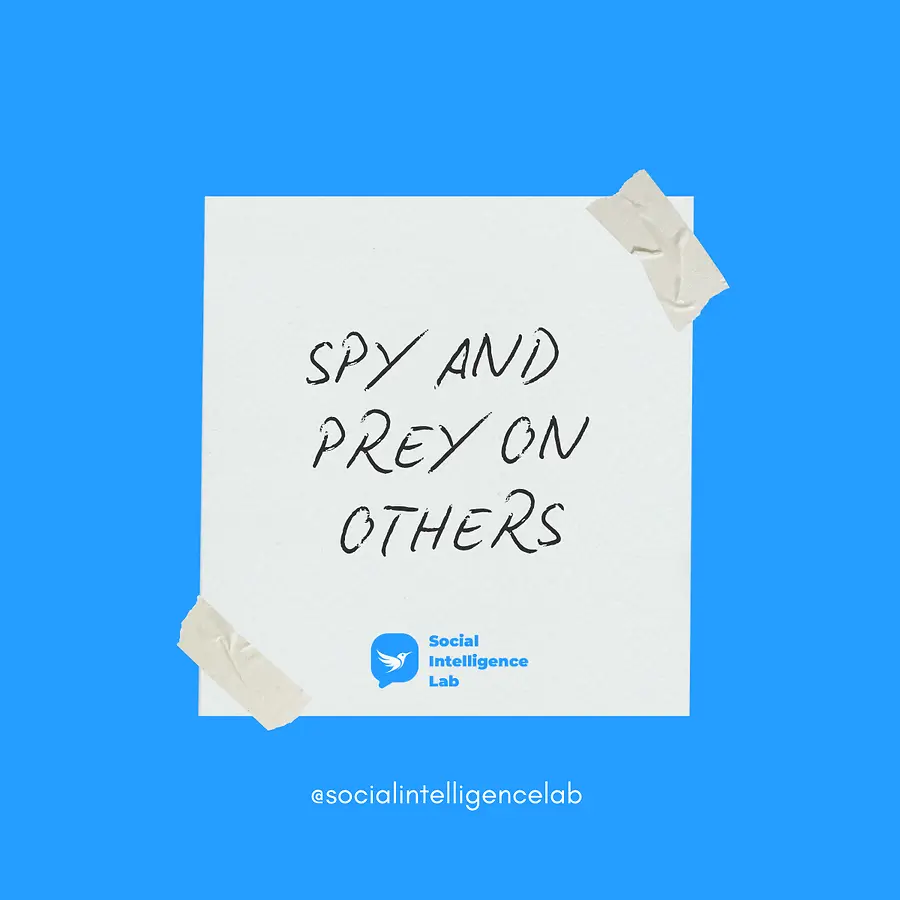
This manipulative maxim of spying on and preying upon others is rooted in the belief that true influence comes from subtle control. Power is not simply brute force. Classical Machiavellian negotiators argue that when others submit to your will, your "power over" them becomes nearly unshakable. Achieving this level of control, however, often hinges on an exhausting cycle of spying on and preying upon the weaknesses and vulnerabilities of others.
Inside the Machiavellian Playbook
We need to understand that coercive power relies heavily on information asymmetry, where one party holds all the cards. Through both my career and research, I have seen how easily we can become prey to these deliberate tactics. To achieve this advantage, counterparts often spy under the guise of friendship, posing as trusted allies while gathering intelligence. Every encounter is treated as a potential source of data, using indirect questions and careful observation to map vulnerabilities. They may even use deception to uncover the truth, offering a false confession or a manufactured vulnerability of their own simply to prompt you to reveal a genuine one.
You may have noticed, as I have, that once our emotional triggers and insecurities are mapped, the "power over" strategy shifts from collection to exploitation. By manipulating desires and instilling subtle fears, a coercive counterpart shapes our decisions in their favor, gradually fostering dependency. With the right information, they can undermine our resistance and make us increasingly reliant on them, subtly steering us toward compliance.
To protect this machinery, the Machiavellian seeks to control the narrative by building a larger-than-life, unforgettable persona. In this realm, visibility is a form of power, and carefully cultivated controversy—or even outright infamy—is often preferred to being ignored. Operating under the assumption that all attention is good attention, they use public perception to elevate their influence, preying on others' weaknesses while continuously exaggerating their own strength.
The Hidden Costs of Coercive Power
Most of us know that while these tactics may yield short-term wins, they are unethical, occasionally illegal, and entirely corrosive to long-term professional health.
What have you experienced personally and professionally? Have you witnessed bullying and manipulation backfire?
Trust breaks down. Agreements collapse. Valuable time is wasted. Reputations suffer. If success depends on lasting collaboration, treating your network like a Cold War espionage ring will ultimately sabotage your entire project.
The Alternative: "Power With"
Rather than attempting to dominate a counterpart, sustainable success seeks to understand them. I have spent my career studying and practicing a "power with" strategy grounded in curiosity, empathy, and shared goals—an approach that creates far greater value over time. Instead of seeking control, we build cooperation by actively aligning our goals with those of our counterparts, making collaboration a mutually appealing choice rather than a matter of forced compliance.
This approach still requires sharp perception, but it replaces spying with learning through intentional observation. While we may never fully decode another person, we can develop the skills to engage more effectively through thoughtful preparation. This is where social and emotional intelligence become our primary tools, allowing us to uncover true motivations and build authentic connections without a hidden agenda.
In practice, emotional intelligence requires us to recognize subtle cues. That means paying close attention to body language, tone, and facial expressions that reveal far more than spoken words. Doing this accurately requires inner clarity, relying on self-awareness and emotional regulation to understand others without projecting our own biases onto them. Women often seem to excel in this area. Don't you think?
Fortunately, unless someone experiences a condition such as alexithymia—which can impair emotional recognition—these skills can be strengthened significantly through intentional practice. The final piece is learning to avoid imposing a rigid agenda. Effective collaboration requires a delicate balance of timing, deadlines, and interpersonal dynamics. Pushing too hard or moving too quickly can derail the entire process.
Social Intelligence Lab: Exercises for the Real World
To strengthen our ability to connect with and understand others—completely free from manipulation—try integrating these five practices into your regular interactions:
- Practice Dynamic Listening: Shift your focus from what someone says to how they say it. Notice whether they seem confident or hesitant, and pay attention to whether their words align with their body language.
- Aim for Accurate Summarization: When responding, reflect both the facts and the underlying emotions behind your counterpart's statements. Acknowledging emotional reality, not just logic, builds immediate rapport.
- Spot Emotions Beneath the Surface: A sudden pause, a glance away, or a nervous laugh often hints at deeper concerns. Gently explore these moments without pushing or interrogating.
- Use Self-Disclosure Thoughtfully: Share your own perspectives or feelings when appropriate. Authentic vulnerability creates a safe space for honest dialogue and mutual understanding.
- Encourage Emotional Dialogue: If your counterpart resists emotional engagement, acknowledge it calmly and explore their comfort level. Nonverbal signals such as sighs or posture shifts are often cues that a deeper conversation may be helpful.
Expand Your Workplace Intelligence
As part of our Social Intelligence Lab Practice Community, we explore some of the more coercive tactics associated with "power over." By examining these harder-edged, Machiavellian approaches to social behavior, we become more aware of how they operate and how they affect relationships.
Before we can successfully shift the game toward "power with"—an approach that emphasizes dignity, clarity, and collaboration—we must first identify the manipulation strategies we may encounter and prepare to respond effectively.
Let's have some fun while learning to recognize the difference.


