
Strong Women Don't Dim Each Other's Light
Why We Must Stop Competing With Each Other and Start Lifting One Another Up


There is something I have noticed throughout my life and career that continues to trouble me. We talk so much about empowering women, celebrating their accomplishments, and encouraging them to become leaders. Yet sometimes, the very people who should be lifting women up are the ones making their journeys more difficult.
I have often wondered why.
Why is it that a woman who is confident, outspoken, and willing to stand up for what she believes in can be viewed as difficult, intimidating, or even threatening? Why is it that the very qualities we admire in male leaders are sometimes criticized in women?
A man who is assertive may be described as a strong leader, while a woman demonstrating that same assertiveness may be labeled bossy, aggressive, or controlling. A man who speaks his mind may be seen as confident, while a woman who does the same may be considered difficult. A man who stands firm in his decisions may earn respect for his leadership, while a woman may face criticism for being unwilling to compromise.
Why do we sometimes hold women to different standards?
And perhaps an even more difficult question is this: Why do women sometimes participate in these double standards against one another?
I recognize that not every woman has experienced these challenges, and I certainly don't believe that all women compete with or undermine one another. However, throughout my career, I have witnessed and experienced situations that have made me question why women sometimes struggle to support, encourage, and celebrate one another.
I believe these experiences deserve an honest conversation.
My purpose in sharing these thoughts is not to criticize women or point fingers, but to encourage all of us, myself included, to reflect on how we treat one another.
Are we creating environments where women feel valued, respected, and empowered to succeed? Or are we sometimes contributing to the very barriers we have worked so hard to overcome?
The Challenges of Being a Strong Woman
Throughout my career, I have worked with many different people, personalities, and leadership styles. I have seen examples of women who lead with strength, compassion, intelligence, and integrity. I have also witnessed how quickly a woman's confidence can be misunderstood or used against her.
At times, there seems to be an expectation that women should be strong, but not too strong. Confident, but not too confident. Successful, but not so successful that others feel threatened. We are encouraged to speak up, but sometimes criticized when we actually do.
It can feel as though women are expected to walk an invisible line between being respected and being accepted.
I have watched women work incredibly hard to earn their positions, establish themselves professionally, and demonstrate their abilities, only to find themselves questioned, undermined, or judged more harshly than others.
Sometimes those judgments come from men. But sometimes, disappointingly, they come from other women.
That is something I believe we need to talk about more openly.
When Support Becomes Competition
Women have spent generations fighting for opportunities, equality, recognition, and the right to have their voices heard. We have worked to break through barriers and challenge stereotypes that once limited what women could accomplish.
So why, after all that progress, do we sometimes create additional barriers for one another?
Why can it be difficult to celebrate another woman's confidence rather than question it? Why might someone's success be met with criticism instead of recognition for the hard work behind it? Why do we sometimes view another woman's accomplishments as a threat rather than an inspiration?
I believe insecurity, competition, jealousy, and the fear of being overshadowed can sometimes influence how people treat one another. These feelings are human, and women are certainly not alone in experiencing them.
But we have a choice in how we respond.
Another woman's success does not mean we have failed.
Her intelligence does not make us less intelligent. Her confidence does not diminish our abilities. Her accomplishments do not take away from what we have achieved.
There is room for more than one strong, successful, capable woman at the table.
We should not have to compete for the right to be respected. We should be helping create environments where respect is extended to everyone.
Leadership Is Not About Being Liked by Everyone
One of the most important lessons I have learned is that being a leader does not mean everyone will agree with you or even like you.
Leadership often requires difficult decisions, uncomfortable conversations, and the courage to stand firm when doing what is right is not necessarily what is popular.
A strong leader must be willing to listen, learn, admit mistakes, and consider different perspectives. But leadership also requires the confidence to make decisions and accept responsibility for them.
Women should not have to apologize for possessing those qualities.
Being compassionate does not mean being weak. Being kind does not mean allowing others to take advantage of you. Being respectful does not mean remaining silent when something is wrong.
And being strong does not mean you are incapable of understanding, empathy, or kindness.
A woman can be both strong and compassionate. She can be confident and humble. She can lead with authority while still treating others with dignity and respect.
These qualities are not contradictions. They are what make exceptional leaders.
The Power of Lifting One Another Up
I have often thought about how much more women could accomplish if we spent less time questioning one another's abilities and more time encouraging one another's potential.
Imagine workplaces where women genuinely celebrated the accomplishments of their female colleagues.
Imagine leaders who saw potential in other women and worked to develop it rather than feeling threatened by it.
Imagine young women entering their careers surrounded by mentors who encouraged them to ask questions, take risks, develop confidence, and pursue leadership opportunities.
What a difference that could make.
As a school counselor, I have spent much of my career working with young people, helping them recognize their strengths, overcome obstacles, and believe in their potential. I have especially valued opportunities to encourage young women to recognize that their voices matter and that they are capable of accomplishing difficult things.
I want young women to grow up knowing they do not need to become smaller, quieter, or less confident to make others comfortable.
But we cannot simply tell young women to believe in themselves. We must demonstrate what that looks like.
They are watching how we treat one another.
They notice when women support each other, and they notice when women criticize, exclude, or undermine each other.
We cannot teach the next generation of women to be confident and courageous while discouraging those very qualities in the women around us.
We must be the examples we want them to follow.
Empowerment Is More Than a Word
We hear the word empowerment everywhere. It appears in speeches, leadership conferences, professional organizations, magazines, and social media.
But empowerment should be more than a popular phrase.
It should be something we practice.
Empowerment means recognizing another woman's strengths without feeling threatened by them. It means offering encouragement when someone is struggling and celebrating when someone succeeds.
It means mentoring instead of competing, supporting instead of criticizing, and opening doors instead of closing them behind us.
It also means being willing to have difficult conversations, address unfair treatment, and stand beside women who may not have the confidence or opportunity to stand up for themselves.
We do not have to agree with every decision another woman makes. We do not have to share the same opinions, personalities, backgrounds, or leadership styles.
But we can still treat one another with respect.
We can disagree without being disrespectful. We can hold one another accountable without being cruel. We can recognize differences without turning them into divisions.
And perhaps most importantly, we can learn to see another woman's strength as something to admire rather than something to fear.
What Are We Teaching the Next Generation?
As women, particularly those of us who have spent years in education, leadership, or mentoring roles, we have an opportunity and a responsibility to help shape the next generation.
I think about the young girls who are still discovering who they are and what they want to become.
Some are naturally confident and outspoken. Others are quiet, thoughtful, and still learning to find their voices. Some will become teachers, counselors, business owners, doctors, mothers, executives, or leaders in their communities.
Each of them deserves to know that her worth is not determined by how she compares to another woman.
I want young women to understand that they can be ambitious without being unkind. They can be successful without stepping on someone else. They can be strong without losing their compassion.
And I want them to know that when they encounter people who question their abilities, criticize their confidence, or try to discourage their dreams, those experiences do not define their worth.
They must learn to believe in themselves even when others do not.
But just as importantly, they must learn to believe in other women, too.
Because the goal should never be to become the only successful woman in the room.
The goal should be to help create a room full of successful women.
The Responsibility That Comes With Influence
I believe true strength is not measured by how much power we have over others, but by how we use our influence to make a difference.
A truly strong woman does not need to belittle someone else to establish her own importance.
She does not need to undermine another woman's accomplishments to feel successful.
She recognizes that confidence and kindness can exist together, that leadership and humility can complement each other, and that helping another woman succeed does not diminish her own achievements.
I want to be the kind of woman who encourages others to recognize their strengths.
The kind of woman who speaks up when something is unfair.
The kind of woman who celebrates another woman's success, even when my own journey looks different.
And the kind of woman who helps others find the courage to stand tall, believe in themselves, and pursue their dreams.
I believe we all have the opportunity to be that kind of woman.
We simply have to make the choice.
Remember…
Never allow someone else's insecurity to make you question your worth or diminish your light. There will always be people who feel threatened by your strength, your confidence, or your success. Some may try to discourage you, discredit you, or make you feel that you need to become less so they can feel like more.
But you were never meant to make yourself smaller so someone else could feel bigger.
And just as importantly, remember that another woman's success does not diminish your own. Her accomplishments do not take away from yours, and her light does not make yours shine any less brightly.
We don't become stronger women by tearing other women down. We become stronger by lifting one another up.
So stand tall. Know your worth. Celebrate the women around you. Be the woman who encourages, supports, and empowers others to become everything they were meant to be.
Because the world doesn't need women competing to see whose light shines the brightest. It needs women who aren't afraid to shine together.
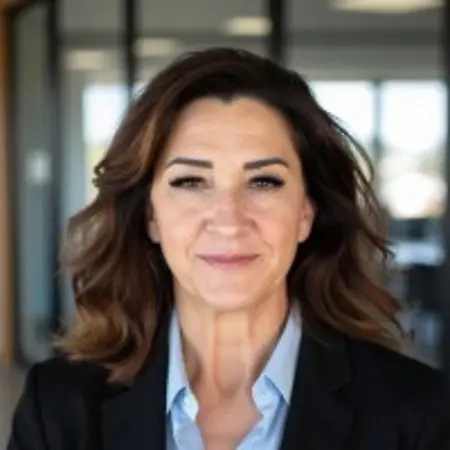
Tami Larsen is an accomplished school counselor with 27 years of experience serving students throughout Utah. She holds degrees in Criminal Justice and Sociology from Weber State University and a Master's in Counselor Education from the University of Phoenix. Throughout her career, Tami has supported students' emotional regulation, identity development, and communication skills while serving as a Domestic Violence…





