Teaching My Daughter for a World I’m Still Learning How to Navigate
Teaching my daughter to thrive in uncertainty by learning alongside her.

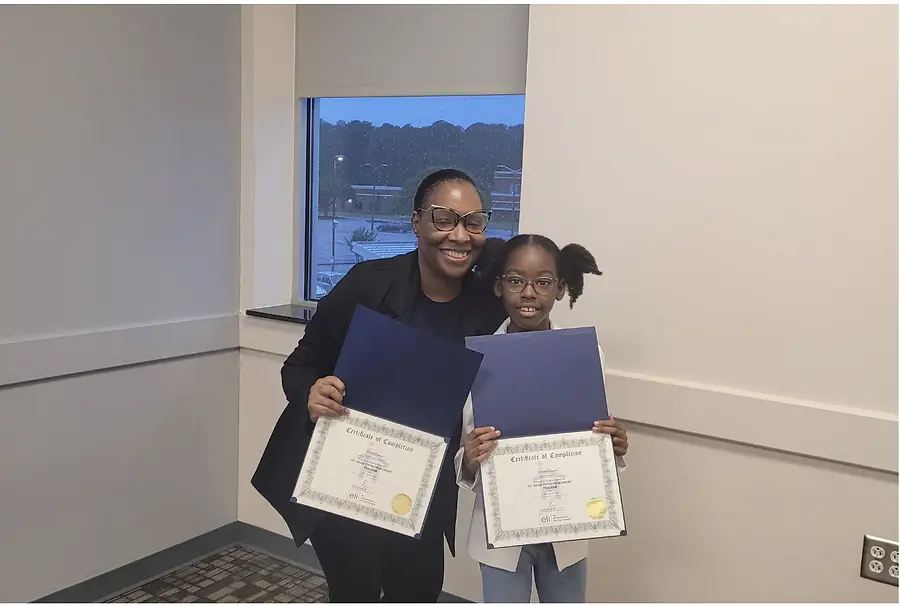
I am teaching my daughter how to navigate a world I am still learning how to understand myself.
That sentence used to make me uncomfortable. It felt like something I was supposed to hide. Parents are expected to be certain. Leaders are expected to be steady. Founders are expected to have a plan.
But certainty is not the world my daughter is inheriting.
I grew up in a household that valued stability. You went to school, you got a job, and you stayed there as long as you could. That guidance made sense for the world my parents knew. It rewarded loyalty, predictability, and linear progress.
The world my daughter is growing into looks very different.
Today, I am teaching her both paths: how to prepare for a traditional career if that is what she wants, and how to think like a builder if she decides to create something of her own. Not because entrepreneurship is superior, but because having options is a form of protection.
We have already encountered moments that made that lesson real.
There have been times when our work was welcomed and celebrated. There have also been moments when people were very clear that they did not want what we were offering—online, in person, directly. Those moments sting, especially when you are building something with care and intention.
What I am teaching her in those moments is not how to harden herself, but how to understand context.
Not everyone is your audience.
Not every no is personal.
Not every rejection is a judgment of your worth.
These are lessons I am still learning myself.
After a major professional disruption last year, I had to rebuild while still showing up for my family, my work, and my community. There was no clean pause and no quiet season to figure things out privately. Life kept moving.
Then something unexpected happened.
Just over a month later, my daughter and I completed an entrepreneurship program together, focused on problem-solving, leadership, and building ideas responsibly. We showed up as students, not experts. As learners, not performers. That experience became a marker for me—not of recovery, but of continuity.
I wrote about that moment and what it represented for us here:
Learning did not stop because things changed. Growth did not pause because certainty disappeared.
I want my daughter to know that disruption does not mean the end of momentum. It means the terrain has shifted.
I also want her to understand that entrepreneurship is not about applause. It is about responsibility. It is about listening. It is about recognizing when an idea needs refining, when a space is not aligned, and when to walk away without bitterness.
Most importantly, I want her to know that if she ever faces instability, it does not have to define her ability to move forward. I hope that if she ever finds herself navigating uncertainty, it will feel less devastating because she has already learned how to adapt without panic.
This is not about raising an entrepreneur at all costs.
It is about raising a thinker.
A builder.
A person who knows she has options.
The world is changing. Careers are shifting. Systems are evolving faster than many of us were prepared for. Preparing our children does not mean predicting the future for them. It means giving them tools to respond to it with clarity and confidence.
I am still learning.
She is still learning.
And that is exactly the point.
We do not need to pretend certainty to raise capable children. Sometimes the most powerful lesson is showing them how to keep learning when the path changes.


