Texas Is Becoming America's AI Powerhouse
Part 3 Building a Sustainable Future: Renewable Energy and Responsible AI

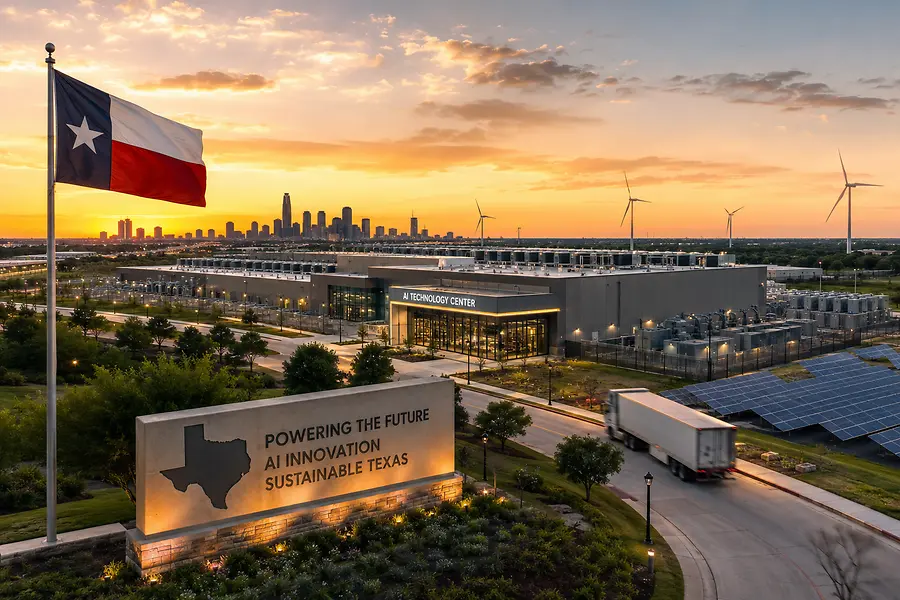
Growth in Texas
Can AI Centers Run on Renewable Energy?
As demand for artificial intelligence continues to grow, one of the most important questions is how these facilities will receive reliable power while reducing their environmental impact.
Solar energy presents a major opportunity for Texas, but solar panels alone cannot currently provide uninterrupted electricity for large AI campuses.
AI facilities operate:
- 24 hours a day
- 365 days a year
Solar generation varies with weather conditions, seasonal changes, and the daily cycle of sunlight.
A large AI campus cannot simply shut down when the sun goes down.
The Future Energy Mix for AI Facilities
The most practical approach is a diversified energy portfolio rather than relying on a single source.
Future AI campuses are likely to combine several technologies.
Solar Energy
Texas has some of the strongest solar resources in the United States.
Solar farms can provide:
- Daytime electricity
- Reduced greenhouse gas emissions
- Lower fuel consumption
- Lower water use than many conventional power plants
Large-scale solar projects also create jobs in:
- Construction
- Engineering
- Electrical trades
- Operations and maintenance
Battery Storage
Battery energy storage systems can capture excess solar generation and release electricity when demand increases.
Storage helps:
- Reduce pressure on the electrical grid
- Supply power during evening hours
- Improve the reliability of renewable energy
However, current battery technology remains costly for storing enough energy to power very large AI campuses for extended periods without additional generation sources.
Wind Energy
Texas is already one of the nation's leaders in wind power generation.
Wind energy complements solar because wind production often increases during nighttime hours, when solar generation declines.
Combining wind and solar creates a more balanced and resilient renewable energy system.
Water and Energy Storage Solutions
Texas has limited potential for new traditional hydroelectric generation, but water can still play an important role in clean energy strategies.
One option is pumped-storage hydropower, which uses the movement of water to store electricity.
The process works as follows:
- Excess renewable energy pumps water to a higher elevation.
- The stored water is released when electricity demand increases.
- Flowing water drives turbines that generate electricity.
This technology can help stabilize renewable energy systems by storing excess power for later use.
Protecting Texas Water Resources
Water management will become increasingly important as AI infrastructure continues to expand.
Sustainable AI facilities may incorporate:
- Recycled cooling water
- Treated wastewater
- Rainwater harvesting
- Advanced water monitoring systems
These strategies can reduce pressure on:
- Rivers
- Reservoirs
- Aquifers
Responsible water management also helps protect wildlife habitats and surrounding ecosystems.
Environmental Benefits of Renewable AI Infrastructure
A cleaner energy strategy can provide significant environmental benefits.
Potential advantages include:
- Reduced carbon emissions
- Improved air quality
- Lower dependence on fossil fuels
- Reduced water consumption
- Greater grid reliability
However, renewable energy projects must also be planned responsibly.
Large solar developments require thoughtful land-use planning to minimize unnecessary impacts on wildlife, agriculture, and natural habitats.
The Future of Texas AI Development
Texas has a unique opportunity to become a national model for sustainable artificial intelligence infrastructure.
The most successful AI campuses of the future will likely combine:
- Solar farms
- Wind energy
- Battery storage
- Energy-efficient cooling systems
- Recycled water systems
- Advanced energy management technologies
- Reliable grid connections
AI growth does not have to come at the expense of environmental responsibility.
With careful planning, Texas can continue attracting technology investment while protecting the natural resources that make the state unique.
Final Perspective
The AI boom represents a major economic opportunity for Texas, but its long-term success will depend on balance.
Innovation must be paired with:
- Responsible energy planning
- Water conservation
- Environmental stewardship
- Community investment
For investors, developers, policymakers, and local communities, some of the greatest opportunities may come from building the infrastructure that supports AI growth while creating a more sustainable future.
Texas has the resources, workforce, and energy potential to lead the AI revolution. The challenge will be ensuring that this progress benefits both businesses and the communities where these technologies are built.


