The Bond Market Just Sent a Warning to Real Estate Investors: Mortgage Rates Haven’t Caught Up Yet
Why Rising Treasury Yields Should Change How You Underwrite Your Next Deal

What the Bond Market Move Means for Real Estate Investors
The U.S. bond market made a significant move late last week, and real estate investors should be paying attention.
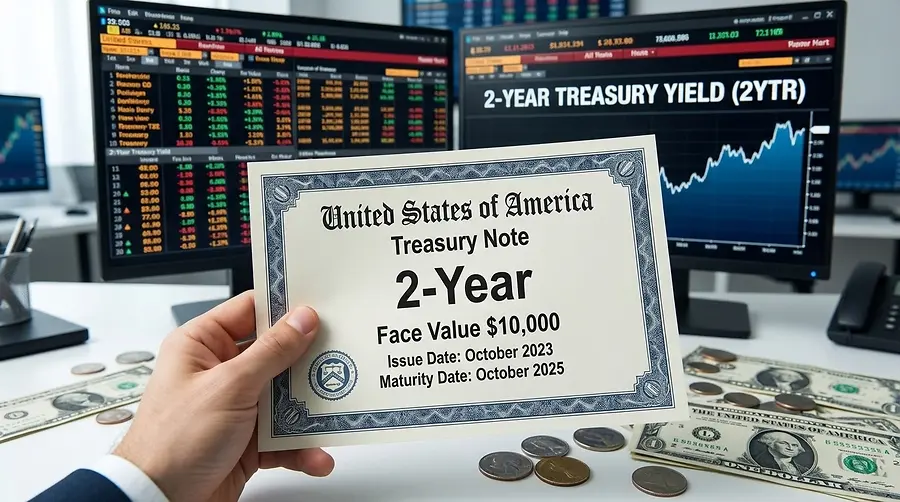
On Friday, August 28, the 2-year Treasury yield jumped sharply, finishing around 4.34%, while the 10-year Treasury ended near 4.73%. The move came after Federal Reserve Chair Kevin Warsh delivered a more hawkish message on inflation, increasing expectations that the Fed could keep rates higher—or potentially raise them again.
The reaction was especially noticeable at the short end of the Treasury curve. Investors are increasingly focused on what the Federal Reserve may do at its September meeting. By Monday, August 31, market-implied odds of a September rate hike had climbed to roughly 66%, according to CME FedWatch data reported by MarketWatch.
But here is where real estate investors need to pay attention:
Mortgage rates have not fully reflected the latest bond-market move.
Freddie Mac reported that the average 30-year fixed mortgage rate was 6.66% for the week ending August 27, barely above the previous week's 6.65%. The 15-year mortgage averaged 5.98%.
As of Monday, August 31, the mortgage market remains in roughly the same range, with Bankrate reporting a national average of around 6.73% for a 30-year fixed mortgage.
That creates an important distinction:
The mortgage rate you saw last week may not be the rate you'll actually get on your next deal.
Mortgage rates don't move one-for-one with the Federal Reserve's overnight policy rate. They are heavily influenced by longer-term Treasury yields, mortgage-backed securities, inflation expectations, investor demand, and overall financial-market conditions.
The 10-year Treasury is particularly important because it serves as a major benchmark for long-term borrowing costs, including mortgages. With the 10-year yield still around 4.7% and showing upward pressure, there isn't much evidence yet that long-term borrowing costs are headed sharply lower.
What Does This Mean for Real Estate Investors?
It means underwriting should remain conservative.
If you're evaluating an acquisition today, don't build your model around the assumption that financing will suddenly fall to 5% or below.
Instead, stress-test the deal at mid-6% mortgage rates or higher, depending on the property, borrower, leverage, and loan structure.
For commercial and investment properties, the actual rate can be substantially different from the headline 30-year residential mortgage rate. That's why investors should evaluate the complete debt structure, including:
- Interest rate
- Amortization
- Loan term
- DSCR requirements
- LTV/LTC
- Interest-only periods
- Balloon payments
- Prepayment penalties
- Closing costs and points
- Seller-financing opportunities
There is also another factor investors shouldn't ignore: oil and inflation.
Oil prices declined during the week ending August 28, with Brent and WTI posting weekly losses. However, geopolitical uncertainty continues to create significant inflation and interest-rate risk.
Higher energy prices can put upward pressure on inflation, which can make it more difficult for the Federal Reserve to ease monetary policy.
The Bottom Line
The biggest mistake right now may be assuming that lower financing costs are just around the corner. The bond market is telling us something different.
Short-term Treasury yields moved sharply higher after the Fed's latest inflation message, long-term yields remain elevated, and mortgage rates are still sitting in the 6%-7% range.
For investors, that means one thing:
Underwrite the deal you can finance today—not the deal you hope you can finance six months from now.
If the numbers only work because your model assumes significantly lower interest rates in Year One, that's not a minor assumption.
That's the assumption you need to challenge first.
In today's market, creative financing, seller financing, stronger equity structures, and conservative underwriting may be just as important as the purchase price.
The opportunity isn't gone. The financing strategy simply matters more than ever.


