The Bridge Generation
The Bridge Generation: How Millennials Are Grieving the World That No Longer Exists

Last year, I was scrolling on Facebook when I came across a post written by American actress Christy Carlson Romano. In the Facebook post, Christy referred to Millennials as “The Bridge Generation.” There's a video of her looking out the window, along with a quote in which she says, “Millennials are nostalgic because we’re grieving a world that doesn’t exist anymore.” When I first read that quote, it hit me hard because that's exactly how I feel. I've felt this way for quite some time, but now that I'm 30 years old, I feel it more deeply, and it feels depressing. It feels depressing because I know that the world I'm currently living in is different from the world I grew up in. I also know that the older I get, the more drastically society will change in ways that will become increasingly unrecognizable. Most importantly, I know that the more drastically life changes, the more my childhood slips away from me until there's nothing left but memories.
In the past, I've often looked at Facebook posts featuring images of things and activities that used to exist in the '90s and early 2000s. I would think to myself about how much easier life was back in the day, especially when I was a child growing up in the late '90s and early 2000s. In her Facebook post, Christy reflects on how, back in the '90s and early 2000s, life was about living in the moment and cherishing the experiences happening in front of you. Even if those moments were being documented, at least they were recorded for the purpose of preserving cherished family memories so you could watch them years later in the privacy of your home with family and friends. However, people today are raising their kids in a world where moments are documented on camera for the purpose of creating social media clickbait and monetizing personal memories shared with the world.
“We witnessed the before and after of everything—before social media, before smartphones became extensions of our hands, before every moment needed to be documented and optimized. We remember when the internet was a place you ‘went to’ instead of something you lived inside of. When going to Blockbuster on Friday night was an event, not a meme,” Christy explained. “And now we're raising kids in a world we barely recognize ourselves. Trying to explain what it felt like to have mystery—to wonder about something and just… not know. To have inside jokes that stayed inside because there was no group chat to screenshot them in. To make mistakes that didn't follow you forever.”
Christy also explained why she referred to Millennials as “The Bridge Generation.” It's simply because we're the generation that has the ability to hold on to what's left of our childhood and preserve our generational experiences. At the same time, we're mourning and grieving the childhood we've lost forever.
“The nostalgia hits different when you realize you're not just missing the past—you're grieving the loss of a pace of life that no longer exists. A simplicity that Gen Z will never understand because they never experienced it. We're the bridge generation, and sometimes it feels like we're standing in the middle watching both sides drift further apart,” she explained. “Maybe that's why we hold onto our '90s/2000s references so tightly. It's not just nostalgia. It's preservation.”
The reason nostalgia hits differently today for Millennials is that we're waking up and realizing how timeless and precious those memories are. We're also realizing how much we took them for granted. When I think about my childhood, I realize how many things I took for granted. I should have watched movies more often on cassette tapes. I should have done more to get electronics and books featuring the Bratz doll brand instead of just focusing on getting the dolls. I should have done more to get video games to play on my brother's PlayStation 2. I should have done more to convince my parents to let me have cable sooner so that I could experience the golden era of Disney Channel and Nickelodeon in the late '90s and early 2000s. I also should have done more to convince my parents to get a working handheld video camera so they could record precious moments of my childhood.
When I think about the Millennial generation, I realize that we may not have had a lot of electronic stuff back in the day, but we felt freer and more alive than we do now. When we didn't have social media, we had friends and family whom we saw in person, and that was enough to keep us content. We felt more connected with our peers and had more meaningful conversations with people we saw regularly. Today, social media outlets such as Instagram, TikTok, and other platforms have caused us to become more disconnected than ever because we would rather try to connect with strangers we don't know (and who might not even be real) than connect with someone in person. In this case, Millennials realize that even communication was something we took for granted because we didn't understand how important it was to connect with another human being until social media came along and artificial intelligence (AI) started taking over.
“We grew up in the last generation that remembers what it felt like to be unreachable,” Christy explained. “To make plans and actually keep them because there was no way to cancel last minute. To be bored. To wait for your favorite song on the radio just to record it on a cassette tape.”
Speaking of artificial intelligence, we see every day how AI is growing and advancing to greater heights than anyone can anticipate. While it may seem exciting to witness technological advancements, it's also concerning because the more technology advances, the less value human life will have in society. This makes me mourn the past even more. Back in the '90s and early 2000s, I feel like human life had a more valuable place in the world. Now, it feels like the value of human life continues to decrease because of artificial intelligence. It makes me scared to think that one day technology will advance so far that human life will almost no longer exist.
Since I'm mourning the loss of the childhood I'll never have back, how am I coping with the world I live in today, which is forever changing? I think the easiest way I cope with modern-day changes is by simply not forgetting where I came from. It sounds simple, but it keeps me grounded in who I am as a person.
Overall, as someone who belongs to the Millennial generation, I believe it's important to cherish the Millennial spirit in your memories and in your heart. Nostalgia is a treasure you cherish forever.
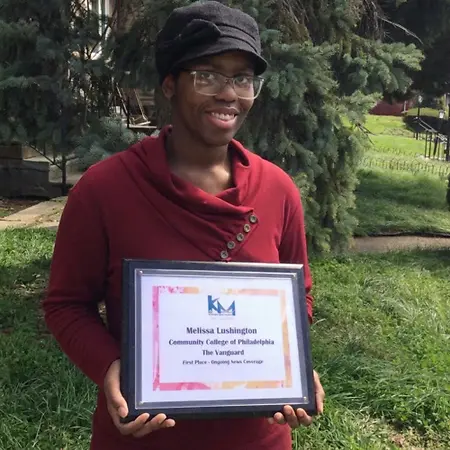
Melissa Lushington is an award-winning journalist and staff writer based in Philadelphia, Pennsylvania. With over six years of blogging experience, she has served as a permanent staff writer for the Verge of Independence Project Multimedia Autism Advocacy since 2019, writing monthly blogs on autism topics. She holds an associate's degree in communications and won first place in the 2022 Keystone Media Awards for…