The Day My Vocabulary "Woke Up" the Office
How a centuries-old dictionary word sparked an unforgettable generational clash in the modern workplace.

The modern workplace is a living archive of technological and cultural evolution. Within a few decades, office communication has shifted from tactile, mechanical objects to digital, automated streams of data. For professionals who bridged these two eras, survival required immense adaptability. As a Baby Boomer navigating a Millennial-led workspace, I always thought my biggest hurdles would be software updates or the dreaded office printer. But as it turned out, my greatest workplace stir wouldn't be caused by a technical glitch. It was caused by a perfectly innocent, centuries-old dictionary word: "cocksure."
The Anatomy of a Word-Smash
It was an ordinary day of chasing errors. Our team thrived on transparency, frequently proofing each other's work to catch the tiniest slips. After noticing a mistake that had somehow slipped past three different pairs of eyes, I decided a gentle, motivational nudge was in order. I sat at my computer and typed out a quick email:
"Dear Teammates, Greetings! I know that we are all inundated with work. And as we do our work, we should be cocksure that we catch all mistakes. Dot our "I"s and cross our "T"s. Thanks! Grace."
I hit send and went right back to work.
Within minutes, the atmosphere changed. I looked up to see my Millennial colleagues frozen in a hilarious state of half-smiles and pure astonishment. Finally, someone broke the silence: "Grace, please check the email that you sent." I checked it. I re-read it. Everything looked fine to me!
That's when the group chimed in to inform me that "cocksure" was highly inappropriate. In fact, they insisted it wasn't even a real word.
To my mind, the word was a centuries-old term meaning completely confident, absolutely certain, and securely established. To their Millennial ears, however, it sounded like an accidental piece of anatomy slang—a highly unprofessional, bizarrely smashed-together workplace profanity.
To their defense, my younger colleagues simply had sharper, faster minds when it came to modern double entendres. My generation was a bit more sheltered! Their brains immediately broke the word down into two distinct, highly anatomical parts.
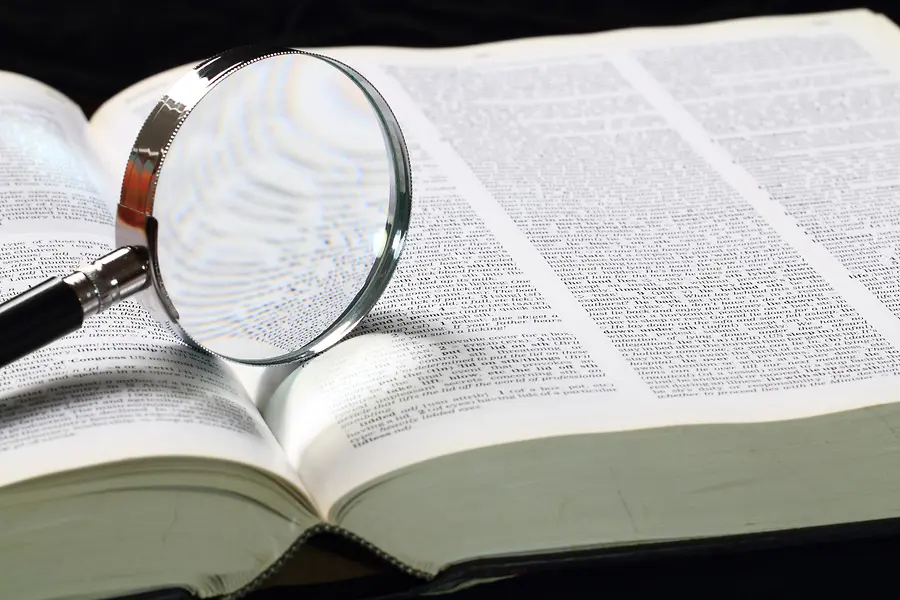
Determined to defend my vocabulary, I marched over to my desk, grabbed my trusty physical dictionary, and flipped to the page. I held it up like a trophy. The expressions on the girls' faces were absolutely priceless—it was like watching Alice tumble straight into Wonderland! Standing there with their mouths agape in pure shock, they finally admitted they had absolutely no clue the word existed. It was a beautiful, funny moment of the "old school" schoolmastering the "new school."
From Carbon Ready to Computer Code
That dictionary was a relic of the world I started in—a world of manual typewriters, telephone call log books, and those classic Memorandum forms. I still miss those forms! They came "carbon ready," meaning you would write your note on the top sheet, and the pressure would beautifully transfer your words across three pages: the original and two identical copies. Back then, if you made a mistake, you couldn't just hit "Ctrl+Z." You had to be careful, which built a lifelong habit of being hyper-vigilant.
When the digital wave crashed into the office, it brought incredible speed, but it also brought a whole new set of frustrations. I traded manual filing cabinets for computers, but suddenly I had to deal with network printers that would become hopelessly "constipated," backing up work until it crawled out tattered and torn.
Rather than letting the technology defeat me, I decided to get proactive. Long before the modern Microsoft era we know today, I was working on the Wang computer system. When data entry demands started piling up, I took it upon myself to teach myself how to write Wang Glossaries…their version of macros. I was incredibly impressed with myself! Suddenly, instead of tedious typing, I was automating data entry and easily populating the names for the information I was sending out. I wasn't just catching up to the modern world; I was programming it.
The Cost of Modern Convenience
Now that I am happily retired, I often look back and pat myself on the back for surviving—and thriving in—that massive technological leap. Modern technology is a beautiful thing, and it undeniably makes life easier.
Keyboards have replaced the satisfying clack of the typewriter, and digital databases have erased the need for carbon-ready memo pads. However, looking back also makes me a little concerned. The younger generations are slowly becoming lazy in their diligence because modernism does so much of the heavy lifting for them. When your spellcheck fixes everything and your thoughts are shortened into rapid-fire acronyms like "LOL," you lose a bit of the discipline it takes to truly dot your I's and cross your T's.
Conclusion
The intersection of generations in the workplace creates a fantastic, funny dynamic. The younger crowd brings native digital literacy and a sharp, modern wit, while the older generation brings linguistic depth, historical context, and an unshakeable work ethic. My journey proved that adaptability doesn't have an expiration date. You can teach yourself macros on a Wang computer to conquer the future, while still using a paper dictionary to send the youth on a trip to Wonderland—one "woke up" teammate at a time.


