THE DOOR OF NO RETURN: RETURNING THROUGH THE DOOR OF HISTORY
A Humanitarian's Journey Through Ghana's Sacred Historical Sites and the Transformative Power of Ancestral Memory

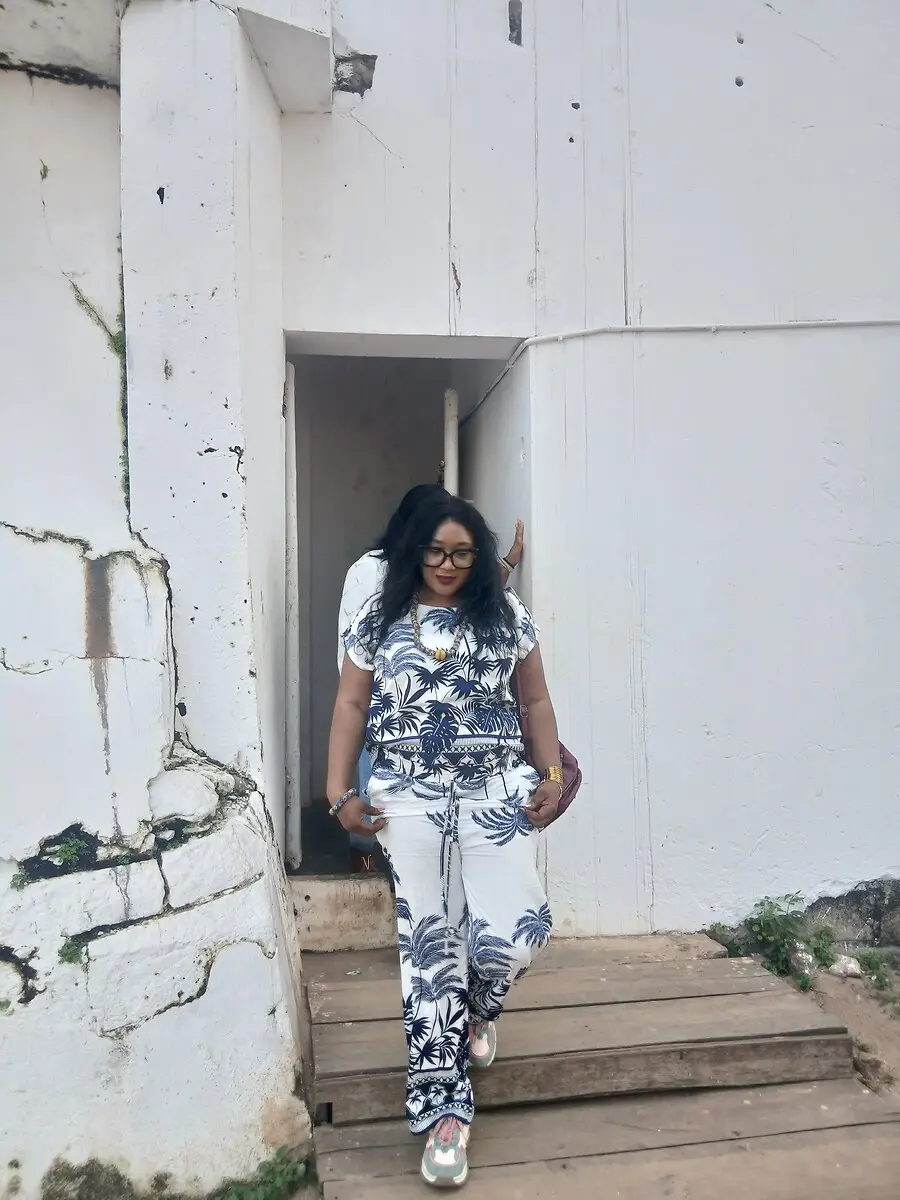
By Dr. Onika Campbell-Rowe
Returning Through the Door of History - the Infamous Door of No Return
As our vehicle travelled through the vibrant streets of Accra, I could not help but feel that this day would be unlike any other during our humanitarian mission. We had already begun engaging communities through healthcare, education, and humanitarian outreach, yet this particular journey would take us beyond service and into the heart of history itself.
There are places in the world where history is written in books, and there are places where history lives within the very stones beneath your feet. Ghana is one of those sacred places. For many descendants of the African Diaspora, Ghana is not simply another African nation. It is a place where memory and identity converge. It is a place where countless ancestral stories began before they were violently interrupted by one of humanity's darkest chapters the transatlantic slave trade. As a Caribbean woman whose heritage is inseparable from that history, I arrived not merely as humanitarian, but as a daughter of the Diaspora seeking to understand the journey that shaped generations before me.
A Nation That Preserves the World's Memory
Before reflecting on the historical sites themselves, I must express my profound admiration to the Government and people of the Republic of Ghana for the remarkable care with which they have preserved these national treasures. In many parts of the world, painful history is hidden, neglected, or allowed to disappear with time. Ghana has chosen a different path. The preservation of the Kwame Nkrumah Memorial Park, Osu Castle, Independence Square, and countless other historical landmarks is an extraordinary act of national courage and global responsibility. These sites have been maintained not simply as tourist attractions, but as living classrooms where future generations can confront truth, honour sacrifice, and better understand the cost of freedom.
Every restored structure, preserved artefact, historical exhibit, and carefully documented narrative reflects a nation's commitment to ensuring that the lessons of history are never forgotten. The museums are thoughtfully curated, allowing visitors to move beyond dates and statistics into the lived experiences of those whose voices were silenced by history. I commend the Government of Ghana, the Ghana Museums and Monuments Board, historians, conservators, cultural custodians, and every individual whose dedication has ensured that these priceless landmarks remain accessible to the world. Their work preserves not only Ghana's history but a significant chapter of global human history. For descendants of enslaved Africans, these preserved spaces become places of remembrance, education, healing, and reconciliation.
The Kwame Nkrumah Memorial Park: A Vision Beyond Independence
Our first stop was the Kwame Nkrumah Memorial Park. Walking through the beautifully maintained gardens toward the mausoleum of Dr. Kwame Nkrumah, I felt an overwhelming sense of reverence. This was the resting place of a man whose vision extended far beyond the borders of Ghana. His dream was not merely political independence but the complete liberation and unity of Africa.
The museum surrounding the memorial houses remarkable artefacts from his life photographs, personal belongings, official documents, gifts from world leaders, and historical records that vividly illustrate the remarkable journey of Ghana's first President. Each exhibit reminded me that genuine leadership requires extraordinary courage. Kwame Nkrumah believed that political freedom would only be meaningful if it was accompanied by education, economic development, social justice, healthcare, and human dignity. His vision remains profoundly relevant today.
As I reflected upon the humanitarian work of Harmony for Humanity Foundation, I realised that every health screening, every scholarship, every school supply distributed, every widow empowered, and every community strengthened represents another chapter in the ongoing pursuit of the freedom that leaders like Nkrumah envisioned. Freedom is not merely the absence of colonial rule.
Freedom is the presence of opportunity.
Osu Castle: Where History Became Personal
Nothing, however, could have prepared me for Osu Castle. The imposing white structure overlooking the Atlantic Ocean appears almost serene from a distance.
Yet behind its walls lies unimaginable sorrow. Walking through the narrow corridors where enslaved Africans were once imprisoned before being forced onto slave ships was emotionally overwhelming. The air itself seemed heavy with memory. Our guide carefully explained the function of each chamber, the separation of families, the conditions under which men, women, and children were confined, and the unimaginable uncertainty that awaited them beyond the castle walls.
Listening was difficult, imagining was even harder and every room felt sacred. Every stone seemed to carry the voices of those who could no longer speak. Then we arrived at the Door of No Return. I stood silently. No words seemed adequate. As I gazed toward the Atlantic Ocean, my thoughts turned to the countless men, women, and children who took their final steps upon African soil through this very doorway. Some were scholars, farmers, artisans, mothers carrying infants.
Some were children too young to understand what was happening. None could have imagined that they would never see their homeland again. Standing there, I found myself overwhelmed by the realisation that my own ancestors may have walked through a doorway like this. The Atlantic before me ceased to be merely an ocean. It became a witness.
It witnessed unimaginable cruelty. It witnessed resilience beyond comprehension. It witnessed humanity at its darkest and most grusome crime. Yet centuries later, that same Atlantic carried me back not in chains, but with purpose. Not as property.
But as a humanitarian. Not stripped of identity. But proudly embracing it.
In that moment, the Door of No Return became, for me, a Door of Return a symbolic homecoming that transformed inherited pain into renewed purpose.
The Atlantic Ocean: A Silent Cemetery and a Living Bridge
The transatlantic slave trade is often described through numbers. Millions transported. Millions displaced. Millions who perished.
Yet standing before the ocean, I realised that history cannot simply be measured statistically. The Atlantic is more than water. It is a silent cemetery for countless unnamed souls who never completed the Middle Passage.
It is also a bridge connecting Africa to every descendant who continues to carry its culture, resilience, spirituality, and hope. Despite centuries of displacement, Africa never truly left us. I recognised familiar expressions in the faces of the Ghanaian people.
I heard echoes of Caribbean speech patterns. I saw traditions that survive in our music, our worship, our food, our family structures, and our profound respect for elders. History separated our geography. It never separated our identity.
Independence Square: Freedom Must Continue
Our final destination was Independence Square. Standing beneath the iconic Black Star Gate, I reflected upon the extraordinary symbolism surrounding this national landmark. It celebrates Ghana's liberation from colonial rule, yet it also challenges every visitor to ask an important question:
What does freedom require today? Our generation may no longer fight colonial empires, but we continue to confront poverty, human trafficking, illiteracy, violence against women and girls, inadequate healthcare, climate vulnerability, and inequality. These are the frontlines upon which humanitarian organisations now serve. The mission has changed. The responsibility has not.
As I looked across Independence Square, I felt renewed determination to continue advancing sustainable development, peacebuilding, education, healthcare, and human rights not merely as professional commitments, but as a moral obligation owed to those whose sacrifices made our freedom possible.
Coming Home Through Service
When I first arrived in Ghana, I believed I had come to serve. As I departed these historic sites, I realised that Ghana had first served me. It reminded me where my story truly began. It deepened my appreciation for the resilience of the African spirit.
It strengthened my commitment to honour my ancestors not only by remembering their suffering but by dedicating my life to ensuring that others experience dignity, opportunity, justice, and hope. The Road to Ghana has become far more than a humanitarian mission.
It has become a pilgrimage. A return to history. A return to identity. A return to purpose. The Atlantic Ocean once carried my ancestors away from this continent against their will. Centuries later, it has witnessed one of their daughters return not in bondage, but in freedom; not in despair, but in service; not in silence, but with a voice committed to advocating for those who still long to experience the fullness of human dignity. History closed one door. Hope has opened another.


