
The Elephant in the HR Room: When Diversity Becomes Selective, Black Women Deserve Accountability
A Black Woman's Account of HR Bias, Racial Privilege, and Workplace Retaliation at Signode

By AyeDNicole | Adrienne Floyd
There is an elephant in the corporate room that I believe deserves a serious conversation: What happens when a Human Resources department is responsible for protecting equality, but an employee experiences its decisions as selective, racially biased, and fundamentally unfair?
I am speaking from my personal experience with Signode, where I worked in Treasury before my termination on August 11, 2026.
One of my greatest concerns involves the composition of the Human Resources team I encountered, which, to my knowledge, consisted of Hispanic professionals without comparable Black or white representation among the individuals I worked with.
Let me make something clear: Being Hispanic is not a problem. Being Afro-Latina is not a problem. Being Euro-Latina is not a problem. The problem arises when people entrusted with protecting employees appear to practice the very discrimination they are supposed to prevent.
And that is where my experience with Carmen Mesa comes into the conversation.
1. Euro-Latina Privilege, Afro-Latina Identity, and the Weaponization of Diversity
We need to have an educated conversation about racial identity within Latino communities.
Latinidad is not a race. Hispanic and Latina women may be white, Black, Indigenous, mixed-race, or identify with other racial backgrounds.
However, the existence of racial diversity within Latino communities does not mean that anti-Blackness, colorism, or proximity to white institutional power cannot exist.
I believe the conduct I experienced from Carmen Mesa reflected characteristics of what I describe as Euro-Latina racial privilege: the ability to operate comfortably within predominantly white corporate leadership while, in my experience, failing to extend comparable protection to a Black female professional.
There is also a broader concern about the weaponization of diversity.
Some individuals know how to use the language of minority representation, discrimination, and inclusion when it benefits their position, yet fail to advocate for those same principles when another minority employee needs protection.
That is what I mean when I discuss people who can play both sides.
They want the protection of diversity while appearing unwilling to practice equality.
This behavior, regardless of the race or ethnicity of the person engaging in it, can reproduce the same power imbalances associated with white supremacy.
And Black women should not be expected to remain silent about that contradiction.
2. Why Was There So Little Visible Racial Diversity Within Human Resources?
From my observations, Signode's Human Resources personnel with whom I interacted were Hispanic women.
I believe that warrants a legitimate discussion about representation, recruitment, oversight, and employee advocacy.
Where were the Black professionals? Where was the broader racial representation? And what independent safeguards existed when an employee questioned the judgment of HR leadership?
I am not suggesting that Hispanic women are unqualified to work in Human Resources. I am questioning whether the department had sufficient diversity of perspectives, accountability, and independent review mechanisms.
A company's commitment to diversity should extend beyond hiring employees who fit a broad minority classification.
Diversity without fairness is simply representation without accountability.
3. Carmen Mesa's Comments About Motherhood Were Unprofessional
One interaction that continues to stand out involved Carmen Mesa discussing my living arrangements and the fact that I did not have children.
As I recall, Carmen made remarks along the lines of:
"Oh, I wish I could live close to the job like you."
And:
"I don't have to worry about a child like you."
My response?
As if Carmen Mesa didn't have a choice with her motherfucking coochie not to make a damn child.
I said what I said.
Motherhood does not give anyone the right to resent a childless woman for having different responsibilities, financial obligations, or professional flexibility.
I respect women who choose motherhood. However, I also respect women who choose to prioritize education, financial independence, and their careers.
I do not owe another woman an apology because I made different reproductive and lifestyle decisions.
What concerned me was the perceived contrast between Carmen expressing frustration about her personal circumstances and her subsequent involvement in the HR process surrounding my termination.
I cannot establish that her comments motivated the employment decision. Nevertheless, the experience left me questioning whether personal attitudes affected professional judgment.
Human Resources is not a place to project personal frustrations onto employees.
4. February 6, 2026: The Data Incident That Deserved Serious Attention
On February 6, 2026, I received a corporate cardholder file containing information associated with more than 500 cardholders through my personal Gmail account.
The file was sent in connection with Treasury personnel, including Tracy Park and Ginger Huber.
I recognized the potential sensitivity of the information and raised concerns through the appropriate internal channels.
From my perspective, this was a significant information-security and internal-control matter deserving a documented investigation.
Yet I did not observe a level of accountability that reassured me the incident had received appropriate attention.
What made the situation particularly troubling was that Tracy Park, a white female manager involved in the incident, remained in her position while I later experienced escalating workplace concerns and ultimately lost my employment.
I believe Carmen Mesa's handling of my complaints and the termination process warrants independent review.
How does a Black woman raise concerns about a potential data-security breach and eventually lose her job while the manager involved in that incident remains employed?
That question deserves a documented answer.
It does not automatically establish discrimination or retaliation, but it presents a sequence of events that I believe should be examined by the appropriate investigators.
5. My Treasury SOPs and Intellectual Contributions Must Not Be Erased
Let me articulate another important issue.
I, Adrienne Floyd, developed Treasury standard operating procedures and documented processes during my employment at Signode.
My contributions included developing process documentation, organizing workflows, and helping establish clearer operational guidance for Treasury activities.
I believe these contributions provided meaningful value to the department.
Following my termination, I became concerned that the procedures and materials I developed could continue to be used without appropriate recognition of my work.
Let me be clear: I am not claiming to have proven that anyone stole my work.
I am stating that I want my authorship, professional contributions, and the circumstances surrounding the development of those procedures accurately documented.
There is an important difference between a company lawfully retaining work created within the scope of employment and an organization misrepresenting who developed that work.
I want that distinction respected.
A Black woman's professional contributions should not become invisible simply because she is no longer on the payroll.
6. The Double Standard: Protecting Management While Terminating the Employee Who Raised Concerns
My concerns did not begin and end with the February incident.
Throughout my employment, I experienced circumstances that I believe deserve examination, including:
- The handling of my concerns about sensitive corporate information.
- Workplace interactions with Tracy Park that I experienced as intimidating or inconsistent.
- Questions surrounding my professional development and educational ambitions.
- My requests for workplace accommodations.
- The treatment of my outside business and entertainment interests.
- My termination on August 11, 2026, without a performance improvement plan.
I believe the full chronology is important.
When an employee raises concerns about controls, workplace treatment, and accommodations, HR should be able to demonstrate that subsequent employment decisions were made independently, consistently, and lawfully.
I believe my termination was wrongful and retaliatory, and I want the evidence reviewed through the appropriate legal and administrative channels.
I have preserved emails, timestamps, communications, and descriptions of relevant events for that purpose.
7. Black Women Should Not Have to Compete With Other Women for Basic Respect
There is another uncomfortable conversation about how some women relate to Black women in professional environments.
I have observed situations in which women express solidarity with Black culture, Black families, and Black communities while failing to extend that same respect to Black women in positions of professional independence.
I also believe some women become uncomfortable when a Black woman does not need their approval, their social connections, or their personal validation.
That is not exclusive to Hispanic women, white women, or any other racial group.
It is a problem of character, prejudice, and professional ethics.
Interracial relationships and multicultural families are not evidence of wrongdoing. Neither a woman's ethnicity nor the racial identity of her children determines how she will treat Black women.
But having relationships with Black people does not automatically make someone free of anti-Black bias.
That is a distinction worth making.
I am not interested in performative solidarity.
I am interested in measurable equality.
8. Human Resources Must Be Held to the Same Standards It Enforces
HR professionals should not be above scrutiny.
When an employee reports a potential data-security concern, the organization should document how that concern was reviewed.
When an employee requests accommodations, the organization should maintain appropriate records of its response.
When an employee is terminated after raising protected concerns, the employer should be able to explain the legitimate reasons for that decision.
And when employees allege racial bias, those allegations should receive an impartial assessment regardless of the ethnic background of the HR professionals involved.
My experience with Carmen Mesa left me questioning whether these standards were applied consistently.
That is my experience, my perspective, and my right to articulate.
9. The Elephant in the Room Is Accountability, Not Ethnicity
I will not apologize for questioning how corporate systems treat educated, professionally ambitious Black women.
I will not apologize for documenting my contributions to Treasury.
And I will not apologize for questioning why I lost my employment after raising concerns that I believed deserved serious attention.
But I also recognize that the conduct of an individual should not become an indictment of an entire ethnic community.
My criticism of Carmen Mesa concerns her actions and professional decisions as I experienced them—not an assumption that every Hispanic or Afro-Latina woman behaves similarly.
The same standard of accountability must apply to everyone: Black, white, Hispanic, Latina, or otherwise.
That is what genuine diversity, equity, and inclusion should mean.
Closing: My Career, My Documentation, and My Voice
I earned my education. I built my professional experience. I contributed to Treasury operations. And I have every right to question how my employment ended.
I believe the circumstances surrounding my termination deserve independent examination, including the February 6, 2026, data incident, the handling of my workplace concerns, and the treatment of the procedures I developed.
Black women should not have to surrender their professional dignity to preserve another person's corporate comfort.
If a company wants to advertise diversity, it should demonstrate fairness through its decisions, documentation, investigations, and treatment of employees.
And if HR is responsible for protecting the integrity of the workplace, HR must be willing to have its own conduct reviewed.
That is the elephant in the room.
You cannot preach equality while practicing selective accountability.
— AyeDNicole | Adrienne Floyd
Editorial disclosure: This article presents the author's personal experiences, recollections, allegations, and opinions. Allegations of discrimination, retaliation, improper handling of confidential information, or wrongful termination have not been independently adjudicated in this article. References to workplace conduct should not be interpreted as findings of legal liability or as characterizations of an entire ethnic group.
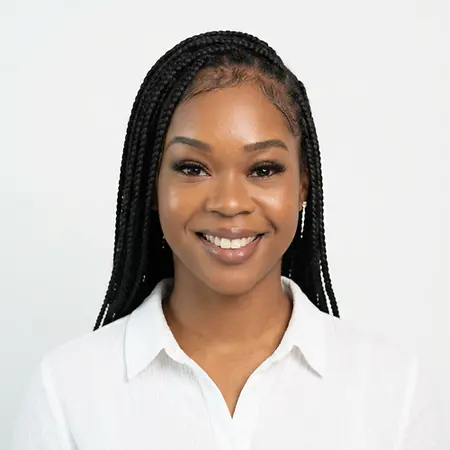
Adrienne Floyd is a treasury and finance professional with an MBA from Florida A&M University, specializing in cash management, financial operations, and data-driven reporting. She has distinguished herself by introducing Power BI reporting solutions within treasury departments, helping transform traditional spreadsheet-based reporting into dynamic KPI dashboards that strengthen visibility, analysis, and strategic…





