The First Skill in Sales Is Seeing People
How attention, care, and humanity build trust before any pitch

I don’t have a background in sales.
I didn’t come up through pipelines, quotas, or closing techniques. I wasn’t trained to persuade, overcome objections, or optimize conversion rates.
What I do have is an eye for detail and a deep respect for people.
Over time, I’ve learned something many sales playbooks miss entirely: before anything is sold, before any partnership is formed, someone has to feel seen.
The most powerful lesson I’ve encountered about relationships didn’t come from a business book. It came quietly, at the bottom of an email signature belonging to a community leader my daughter and I now work alongside.
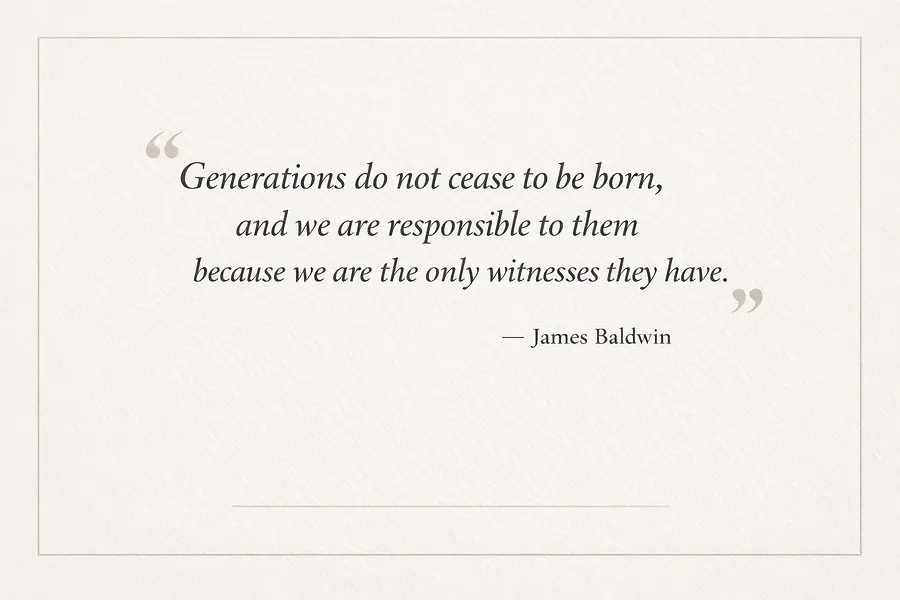
“Generations do not cease to be born, and we are responsible to them because we are the only witnesses they have.”
— James Baldwin
That sentence explains how I approach every professional relationship I build.
I don’t enter conversations trying to extract value. I enter listening for what matters. I notice tone before terminology. I pay attention to what someone repeats, what they avoid, and what they protect. I listen for values long before needs are named.
That isn’t a sales tactic.
That is care.
And care, it turns out, is a foundation stronger than any formal sales framework.
When I reached out to potential partners for the work my daughter and I are building, I didn’t lead with credentials or polished pitches. I led with understanding. I paid attention to how people spoke about the children they served, the communities they carried, and the responsibilities they felt but rarely articulated.
That is how trust formed—quietly, naturally, without performance.
Earlier this year, this same community leader brought my daughter and me into a large MLK Day event, publicly supporting our mission and trusting us to stand before families and children with care and intention. That trust was active. It was visible. It mattered.
Now, my daughter and I have been preparing thoughtfully, and we will be presenting a custom program together later this month for the children he supports.
When I built that presentation, I didn’t start with slides. I started with questions—with context, with the understanding that these children are forming their relationships with technology, safety, and authority in real time. How adults show up matters more than what they say.
My daughter will stand beside me when we present—not as a symbol, not as branding, but as truth.
Because when you work with children and communities, you are never just selling a service. You are modeling priorities. You are demonstrating what attentiveness looks like. You are showing what it means to take people seriously.
Sales, at its best, is not persuasion.
It is recognition.
It is the ability to understand what someone is responsible to, not just what they are responsible for. It is the discipline of noticing small things, because small things reveal values—and values determine whether a relationship will last.
I may not come from sales.
But I understand relationships.
And in a world saturated with noise, speed, and surface-level engagement, that understanding is not a soft skill. It is a competitive advantage.
Generations do not stop arriving.
And whether we call it sales, leadership, or community building, someone has to be willing to witness with care.
That is where real business begins.


