The Future of Healthcare Depends On Those Who Teach It
Why Nursing Educators Are the Foundation of Healthcare Excellence

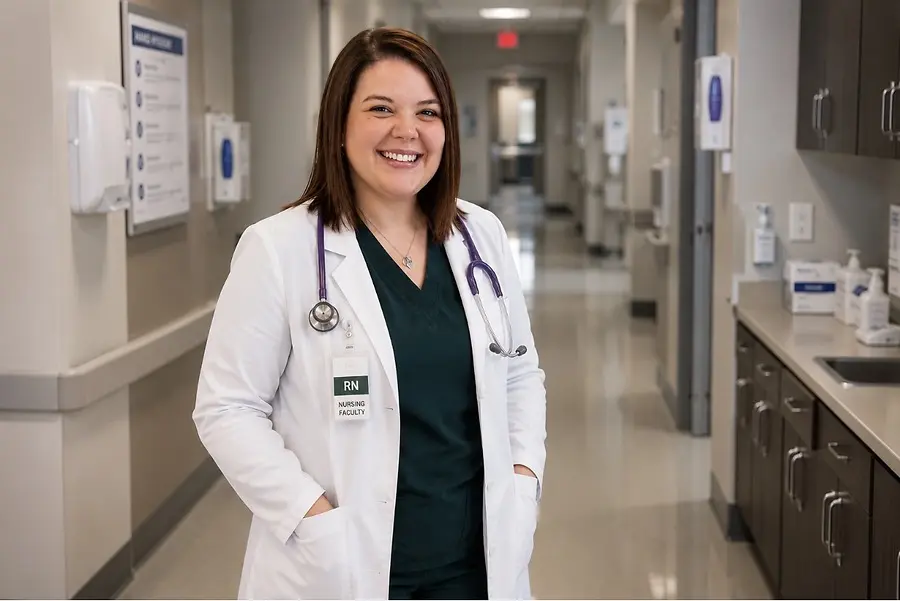
When conversations turn to the healthcare workforce, we often hear one phrase repeated:
"There's a nursing shortage."
While that statement is true, it tells only part of the story.
The reality is this: we cannot solve the nursing shortage without first addressing the nursing faculty shortage.
Every registered nurse, nurse practitioner, certified registered nurse anesthetist, nurse leader, and nurse educator began in the same place—a classroom. Before they ever started an IV, interpreted an ECG, comforted a grieving family, or saved a life, someone stood in front of a classroom believing they could become a nurse.
That someone was a nursing educator.
And someone else stood beside them in the clinical setting, helping bridge the gap between textbooks and real patients.
That was a clinical instructor.
These professionals are often the invisible foundation of our healthcare system.
Education Shapes Patient Care
Nursing education is unlike many other academic disciplines.
We don't simply teach students to memorize information. We teach them to think critically under pressure, recognize subtle changes before a patient deteriorates, communicate with physicians, pharmacists, respiratory therapists, and families, advocate when something doesn't seem right, and lead with both knowledge and compassion.
Every lesson taught today becomes a clinical decision made tomorrow.
The quality of nursing education directly influences the quality and safety of patient care.
Clinical Instructors Build Confidence
Some of the most meaningful learning doesn't happen within four classroom walls. It happens at a patient's bedside.
Clinical instructors help students transform knowledge into action.
- The first medication administration.
- The first sterile dressing change.
- The first difficult conversation with a family.
- The first emergency.
Students remember those moments for the rest of their careers—not because of the procedure itself, but because someone was there guiding, encouraging, correcting, and ensuring they learned safely.
Clinical instructors don't simply supervise. They mentor. They coach. They model professionalism. They help students discover not only what to do but also who they want to become as nurses.
The Growing Challenge
Across the nation, nursing programs are forced to turn away qualified applicants every year—not because students lack the passion or ability to become nurses, and not because hospitals don't need them, but because there aren't enough faculty members and clinical instructors to educate them.
Many educators could earn significantly higher salaries by returning to bedside practice. Yet they choose to teach because they understand something profound:
Educating one nurse has the potential to impact thousands of patients over the course of that nurse's career.
That kind of influence cannot be measured by a paycheck alone.
Why I Teach
For me, teaching has never been about standing in front of a classroom. It's about standing beside students as they discover what they are capable of becoming.
I have the privilege of watching uncertainty become confidence and watching students who once questioned themselves become compassionate professionals capable of changing lives.
Every graduation reminds me that we are not simply awarding diplomas. We are preparing the future of healthcare.
The students sitting in today's classrooms will become tomorrow's emergency department nurses, operating room nurses, pediatric nurses, labor and delivery nurses, nurse managers, educators, and healthcare leaders.
The patients they care for may one day be our parents, our spouses, our children, or even ourselves.
A Call to Invest in Educators
If we truly want to strengthen healthcare, we must strengthen nursing education.
- That means investing in faculty recruitment and retention.
- Supporting clinical instructors.
- Expanding opportunities for experienced nurses to teach.
- Recognizing education as a vital component of our healthcare infrastructure—not as an afterthought.
Because every nurse begins with someone willing to teach.
The future of healthcare will never be stronger than the educators preparing those who provide it.
Every patient deserves a well-prepared nurse. And every future nurse deserves an educator who believes in their potential before they believe in it themselves.
That is where the future of healthcare begins.


