The Habits That Quietly Hold Women Leaders Back
How overcommitting, self-doubt, silence, and survival patterns keep capable women from fully stepping into their leadership.

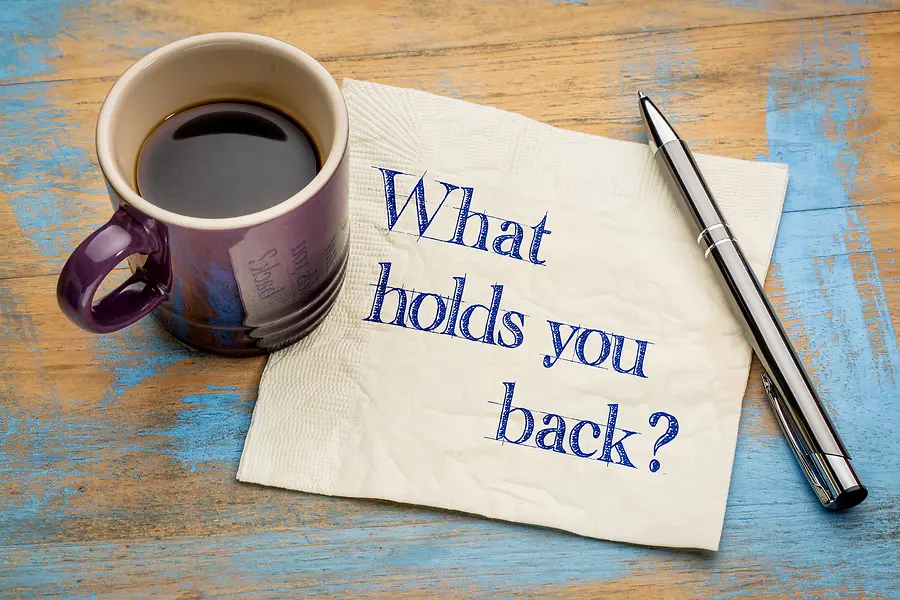
A lot of women are told the same story about leadership: be more confident, speak up more, stop second-guessing yourself, and go after bigger opportunities.
That advice is not wrong. It is just incomplete.
Because many women are not struggling from a lack of talent, ambition, or work ethic. They are struggling under the weight of habits they learned to survive—habits that made them dependable, agreeable, humble, and useful. Habits that helped them navigate rooms where they were underestimated, overlooked, or expected to prove themselves twice over.
The problem is that survival habits do not always serve leadership growth.
What gets praised early in a woman’s life and career can quietly become the very thing that limits her later: saying yes to everything, waiting to be noticed, shrinking her voice to keep the peace, confusing self-doubt with humility, and leading without boundaries until exhaustion becomes normal.
These habits are common. They are rewarded. And they are costly.
If we want more women to rise into healthy, sustainable leadership, we have to stop treating the issue as if women simply need more confidence. The deeper work is helping women recognize the patterns that have kept them accepted, overextended, and too often unseen.
Overcommitting is not the same as leading
One of the most common traps women fall into is overcommitting in the name of being helpful.
Many women are conditioned to believe that their value is tied to how much they can carry. So they become the one who fills the gaps, takes the extra call, solves the extra problem, stays late, checks in, follows up, smooths things over, and makes sure nothing falls apart.
That kind of dependability is admirable. But there is a line where being helpful turns into being consumed.
A full calendar does not always mean a woman is growing in leadership. Sometimes it means she is buried in responsibilities that leave no time to think strategically, build intentionally, or lead at the level she is capable of. She is busy, but not developing. Needed, but not advancing.
Exhaustion is not evidence of impact. Constant availability is not a measure of worth.
Leadership requires more than work ethic. It requires discernment. It requires knowing what is yours to lead, what should be delegated, and what should never have landed on your shoulders in the first place.
Waiting to be noticed keeps too many women stuck
Too many capable women are still believing that if they do excellent work, the right people will eventually notice and open the next door.
Sometimes that happens. Often, it does not.
Women are frequently taught to keep their heads down, stay humble, and let their work speak for itself. But in real leadership environments, work rarely speaks entirely on its own. Someone has to give language to the results. Someone has to connect the dots between contribution and value. Someone has to say, clearly and confidently, “Here is what I built. Here is what I solved. Here is how I can contribute at a higher level.”
That is not arrogance. It is ownership.
There is a difference between self-promotion and self-possession. One performs for attention. The other communicates value with clarity.
Women who wait to be discovered often end up watching less qualified people move ahead simply because those people are more comfortable naming their strengths out loud. That can be frustrating, but it is also a reminder: visibility matters.
A woman does not dishonor her humility by owning her impact. She strengthens her leadership when she learns how to do it well.
Silence can look like professionalism, but it comes at a cost
Many women know what it means to measure every word before speaking.
They know how to soften the truth, hedge a clear opinion, or wait until everyone else has gone first. They know how to present an idea in a way that keeps others comfortable. They know how to read the room and adjust themselves accordingly.
Again, this habit does not come from nowhere. It comes from experience. Many women have learned that being direct can be labeled as difficult, being confident can be read as threatening, and being firm can create resistance that men often do not face in the same way.
So women adapt. They become careful. They become polished. They become quieter than they should be.
But silence has a price.
When women consistently hold back their instincts, insight, and perspective, the room loses something valuable. Teams lose clarity. Decisions lose depth. And women lose confidence in their own authority.
Leadership does not require being the loudest person in the room. But it does require being present in the room. It requires a woman to stop apologizing for having substance, judgment, and a point of view.
The goal is not to become harsher. The goal is to become more honest about what you see and more willing to say it.
Self-doubt is not humility
This one matters because so many accomplished women still mistake self-doubt for virtue.
Humility says, “I am still learning.”
Self-doubt says, “I probably do not belong here.”
Those are not the same thing.
Humility leaves room for growth. Self-doubt shrinks a woman inside opportunities she has already earned. It makes her hesitate before she speaks, downplay what she knows, and question whether she is really ready even after she has produced results.
Too many women wait until they feel completely prepared before they allow themselves to lead. But leadership rarely works that way. Readiness is often built in motion. Confidence is usually strengthened through action, not before it.
The women who grow are not always the ones with the least fear. They are often the ones who stop treating fear as a final answer.
They decide that uncertainty does not erase their experience. They decide that being stretched does not mean being unqualified. They decide that they do not need to be perfect to be credible.
That shift changes everything.
A woman cannot lead sustainably without boundaries
Women are often praised for being accessible, generous, responsive, and emotionally steady. Those qualities can make them strong leaders. But without boundaries, those same qualities can become liabilities.
A woman without boundaries becomes easy to lean on and easy to drain.
She becomes the person everyone calls when there is a problem, the one who absorbs tension, the one who keeps things moving, the one who makes up for what others failed to do. And because she is capable, people assume she can keep doing it indefinitely.
She cannot.
Boundaries are not selfish. They are structure. They protect energy, focus, peace, and long-term effectiveness. They allow a woman to lead from intention instead of reaction. They keep her from rewarding dysfunction with endless labor.
Healthy leadership is not built on how available you are to everyone else. It is built on how well you protect what matters most.
A woman who leads without boundaries may look strong for a season. But eventually, she pays for it in resentment, exhaustion, and reduced capacity. Sustainable leadership requires something better.
The real shift happens when women ask different questions
Breaking these habits is not about becoming a completely different person. It is about becoming more conscious of what no longer serves you.
It starts when a woman stops asking, “How do I keep everyone comfortable?”
And starts asking, “What does leadership require from me here?”
It starts when she stops asking, “What if I am not ready?”
And starts asking, “What have I already proven?”
It starts when she stops asking, “Will someone notice?”
And starts asking, “Have I clearly communicated my value?”
It starts when she stops asking, “How much more can I carry?”
And starts asking, “What is actually mine to lead?”
That is the real work.
Leadership is not only about title or position. It is about posture. It is about how a woman sees herself, carries herself, and decides what she will no longer normalize.
When women break the habits that kept them hidden, overextended, and uncertain, they do more than grow personally. They change the environments around them. They lead with more clarity. They mentor with more honesty. They make it easier for the women coming behind them to rise without the same level of apology, overperformance, or self-erasure.
Women do not need more shallow advice. They need honest development.
Telling women to “just be more confident” is easy. But it is not enough.
Women need language for the patterns that have shaped them. They need tools to replace those patterns. They need support systems that do more than encourage them. They need mentorship, standards, and development that help them lead without losing themselves.
The strongest women leaders I know are not the ones who never wrestled with doubt. They are the ones who stopped partnering with the habits that kept them small.
They learned to speak sooner.
They learned to carry less.
They learned to own their value.
They learned to protect their energy.
They learned that leadership is not about becoming harder. It is about becoming clearer.
And once a woman becomes clear, it gets a lot harder for the world to define her limits for her.
I believe in you.
Mandy Jo


