The Leadership Capabilities Organizations Need Are Being Overlooked in Women
As we enter 2027, the opportunity is bigger than recognizing women’s potential. It is developing that potential and giving it the authority to produce results.


The next era of leadership is not just about what we achieve. It is about what we develop in the people and systems around us. Women have an extraordinary opportunity to shape that future. Not by proving we fit an existing definition of leadership, but by helping define what leadership makes possible.
That work requires leaders who navigate uncertainty, coordinate competing priorities, build trust, develop talent, and make decisions with consequences beyond themselves. Many women practice those capabilities across their professional and personal lives. As we enter 2027, the opportunity is to turn those experiences into intentional leadership practices that strengthen businesses, families, and communities. Not because women are inherently better leaders. Not because balancing more responsibilities automatically prepares someone to run an organization. But because experience provides a foundation we can deliberately build upon.
The question is how we connect what we have learned with the purpose, capabilities, relationships, resources, and systems necessary to create meaningful results. That is where Success Development enters the conversation.
The Capabilities Are Relevant. Access Is Unequal.
The World Economic Forum's Future of Jobs Report 2025 identifies analytical thinking, adaptability, leadership, and social influence among employers' most important workforce skills. Empathy, active listening, self-awareness, talent management, and lifelong learning also feature prominently.
These are not peripheral qualities. Employers identify them as capabilities their workforces need. They develop through practice: making difficult decisions, communicating across differences, responding to changing conditions, and understanding how one person's actions affect others. Paid employment provides opportunities to practice them. So do entrepreneurship, education, community leadership, and caregiving. None of those experiences guarantees leadership excellence. Each may provide evidence worth examining rather than dismissing because it developed outside a conventional management position. Yet relevant capability does not translate automatically into advancement.
McKinsey and LeanIn.Org's Women in the Workplace 2025 reports that women receive less career support and fewer opportunities to advance. It also finds that when women and men receive similar support from managers and senior colleagues, the gap in their desire for promotion falls away.
That association challenges the habit of treating ambition as an individual issue disconnected from opportunity. Asking whether a woman wants to advance tells us only part of the story. We also need to ask what support she receives, which assignments she has access to, and whether anyone with influence is helping create a path forward. Recognition matters. Development and access make recognition useful.
Experience Is a Starting Point, Not a Development Plan
There is a risk in celebrating women's ability to manage competing demands.
We may praise their capacity to carry responsibility without examining why they are carrying so much. We may call someone resourceful while leaving her under-resourced. We may recognize her ability to hold a team together while passing her over for the authority to lead it.
That is not leadership development. It is appreciation without investment.
An overloaded life is not a leadership credential. Managing a household is not identical to managing a business. Navigating conflict does not automatically mean someone has learned to resolve it constructively.
The work is more specific.
What did the experience require? What capability did the person demonstrate? Where does that capability transfer? What further knowledge, practice, or support does she need?
A woman who coordinates a complex community initiative may demonstrate planning, negotiation, and stakeholder communication. Those capabilities deserve examination. She may also need financial training, industry knowledge, or experience managing employees before taking on a particular role.
Both things deserve to be true: her experience has value, and her development deserves investment.
From Recognizing Potential to Developing Success
Throughout my work in the United States Navy, corporate leadership, entrepreneurship, and coaching, performance and accountability have mattered. Clear expectations, sound decisions, and disciplined execution remain essential to how I understand leadership. But achieving an objective and developing the capacity for lasting success are not the same thing. A leader may deliver results while keeping every important decision centralized. An entrepreneur may increase revenue while building a business that depends on her constant availability. A professional may earn a promotion that moves her further from the life she wants. The achievement is real. So is the development gap.
Success Development is my approach to addressing that gap. It connects personal purpose with the capabilities, relationships, resources, behaviors, and systems necessary to create meaningful outcomes.
It begins with three questions.
Know your WHY. What matters deeply enough to guide your decisions and sustain your commitment?
Find your North Star. What future are you working toward, and how will you recognize meaningful progress?
Develop your success. What needs to grow or change to make that future possible?
These questions help distinguish an attractive opportunity from an aligned one. They also turn development into something more concrete than encouragement. If a woman wants to lead a business unit, what experience does she need? Who will give her responsibility for consequential work? What authority accompanies that responsibility? How will progress be evaluated? Purpose gives development direction. Practice, resources, and opportunity give it traction.
Developing the Person Behind the Leader
Success Development gives the work direction. Leadership Voltage is my approach to developing the person responsible for carrying it forward.
Its central premise is straightforward:
Sustainable organizational growth starts with developing the people responsible for leading it. That development involves more than strategy or technical competence. It includes how we execute, respond under pressure, communicate expectations, build trust, and handle responsibility. A leader may understand delegation intellectually while taking back every decision when uncertainty rises. She may value accountability while avoiding a difficult conversation. She may care deeply about her team while becoming responsible for problems other people need to learn to solve. Those are development needs, not reasons to question whether she belongs in leadership. We can lead with humanity and maintain accountability. We can care about people without carrying every responsibility for them. The goal is not to remove pressure from leadership. It is to develop the judgment and practices that make effective leadership possible under pressure.
Women Have Work to Do. Organizations Do Too.
An argument about unequal access needs more than a list of ways women can improve themselves. Women have agency in their development. Organizations have responsibility for the conditions in which that development happens.
1. Recognize Capability Through Evidence
For women, this means learning to describe experience in terms of demonstrated capabilities and outcomes, not just effort. For organizations, it means examining how potential is assessed. Which behaviors count as evidence of readiness? Are comparable contributions evaluated consistently? Are relevant experiences being overlooked because they developed along a less familiar path? The aim is rigorous evaluation with a wider field of vision.
2. Pair Development With Meaningful Responsibility
Training has value. So does the opportunity to apply it. Women need access to assignments that build judgment, visibility, and operational experience. Organizations need to provide clear expectations, useful feedback, and sponsorship alongside those assignments. Responsibility also needs appropriate authority. Being accountable for an outcome while lacking the power or resources to influence it is a structural problem, not a confidence problem.
3. Develop People Rather Than Dependency
One useful measure of leadership is what happens when the leader is not in the room. Do people understand the priorities? Are decision boundaries clear? Do they have the knowledge, resources, and authority to act? For individual leaders, development means teaching, delegating, and allowing others to practice judgment. For organizations, it means rewarding leaders who build team capability, not merely those who personally rescue every situation. A team's dependence on one exceptional person is a risk to manage, not just a performance story to celebrate.
4. Measure Whether Opportunity Produces Progress
Attendance at a leadership program is an activity. Increased capability and access to meaningful work are outcomes. Organizations need to examine who receives sponsorship, consequential assignments, promotions, and decision-making authority. They also need to assess what their leaders develop: stronger judgment, clearer accountability, capable teams, and sustainable performance. Women need measures tied to their own North Star as well. A larger title may represent progress. So may greater financial stability, a more independent business, or work that better aligns with personal priorities. Development has a purpose beyond preparing someone to accept more work.
The Opportunity in 2027
The calendar turning to 2027 will not resolve these issues. Organizational choices will. The capabilities employers identify as essential give us a reason to examine where talent is being missed. The evidence on career support gives us a reason to question explanations that place the burden entirely on women's ambition. Success Development offers a way to connect that examination with purposeful action. This is not an invitation to idealize women or expect every woman to lead the same way. Women bring different experiences, ambitions, strengths, and development needs. It is an invitation to take their capabilities seriously enough to invest in them.
The next era of leadership needs people who deliver results and develop the capacity for those results to continue. Women have a significant role in shaping that future. Organizations have a role in making that leadership possible. The opportunity is not to ask women to carry more. It is to recognize what they bring, invest in what they need, and give their leadership room to produce results.
Know your WHY. Find your North Star. Develop your success. Then help someone else develop theirs.
About the Author
Danielle Joleigh Bennett is a retired U.S. Navy Supply Corps officer, entrepreneur, author, speaker, and leadership and success coach. She is the founder of Radiant Legacy Collective, Inc. and Voltage Brands LLC, a Success Development Company. Her work connects personal growth, leadership capability, organizational effectiveness, and meaningful outcomes through Leadership Voltage, Triadic Balance, and the philosophy of Soft Power for Hard Systems.
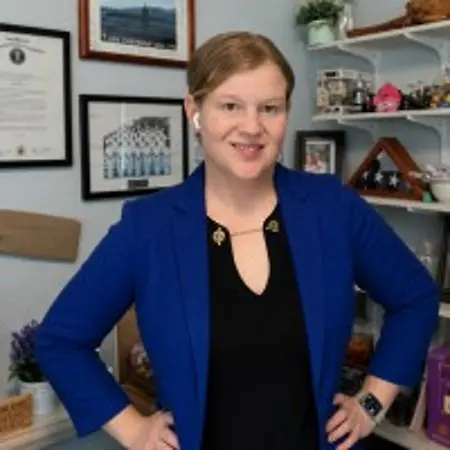
Danielle Joleigh Bennett is a U.S. Navy Veteran, PMP-certified program leader, and Founder of Radiant Legacy Collective, Inc. She serves as a Senior Program Leader in aerospace and defense, managing multimillion-dollar initiatives while consulting on leadership transformation and business strategy. Bennett balances her demanding executive career with raising four children and coaching, using disciplined time…