
The Missing Years
Extending Trauma-Informed Support Beyond Elementary School to Transform Secondary Education

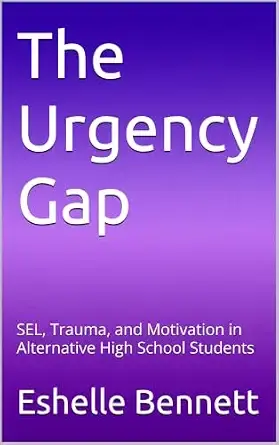
The Missing Years: Why Trauma-Informed Care Can't Stop at Elementary School
By Eshelle Bennett, MS Psychology
When we talk about trauma-informed education, the conversation almost always begins with young children.
We celebrate elementary schools that have embraced social-emotional learning, restorative practices, mindfulness activities, and relationship-centered approaches. We recognize the importance of helping children identify emotions, regulate behavior, and build healthy connections with others. And rightfully so. But there is a question we rarely ask: What happens when those children grow up?
Somewhere between elementary school and high school graduation, many of the supports designed to help students navigate adversity begin to disappear. The focus shifts toward academic performance, graduation requirements, testing benchmarks, college planning, and career readiness. While these priorities matter, they often leave little room for an uncomfortable truth: Trauma does not disappear when a student enters ninth grade. In many cases, that is precisely when its effects become most visible.
As an educator, education consultant, and founder of EB Consulting, I have worked with students from many different backgrounds and life circumstances. I have met remarkable young people who are balancing school with jobs, family responsibilities, mental health challenges, housing instability, and experiences most adults would struggle to navigate.
What I have learned is simple. Many of our students carry far more than backpacks. Yet we continue to design systems that expect them to perform as though those burdens do not exist.
The Independence Myth
One of the biggest misconceptions we have about teenagers is that growing older means needing less support. By high school, students are expected to be independent. They move between multiple classrooms. They manage increasingly demanding schedules. They are encouraged to take responsibility for their own future.
At the same time, many adults assume that because adolescents appear more mature, they require less emotional support than younger children. I believe the opposite is often true. Teenagers may be taller, older, and more capable of masking their struggles, but that does not mean those struggles have gone away. The student who never asks for help may not be self-sufficient. The student who is frequently absent may not be disengaged. The student who sleeps through first period may not be unmotivated. Sometimes, what we label as poor behavior is a response to circumstances we have not taken the time to understand.
Trauma often speaks through actions before it speaks through words. The problem is that many educational systems have become experts at measuring performance while struggling to understand what is happening beneath it.
The Gap We Don't Talk About
For years, schools have invested significant time and resources into helping younger students develop social-emotional skills. Elementary classrooms commonly incorporate lessons focused on emotional awareness, self-regulation, conflict resolution, and relationship building. These are valuable investments. But as students grow older, those structured supports become less common. Not because educators stop caring. Not because schools stop trying. But because secondary education presents challenges that make relationship-centered support more difficult to provide.
An elementary teacher may spend an entire day with one group of students, developing deep knowledge of their personalities, needs, and challenges. A high school teacher may interact with more than 150 students throughout the course of a day. Students move from classroom to classroom. Time is segmented into periods. Academic demands increase. Opportunities for meaningful connection become harder to create. The result is a gap that too often goes unnoticed. Students may need emotional support more than ever, yet have fewer opportunities to receive it.
What If We Have It Backwards?
For decades, educational conversations have focused heavily on preparing students for the future. We talk about college readiness, career readiness, workforce readiness, and life readiness. But readiness is difficult to achieve when students are operating in survival mode. A young person who is dealing with anxiety, instability, grief, trauma, or chronic stress cannot simply switch those experiences off during algebra, English, or history. Learning and well-being are not separate conversations. They are deeply connected. If we want students to thrive academically, we must also create conditions where they can thrive emotionally. This is not about lowering expectations. It is about recognizing reality. High expectations and high support should coexist. In fact, they must.
Seeing Students Differently
One of the most powerful shifts trauma-informed education offers is a change in perspective. Instead of asking, "What's wrong with this student?" we begin asking, "What might this student be experiencing?" That single shift moves us away from judgment and toward understanding. It encourages curiosity instead of assumptions. Connection instead of correction. Partnership instead of punishment. When students feel understood, they are more likely to engage. When they feel connected, they are more likely to persist. When they feel seen, they are more likely to believe they belong. These outcomes cannot be measured by test scores alone, but they are often the foundation upon which every other success is built.
Why Family Engagement Matters
This conversation cannot stop at school doors. As someone who works closely with families through postsecondary planning and student support initiatives, I have seen firsthand how critical parent and caregiver engagement remains during the teenage years. Ironically, this is often when family engagement begins to decline. Many schools have strong parent engagement efforts in elementary education but fewer opportunities for meaningful collaboration in high school. Yet parents are still one of the most influential factors in a student's life. When schools and families work together, students benefit from stronger support systems, greater consistency, and deeper connections. Trauma-informed care is not solely the responsibility of teachers or counselors. It requires partnerships. It requires community. And it requires a shared commitment to seeing the whole child, regardless of age.
A Leadership Challenge for Education
The future of education depends on more than academic innovation. It depends on our willingness to address what students need most. As leaders, educators, parents, and advocates, we must ask ourselves whether the systems we have built truly reflect what we know about adolescent development and human resilience. If trauma-informed care is valuable in kindergarten, why would it become less important in tenth grade? If relationships matter for an eight-year-old, why would they matter less for a sixteen-year-old? And if belonging helps children succeed, why wouldn't it help adolescents do the same? These questions deserve more than discussion. They deserve action.
The Missing Years
The young people sitting in high school classrooms today are preparing for adulthood in a world filled with unprecedented challenges and uncertainty. Many are resilient beyond measure. Many are carrying burdens we may never fully understand. All of them deserve educational environments that recognize their humanity alongside their academic potential. Trauma does not expire when students become teenagers. The need for connection does not disappear. The need to feel seen, supported, and understood does not end. If we are truly committed to student success, we must stop viewing trauma-informed care as an elementary school initiative and start embracing it as a lifelong educational responsibility. Because the years between childhood and graduation are not the years when support should fade. They may be the years when it matters most.
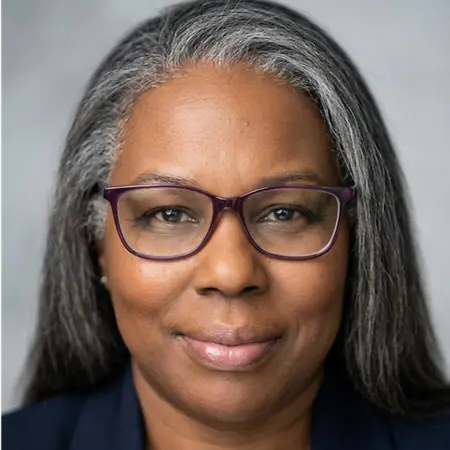
Eshelle Bennett is an educator, life coach, and author with 25 years of experience supporting at-risk youth in Las Vegas. As founder of EBConsulting and graduate advocate at Acceleration Academy, she helps students overcome barriers and achieve academic goals. Bennett authored two books on student success and holds degrees in Criminal Justice and Psychology. Her philosophy emphasizes empathy, self-efficacy, and…





