The New Face of Humanitarian Leadership: How Women Are Building Peace, Advancing Human Rights, and Transforming the World
How women leaders are reshaping global humanitarian action and building a more just, peaceful world.

The Future of Humanitarian Leadership Will Be Defined by Women
The future of humanitarian leadership will not be determined solely by the resources we mobilize, the policies we draft, or the institutions we build. It will be determined by the leaders we empower.
Across every continent, women are reshaping how the world responds to conflict, humanitarian crises, forced displacement, climate disasters, public health emergencies, and sustainable development. They are no longer confined to the margins of humanitarian action; they are increasingly leading it—from negotiating peace agreements and directing emergency operations to influencing global policy, rebuilding fractured communities, and defending the fundamental rights and dignity of those most at risk.
This transformation represents one of the most significant shifts in twenty-first-century leadership.
For generations, women were too often portrayed as the recipients of humanitarian assistance—the displaced mother, the survivor of conflict, the caregiver navigating crisis, or the silent victim of war. While these realities remain for millions, they no longer define women's place within the humanitarian landscape.
Today, women are not simply participating in humanitarian action; they are defining its future.
Around the world, their leadership is transforming communities, influencing public policy, advancing peace negotiations, responding to humanitarian emergencies, and challenging the systems that perpetuate inequality and conflict.
Women as Architects of Peace
In Liberia, the extraordinary leadership of Leymah Gbowee united Christian and Muslim women in a nonviolent movement that helped bring an end to years of devastating civil war. Their courage demonstrated that women are not merely advocates for peace; they are architects of peace itself.
In Pakistan, Malala Yousafzai transformed a personal tragedy into a global campaign for girls' education, reinforcing the principle that education is not only a fundamental human right but also one of the most powerful instruments for preventing conflict and breaking cycles of poverty.
In New Zealand, former Prime Minister Jacinda Ardern demonstrated that compassion, transparency, and decisive leadership are not competing values but complementary strengths. Her response to national crises became an international example of governance rooted in empathy, inclusion, and human dignity.
Across Africa, women continue to mediate local conflicts, rebuild livelihoods after war, strengthen food security, protect vulnerable families, and restore fractured communities in countries including Rwanda, Sierra Leone, South Sudan, and the Democratic Republic of the Congo. Long before international agencies arrive—and long after they depart—women often remain the enduring foundation of recovery.
Within the global humanitarian system, women serving through the United Nations High Commissioner for Refugees, the United Nations Entity for Gender Equality and the Empowerment of Women, the International Committee of the Red Cross, and countless civil society organizations continue to lead refugee protection, emergency response, peacebuilding, public health interventions, and efforts to protect women and children affected by conflict and displacement.
These international examples remind us that humanitarian leadership is no longer confined to governments or multilateral institutions. Increasingly, transformative leadership is emerging from community-based organizations that combine diplomacy, sustainable development, education, and local partnerships to create lasting impact.
Community-Based Humanitarian Leadership
One such example is the work of the Harmony for Humanity Foundation, Inc. Operating across Africa, the Caribbean, and the wider global diaspora, the Foundation has embraced a model of humanitarian leadership that moves beyond emergency relief toward sustainable community transformation.
Its initiatives include expanding educational opportunities and scholarships, supporting women and youth empowerment, promoting clean water and sanitation, strengthening community resilience, advancing human rights advocacy, and fostering peacebuilding through international partnerships and cultural diplomacy.
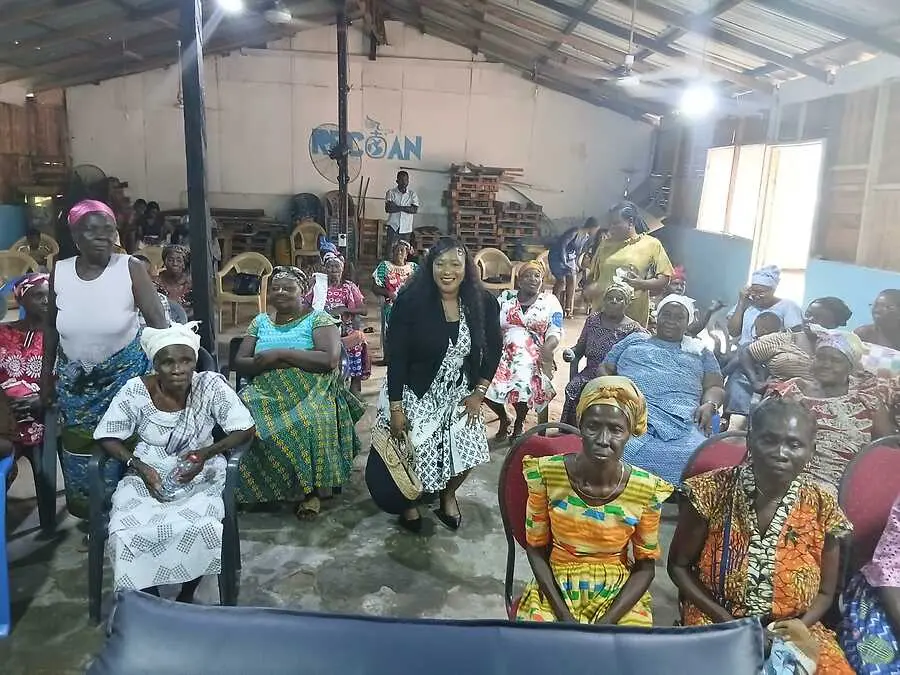
In Ghana, for example, the Foundation has worked alongside traditional authorities, educational institutions, community leaders, and humanitarian partners to advance initiatives focused on educational access, women's empowerment, clean water, skills development, and community resilience. Its humanitarian philosophy reflects a growing international understanding that sustainable peace is achieved not solely through aid, but through empowering communities to become active participants in their own development.
The Foundation's regional partnerships in response to humanitarian emergencies, including collaborative relief efforts supporting communities in Jamaica following Hurricane Melissa, further illustrate how governments, civil society, faith-based organizations, and private-sector partners can work collectively to restore dignity and hope during times of crisis. These examples represent only a fraction of a much broader global movement.
Reshaping Leadership at Every Level
From humanitarian workers serving in conflict zones to diplomats negotiating peace accords; from educators rebuilding schools after disasters to physicians responding to epidemics; from grassroots organizers defending Indigenous rights to parliamentarians advancing legislative reform, women are reshaping humanitarian leadership at every level.
What distinguishes many of these leaders is not simply representation. It is their approach to leadership.
Women frequently lead through collaboration rather than confrontation.
They prioritize dialogue over division. They understand that recovery is measured not only by rebuilt infrastructure but also by restored trust, renewed opportunity, and strengthened human dignity.
Their leadership reflects empathy, resilience, strategic thinking, emotional intelligence, innovation, and an unwavering commitment to inclusive decision-making. These are not "soft skills." They are strategic competencies essential for navigating the increasingly interconnected humanitarian challenges of the twenty-first century.
The Case for Women's Inclusion
Communities recover more effectively when women participate in disaster preparedness and emergency response. Peace agreements are more durable when women are meaningfully engaged in negotiations.
Governance becomes more responsive when women help shape public policy. Development becomes more equitable when women influence economic and social transformation.
The inclusion of women is therefore not simply a matter of equality. It is a matter of effectiveness. It is a matter of sustainable development. It is a matter of peace.
The world cannot afford to overlook half of its leadership potential while confronting armed conflict, forced displacement, climate change, democratic fragility, public health emergencies, and widening inequality.
Investing in Women's Leadership
Investing in women is not symbolic. It is one of the wisest humanitarian, economic, and peacebuilding investments any nation can make.
Every investment in a girl's education strengthens future generations.
Every investment in a woman's economic empowerment strengthens communities.
Every investment in women's leadership strengthens democratic governance.
And every investment in women as peacebuilders strengthens the foundations of a more just, resilient, and peaceful world.
The future of humanitarian leadership will not be defined solely by the crises we confront.
It will be defined by the leaders we choose to empower.
Women are not simply transforming humanitarian leadership.
They are transforming the future of humanity.


