
The Power of a Well-Placed No
How learning to say no to impressive opportunities became the key to building the life and business I truly wanted.

Years ago, I was offered an opportunity that seemed almost too good to pass up.
I was invited to submit a proposal to provide floral services for a cruise line.
Imagine that for a moment. A small business owner with the possibility of landing a prestigious account that could elevate her company's visibility and potentially open doors to an entirely new level of business.
I was over the moon.
It was big. It was exciting. And, quite frankly, it was impressive.
Until I began looking beyond the excitement.
The more I examined what the commitment would require, the more I realized that this wasn't simply another account. It would essentially become a full-time job.
At the time, I was already running Eden Florist full-time and beginning to build my marketing company. Accepting the opportunity would mean expanding my business in a direction that would demand enormous amounts of time, energy, and attention.
And suddenly, the opportunity that had looked so attractive began looking very different.
I had a decision to make.
Did I want the prestige of a bigger business, or the freedom to build the kind of future I envisioned?
I said no.
And looking back, it was one of the best business decisions I ever made.
The Pressure to Say Yes
As women, many of us have been encouraged to be accommodating, helpful, dependable, and available.
We're often praised for how much we can manage, how many responsibilities we can juggle, and how willingly we step forward when someone needs us.
Those qualities can serve us well. They help us build relationships, earn trust, and create opportunities.
But they can also become traps.
Somewhere along the way, saying yes can become an automatic response rather than a conscious decision. Yes to another committee. Yes to another client. Yes to another project. Yes to an invitation that sounds wonderful but requires time we don't really have. And sometimes, yes to something simply because we're afraid the opportunity won't come around again.
I've come to believe that one of the most important skills a woman can develop, personally and professionally, is the ability to recognize when a gracious, confident no is the better answer. Not every invitation deserves our acceptance. Not every opportunity deserves our investment.
And not every open door leads somewhere we actually want to go.
Bigger Isn't Always Better
In business, we tend to celebrate growth.
More customers. More employees. More revenue. More locations. More recognition.
There's nothing inherently wrong with any of those things. But growth without intention can create problems that success alone won't solve.
A larger account may require additional staffing, equipment, inventory, and overhead. A prestigious client may demand more attention than the relationship can profitably support. An exciting expansion may leave little time for family, creativity, or other professional interests.
The numbers may look impressive while the quality of our lives moves in the opposite direction. That's why I believe every entrepreneur should periodically ask herself a question:
Am I building a bigger business, or am I building a better business for the life I want to live?
Those aren't always the same thing.
When I considered that cruise line opportunity, I realized that accepting it would mean committing myself to a direction that didn't align with my broader ambitions. I wasn't afraid of working hard. I had already spent years doing exactly that. But I was beginning to understand that working harder wasn't necessarily the same as moving closer to my goals.
Growth, for me, has always been about alignment, not simply expansion.
The Opportunities We Cannot Yet See
Here's the interesting part of my cruise line story. Not long after I declined the opportunity, other doors began opening.
Opportunities emerged that I would have had to turn down if I'd committed myself to fulfilling that large floral contract. Those experiences eventually helped shape the direction of my career, taking me into marketing, publishing, professional leadership, writing, and collaborations I couldn't have anticipated at the time.
Would those opportunities have appeared if I'd accepted the contract?
Possibly.
Would I have had the time and flexibility to pursue them?
Probably not.
Of course, I didn't know any of that when I made my decision. There was no guarantee that something better would come along. I simply knew that the opportunity in front of me, however impressive, wasn't the right fit for the future I wanted to create.
And that's an important distinction.
Sometimes we must trust our judgment before we have the evidence that proves we were right.
Letting Go of Other People's Definitions of Success
One of the most liberating realizations in my entrepreneurial journey has been understanding that success doesn't have to look the same for everyone.
For one woman, success may mean building a multimillion-dollar company with hundreds of employees. For another, it may mean running a profitable business that allows her to spend afternoons with her children or grandchildren. For someone else, it may mean leaving a corporate career to pursue writing, teaching, consulting, or a long-delayed dream.
None of these definitions is inherently more valuable than another.
The trouble begins when we measure our accomplishments against someone else's expectations.
We may accept responsibilities because they look impressive on a résumé. Pursue clients because their names carry prestige. Remain in positions because leaving might be interpreted as a step backward.
But what if stepping away is actually a step forward?
What if declining an opportunity is an expression of confidence rather than insecurity?
What if success means having the freedom to choose?
I've learned that we don't have to accept every opportunity to prove we're capable of handling it. Sometimes knowing we could do something is enough.
Ancient Wisdom for Modern Women
I find it fascinating that some of our most relevant leadership lessons come from philosophies that are thousands of years old.
The ancient Taoist tradition uses water as a metaphor for strength through flexibility. Water doesn't insist on following a single path. It adapts to the landscape while continuing its journey. That image has stayed with me.
So often, we become attached to the idea that success must follow a particular route. We establish goals, create plans, and envision exactly how things should unfold.
And when an unexpected opportunity appears, we may feel compelled to take it simply because it looks like progress.
But progress isn't always about moving faster or carrying more. Sometimes it's about changing direction.
The ancient Greek concept of kairos, the opportune or fitting moment, offers another useful perspective. Timing matters. An opportunity can be attractive, profitable, and prestigious—and still not be right for us at a particular moment.
Learning to recognize that distinction is part of developing confidence in our own judgment. And perhaps that's one of the gifts of experience: realizing that we don't have to chase every possibility simply because it's within reach.
The Freedom to Choose What Matters
Over the years, I've worn many hats: entrepreneur, business owner, publisher, author, mentor, and organizational leader. Each role has brought its own rewards and responsibilities. And each has required decisions about where to invest my time and energy.
I've learned that saying no isn't necessarily about rejecting an opportunity or the person presenting it.
It's about protecting the commitments that matter most. It's about recognizing that our time, attention, creativity, and energy are finite resources.
And it's about understanding that every yes carries a cost, even when that cost isn't immediately apparent.
Sometimes that cost is financial.
Sometimes it's the loss of flexibility.
Sometimes it's an opportunity we haven't even imagined yet.
This doesn't mean we should become so cautious that we stop taking chances. Some of the most rewarding experiences of my life began with an unexpected invitation and a willingness to say yes. The key is learning to distinguish between opportunities that expand our possibilities and those that simply expand our obligations.
Five Questions Before Your Next Big Yes
The next time an exciting opportunity comes your way, consider asking yourself:
- Does this opportunity align with my long-term vision? Not just where I am today, but where I want to be tomorrow.
- What will saying yes require me to say no to? Every commitment consumes time, energy, and resources that could be directed elsewhere.
- Am I attracted to the opportunity itself or the recognition that comes with it? Prestige can be appealing, but it doesn't always translate into meaningful success.
- Will this create greater freedom or greater obligation? Neither answer is automatically wrong, but it's important to understand the trade-off.
- If nobody else knew about this opportunity, would I still want it? Sometimes removing the influence of outside approval reveals what we truly value.
These questions won't eliminate every difficult decision. But they can help us make choices based on intention rather than pressure, excitement, or fear of missing out.
The Power of Choosing Your Own Path
When I think back to that cruise line opportunity, I don't feel regret. I feel gratitude. Gratitude that I took the time to look beyond the prestige of the account. Gratitude that I recognized the commitment it would require. And gratitude that I trusted myself enough to decline something that, on the surface, looked like a tremendous success.
That decision didn't make my business less successful. It helped preserve the freedom to pursue a different kind of success.
And the opportunities that followed became part of a journey I wouldn't trade.
If there's one lesson I'd share with women building businesses, leading organizations, or considering the next chapter of their careers, it's this:
You don't have to pursue every opportunity to become everything you're capable of being. You don't have to build the biggest company, accept every invitation, or meet someone else's definition of achievement. You get to decide what success means to you.
And sometimes the most empowering decision you'll ever make is a simple, thoughtful, well-placed no. Because the right no doesn't close the door on your future.
It leaves you free to open the doors that matter most.
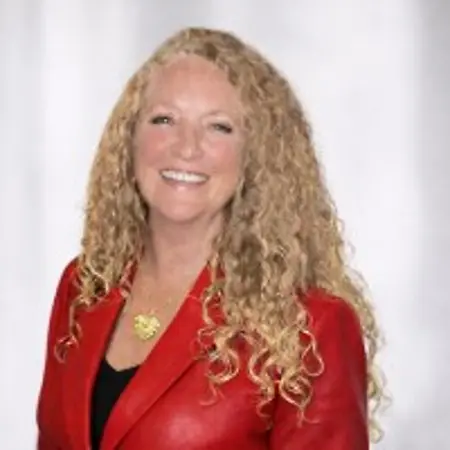
Founder & CEO of Redhead Marketing, Inc., a South Florida–based web design and social media marketing firm helping businesses build powerful online brands since 2005. Also President & CEO of Eden Florist & Gift Baskets, a multi-award-winning floral and event company serving South Florida for over four decades. Founder of Women in Ecommerce and Publisher of WE Magazine for Women, championing women entrepreneurs…





