The Power of Connection: Rethinking What Drives Success
Why strategic relationships - not individual effort - are the true engine of leadership and influence

The Power of Connection: Rethinking What Drives Success
I didn’t expect one of my most important leadership reflections this week to start with myself.
In my work as an Educator Associate at the Delaware Department of Education, supporting educator evaluation systems, I’ve always leaned into my strengths—clarity, structure, and a deep commitment to improving practice.
But recently, I recognized something else.
At times, I was relying too heavily on doing the work independently.
Not because I had to—
but because it felt natural.
That realization challenged me.
It pushed me to be more intentional—
to reach out more strategically, collaborate more deliberately, and leverage the expertise around me in ways that strengthen the work.
One small but important shift was reaching out to a colleague from another workgroup within the Department to help facilitate a project I am currently leading—not out of uncertainty, but out of a commitment to making the work stronger through shared thinking.
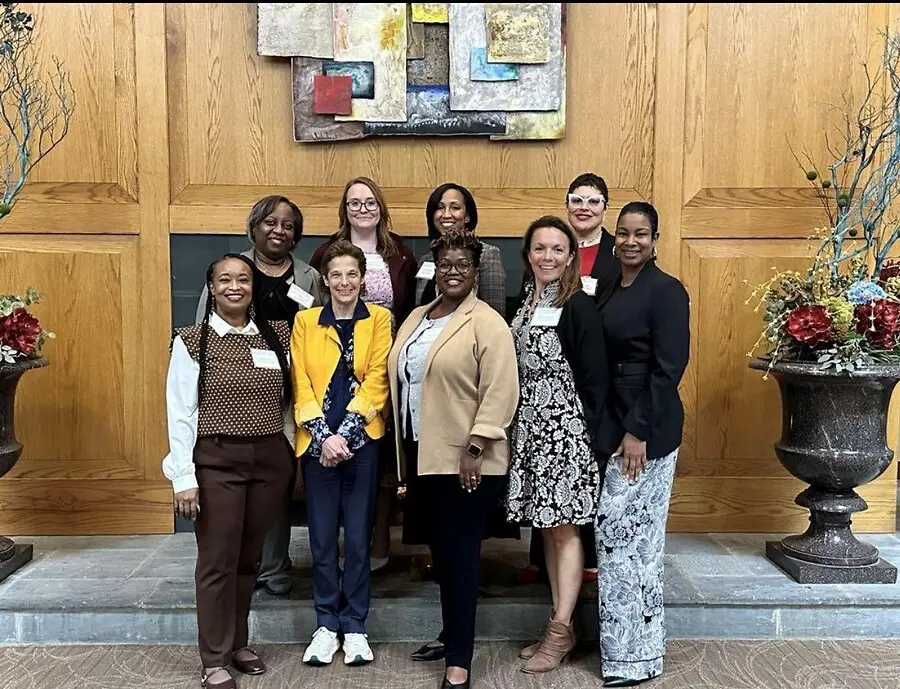
That’s when this week’s experience at a women’s conference with my team landed differently.
Because the message I heard there didn’t feel new—
it felt like confirmation.
Success is not built through working harder.
And it is certainly not built through working alone.
It is built through human connection.
Keynote speaker Julia Korn offered a powerful reframe:
The most successful individuals are not those who do the most in isolation, but those who are most intentional about the relationships they build.
She challenged us to think about our own personal Board of Directors—a concept that shifts how we view leadership and growth:
- A mentor who provides guidance and perspective
- A connector who creates access and opportunity
- A sponsor who advocates for and elevates your work
- A friend who offers grounding, honesty, and support
This framework resonated deeply because it names something many leaders experience but don’t always articulate:
No one succeeds alone.
From Independence to Interdependence
In leadership, there is often an unspoken expectation to be self-sufficient—to carry the weight, solve problems, and have the answers.
But true influence does not come from independence.
It comes from interdependence.
The leaders who make the greatest impact are those who understand how to:
- Leverage relationships with intention
- Seek diverse perspectives
- Build networks rooted in trust and mutual growth
This is not a soft skill—it is a strategic one.
A Question Worth Asking
I left the conference with a question that continues to stay with me:
Who is on my Board of Directors—and how intentional am I about building those relationships?
Not just who is already present,
but who is missing.
And perhaps more importantly:
Where am I serving on someone else’s board?
Because influence is not only about who supports us—
it is also about how we show up for others.
Implications for Leadership
In my work supporting leaders, this message reinforced something I see every day:
Systems and structures matter—but they are only as strong as the relationships that sustain them.
Whether it is coaching, feedback, or instructional leadership, growth happens through:
- Dialogue
- Trust
- Shared understanding
- Collective commitment
Leadership, at its core, is relational.
A Call to Lead Differently
As leaders, we have an opportunity—and a responsibility—to move beyond the idea that success is an individual pursuit.
Instead, we can lead in a way that is:
- Connected rather than isolated
- Strategic rather than reactive
- Collective rather than individual
Because when we build strong, intentional networks,
we don’t just elevate ourselves—
we elevate everyone around us.
Who is on your Board of Directors?
And how are you intentionally building the relationships that will shape your impact?


