The Pressure of Having No Room to Fall Apart
Recognizing that true strength includes vulnerability and the courage to ask for help.

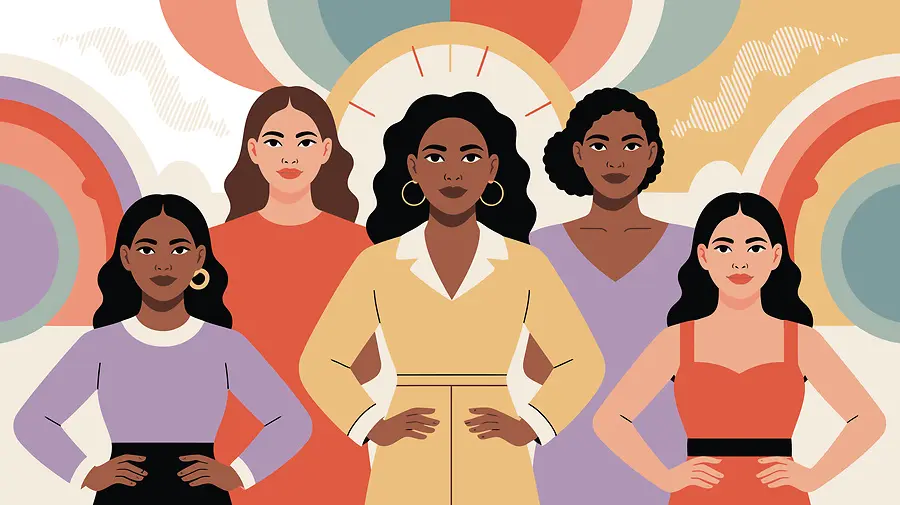
There is a compliment many women receive that does not always feel like a compliment.
"You are so strong."
The words are usually spoken with admiration. They are intended to recognize resilience, perseverance, and courage. Yet for some women, those words carry a hidden implication.
Strong women are expected to remain strong.
The expectation often develops gradually. A woman successfully navigates a difficult season. She handles a crisis. She supports others through hardship. She continues showing up when circumstances would have given her every reason to step away.
People notice.
They begin relying on her stability.
Trusting her judgment.
Seeking her perspective.
Depending on her strength.
What they may not realize is that strength does not eliminate struggle. It simply makes struggle less visible.
Many women become so accustomed to carrying responsibilities that others stop asking whether the load has become too heavy. The woman who always has an answer is assumed to be fine. The woman who supports everyone else is assumed to have support herself. The woman who remains composed during difficult moments is often assumed to be unaffected by them.
Those assumptions are understandable. But they are not always accurate.
The truth is that strength and exhaustion can exist at the same time.
Strength and uncertainty can exist at the same time.
Strength and heartbreak can exist at the same time.
Some of the strongest women are carrying burdens nobody knows about.
They continue meeting deadlines while managing personal challenges.
They continue encouraging others while quietly battling discouragement themselves.
They continue providing stability while longing for a safe place of their own.
This is where the pressure begins. Not the pressure of responsibility alone, but the pressure of feeling as though there is no room to fall apart.
No room to be uncertain.
No room to need help.
No room to admit that carrying everything has become difficult.
For many women, this pressure is not created by others alone. Sometimes it comes from within. They have spent so many years being dependable that vulnerability feels unfamiliar. They have become so accustomed to solving problems that asking for help feels uncomfortable. They have spent so much time carrying others that they struggle to imagine what it would look like to set some of the weight down.
Yet strength was never intended to mean carrying everything alone.
True strength recognizes limits.
True strength acknowledges needs.
True strength understands that resilience is not the absence of struggle; it is the ability to navigate struggle honestly and courageously.
Perhaps one of the greatest misconceptions about strong women is that they never need support. In reality, the strongest women often benefit most from environments where they can be honest, vulnerable, and fully human. They need relationships that allow them to receive encouragement rather than constantly providing it. They need places where they can rest without feeling guilty for doing so.
Because strength is not an unlimited resource. It must be renewed, protected, and replenished.
The women who sustain their strength over time understand this. They recognize that caring for themselves is not selfish; it is necessary. They understand that continuing to pour into others requires moments of restoration, reflection, and renewal.
And perhaps that is the lesson many strong women need to hear most:
You do not have to earn the right to be human.
You do not have to carry every burden alone.
You do not have to prove your strength by pretending you never struggle.
The strongest women are not the ones who never fall apart. They are the ones who understand that even strength needs support.
Because behind many capable, dependable, and resilient women is a simple truth that often goes unspoken:
Being strong does not mean never needing someone to be strong for you.


