
The Pros and Cons of Offset vs POD Printing
Offset vs. Print-on-Demand: Which Printing Option is Right for Your Self-Published Book?

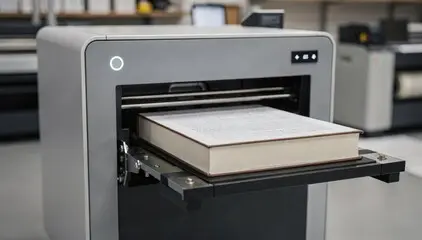
Every Friday afternoon at 2:30 p.m. (CST for me), I spend an hour on Zoom with several children's authors discussing our wins for the week, marketing ideas, places where we can have plushies created for our books, social media questions, and the best places to print children's books other than IngramSpark. The group, Children's Authors Unite, is encouraging and uplifting. Thanks to Francine Juhlin for creating a space where self-published children's authors can come together and collaborate without a hidden agenda. It really is a community that has helped many of us in the group take bigger steps in our own businesses, and Friday's meeting was no exception.
Anyhow, I jumped on the call a few minutes late, catching bits and pieces of a conversation. I had no idea what was being discussed, so I asked for a recap.
A couple of authors were discussing a common topic that many struggle to find information about and understand: printing. It's a topic that gets discussed frequently, but not always in the right way.
So, let me break it down for you.
When it comes to self-publishing your book, there are two print options: print-on-demand (POD) and offset printing, and both options have pros and cons.
I'm going to share with you the pros and cons of each printing service so you can make the best decision for your book and your wallet.
Now, you're probably wondering why I'm even qualified to discuss this topic with you, and I can assure you that I have more knowledge and experience than you can put a price tag on. Let me give you a brief background on my experience first. It might help clarify a few things.
In college, I took a course called Graphic Production, and the instructor had started working in the printing industry in the late 1960s. He taught us how to properly build the mechanical files the printer would need to print our work and avoid printing issues. That education helped me land employment through over 10 temp agencies in Los Angeles, CA, securing production artist assignments at Belkin, Disney, NBCUniversal, UCLA, and more. I also worked for three print shops and went on several press runs for my own clients' projects. I was also the most sought-after production artist in L.A. because of how quickly and efficiently I completed projects on time with no printing issues. I also have over 25 years of experience in graphic design and prepress production. I never missed a client's deadline, and my clients' print projects were always top-tier.
Anyhow, let me share with you the pros and cons of offset printing when it comes to self-publishing.
Offset printing, by far, has the best print quality for books and is the most cost-effective option if you order a large quantity. The more books you print, the lower the price per book will be.
Offset Pros:
- Best print quality that's consistent
- Cost per book goes down depending on the quantity you order
- You can add a dust jacket (hardcovers only)
- Embossing, foil, and end sheet designs can be added
- You can create a custom book size
- Some printers will send you an email proof, while others will send you a print-on-demand (POD) proof of your book so you can review how it will look before it goes on the press
- Will print softcover (paperback), casebound (hardcover), board books, spiral-bound notebooks, and so much more
- Consistent print quality
- Great customer service and support
Offset Cons:
- Almost all offset printers require a minimum order of 500 copies; some will only accept a minimum order of 1,000
- The upfront cost to print is significantly higher, but the cost per book is much lower (depending on your print quantity, your book can cost as little as less than $3.00 per book)
- Storage and distribution capabilities may or may not be available (some offset printers do offer storage and distribution, but for additional fees on top of printing costs)
- If the printer does not offer storage or distribution, you have two options: store your books yourself (either at home or in a climate-controlled storage unit) or ship them to Amazon and have Amazon fulfill the orders (this only works if you don't have a website and rely only on Amazon sales—you can either fulfill the orders yourself or have Amazon fulfill them for you)
Most self-published authors don't have the money or storage capabilities for offset printing, which makes print-on-demand (POD) a more viable and cost-effective option. Companies like IngramSpark, Barnes & Noble, Amazon, Lulu, BookBaby, BookVault, Acutrack, 48 Hour Print, Lakeside Press, and more offer several options authors can use to print their books. However, there are a few hurdles.
POD Pros:
- Most POD printers will print one copy; some may require a minimum of 10 copies (48 Hour Print requires a minimum of 10 copies)
- Cost per book can be expensive (I priced out my book, Stacy Learns to Love Her Wavy Hair, and You Can Too!, with Lulu, BookBaby, and 48 Hour Print, and the cost per book with Lulu was over $20, and I'd have to resize my book!)
- Color, paper stock, and quality can suffer (depending on the printer)
- Inconsistent printing (IngramSpark is well-known for inconsistent print quality because it is not a printing facility. It is a third-party vendor and will send your book to another printer. Sometimes your order will be split between multiple printers, which is why the color may look completely different between two copies.)
- Printing errors (IngramSpark has inserted interior pages upside down or placed another author's book inside)
- Inconsistent shipping (Amazon has been known to ship multiple books to the same person in multiple packages instead of using one box—most likely because it was cheaper to send each book separately)
- Storage and distribution vary by printer (most POD printers will print and ship directly to you, your customers, or stores; IngramSpark is the dominant option for offering POD and distribution to bookstores and retailers, including listing on Amazon, Barnes & Noble, and Walmart. The drawback is inconsistent print quality, which you have no control over.)
- Little to no customer service support
So, before you even write your book, you need to decide what's more important to you: quality vs. price and distribution vs. storage. Then you can start comparing print quotes and see which option is best for you. It's much easier to decide where you will print your book and how you plan to distribute it before you even write it.
Your turn: Make your own pros and cons list. If you have more questions about printing or just want some feedback on several print options before you make a final decision, book a 30-minute call with me. I'd be more than happy to answer all your questions, and I may even have a printer recommendation to share.
Free for you: Ready to take the next step? Grab my free Self-Publisher’s Checklist and use it to take away all the guesswork when it comes to the order and steps for completing your book, from conception to the final product.
Get Self-Publisher’s Checklist
Every book has a story. Yours is still being written.
Until next time,
Stacy
P.S. If you found this article helpful and know someone who would benefit from reading it, please share it with them.
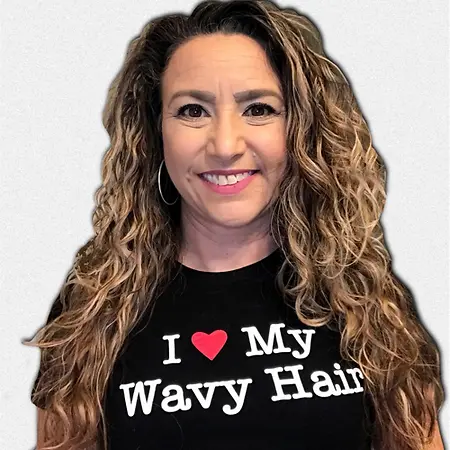
Stacy Schilling is an author and entrepreneur from Bowling Green, Kentucky with 25+ years in graphic design. She founded The Frizz Girls, promoting hair care positivity and natural wavy hair acceptance. Schilling authored children's books encouraging self-acceptance and combines her design expertise with creative initiatives promoting self-love and confidence in young readers.





