The Women Raising Tomorrow’s Innovators: Why Supporting Neurodivergent Children Is a Leadership and Mental Health Imperative.
How Women Leaders Are Unlocking the Hidden Potential of Neurodivergent Children and Reshaping the Future of Work

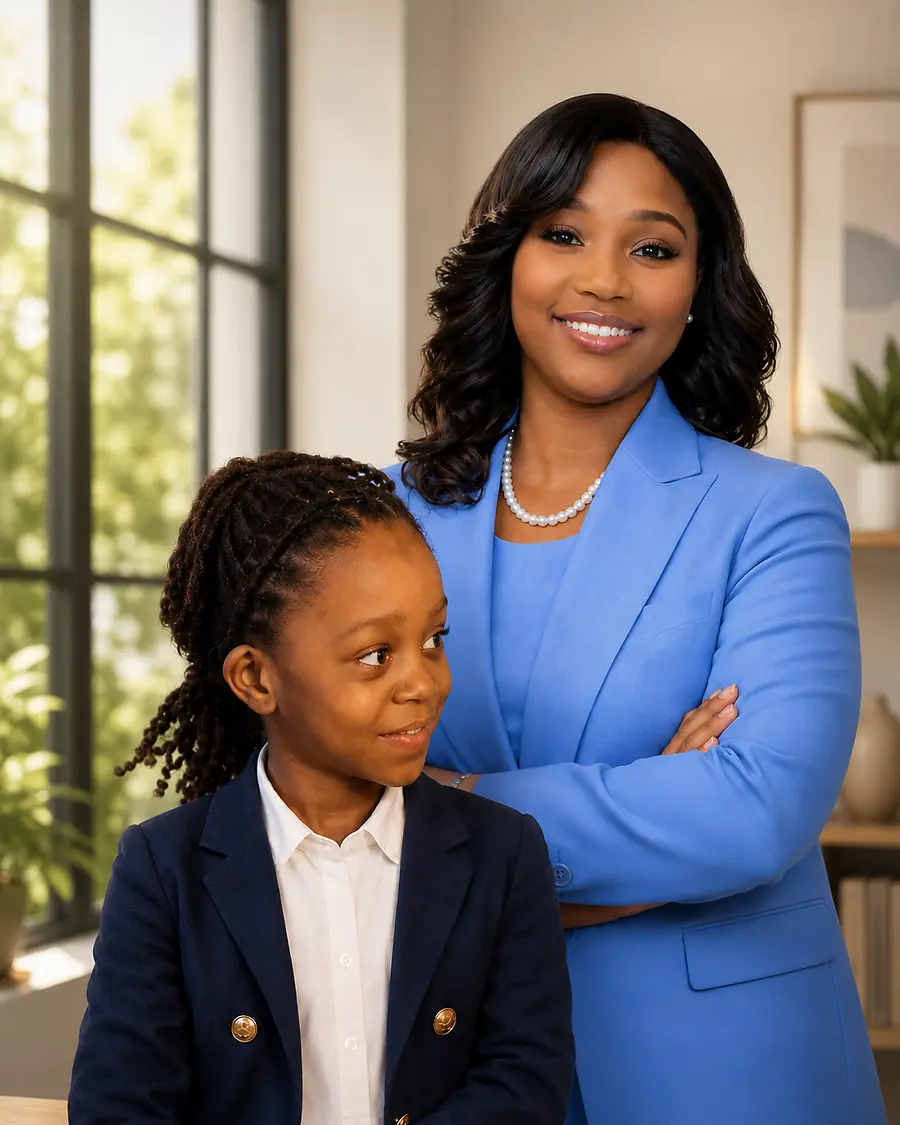
In boardrooms around the world, leaders are searching for the next breakthrough idea. They are investing in innovation labs, artificial intelligence, leadership programs, and talent pipelines. Yet many may be overlooking one of the most important sources of future innovation: a child who thinks differently.
That child may be sitting quietly in a classroom, overwhelmed by sensory stimuli. They may be asking questions others do not understand. They may be struggling to fit into systems that were never designed with their minds in mind.
Somewhere nearby is a woman fighting for them: a mother advocating for accommodations, a teacher refusing to let a child's potential go unseen, a healthcare professional championing early intervention, a leader challenging outdated norms—a woman who understands something society often forgets. Today's misunderstood child may become tomorrow's transformational leader.
The future is not being shaped solely in corporate headquarters or government institutions. It is also being shaped in living rooms, schools, clinics, and communities where women are helping neurodivergent children discover their strengths and protect their mental well-being. This is not merely a parenting issue; it is a leadership issue and a mental health issue. It is one of the most important workforce issues of our time.
The Leadership Potential Hidden in Plain Sight
For decades, society has viewed neurodivergence through a deficit lens. We focused on what children could not do rather than what they might uniquely contribute. Yet many of the qualities associated with neurodivergent individuals are precisely the qualities organizations increasingly seek, such as creativity, pattern recognition, deep focus, innovation, original thinking, and the ability to challenge conventional assumptions. History repeatedly demonstrates that progress rarely comes from people who think exactly like everyone else. Innovation often emerges from minds willing to see possibilities others overlook.
"The minds that struggle to fit into the world are often the minds that eventually reshape it."
When we fail to support neurodivergent children, we risk losing more than individual potential. We risk losing future inventors, entrepreneurs, researchers, artists, policymakers, and leaders.
The Mental Health Crisis Behind the Conversation
While conversations about neurodiversity are becoming more common, mental health remains the missing piece. Far too many neurodivergent children grow up hearing messages that suggest they are broken, difficult, disruptive, or less capable than their peers. The consequences can be profound.
Research consistently shows higher rates of anxiety, depression, social isolation, bullying, and emotional distress among many neurodivergent youth.
The challenge is not their neurodivergence; the challenge is often the constant pressure to suppress who they are in order to gain acceptance.
Imagine spending every day trying to hide the way your brain naturally works. Imagine constantly receiving the message that success requires becoming someone else. That burden carries a cost.
"The greatest threat to a child's future is not thinking differently. It is believing their difference has no value."
This is where women frequently become the first line of defense. Women often notice the silent struggles before anyone else. They recognize when a child begins withdrawing. They see the anxiety hidden behind academic performance. They understand that achievement without emotional well-being is not true success. By protecting mental health, women are not merely helping children cope; they are helping them thrive.
Women: The Architects of Invisible Leadership
Much has been written about women breaking glass ceilings; however, far less has been written about women building foundations. Every day, countless women perform acts of leadership that rarely receive public recognition. They attend meetings, challenge assumptions, navigate healthcare systems, advocate in schools, create safe spaces, encourage confidence, protect dignity, and remind children of their worth.
These acts may appear small; in reality, they are shaping the future. Leadership is not simply about managing organizations. Leadership is about recognizing possibility before others can see it.
"The most influential leaders are often those who see greatness long before greatness becomes visible."
Women around the world are doing exactly that.
Why Neurodiversity Matters to the Future of Work
The workplace of tomorrow will reward different skills than the workplace of yesterday. Artificial intelligence can process information; automation can perform repetitive tasks. Technology can replicate routine functions. What it cannot easily replicate is human originality, curiosity, creativity, empathy, adaptability, imagination, and complex problem-solving.
These are increasingly becoming the currencies of the future economy. Many neurodivergent individuals possess extraordinary strengths in these areas when given appropriate support and opportunities. Organizations that embrace cognitive diversity will likely outperform those that continue recruiting from narrow definitions of talent. The next competitive advantage may not come from hiring people who think alike; it may come from empowering people who think differently.
"Diversity tells people they belong. Neurodiversity reveals what becomes possible when they do."
Redefining Success
Perhaps one of the greatest gifts neurodivergent children offer society is the opportunity to redefine success itself. For too long, success has been measured by conformity—the same milestones, the same pathways, the same expectations. Yet human potential has never been standardized.
Some children communicate differently, learn differently, process emotions differently, and solve problems differently. Difference is not a flaw in the system of humanity. Difference is the system. And when we begin to embrace this truth, we create environments where more children can flourish.
A Call to Women Leaders Everywhere
The conversation about neurodiversity cannot remain confined to special education classrooms or healthcare settings. It belongs in boardrooms, universities, government offices, community organizations, and every space where decisions about the future are made.
Women leaders have a unique opportunity to drive this change: to champion inclusive policies, prioritize mental health, challenge outdated definitions of intelligence and success, and create workplaces where different minds are not merely accommodated but celebrated. Most importantly, to ensure that every child knows their value is not determined by how closely they resemble everyone else.
Because somewhere today, a child is being told they are too different, too sensitive, too distracted, too intense—too much. And somewhere else, a woman is choosing to believe in them anyway.
That belief may become the foundation of the next breakthrough, the next discovery, the next innovation, or the next leader who changes the world. The women raising tomorrow's innovators are doing far more than nurturing children. They are nurturing possibility, protecting mental health, redefining leadership, and they are quietly shaping a future that is more compassionate, more inclusive, and infinitely more innovative than the one we inherited.
Every great innovation begins with a mind willing to think differently, and every extraordinary mind deserves someone willing to believe differently.
Author Bio
Adeola Folorunso, MHA, MPH, FRSPH, FAPH, is a global health advocate, founder of Matermental, and a healthcare provider whose work focuses on maternal mental health, health equity, digital innovation, and inclusive healthcare leadership.