What Are You Assembling?
Transform Your Board Meetings From Approval Sessions Into Strategic Governance That Shapes Your Organization's Future.

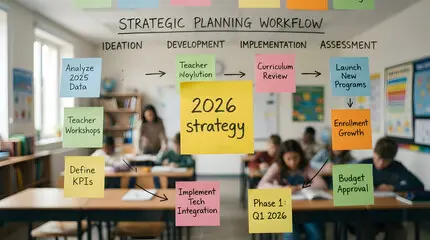
Before Your Next Board Packet Is Assembled, Ask: What Are You Actually Assembling?
Every month, credit unions prepare for another board meeting.
Financials finalized. Dashboards updated. Committee reports assembled. Recommendations written. Packets distributed.
The process is familiar. Disciplined. Expected.
But before you hit "send," ask one question:
What are you actually assembling?
If the answer is information, governance becomes a reporting exercise. If the answer is disciplined examination, governance becomes one of your greatest strategic assets.
Those are not the same thing.
Governance Begins Long Before the Board Packet Exists
The financial services industry has been operating at an inflection point for years. Digital transformation. Member expectations. Competition. AI. Mergers. Modernization.
Credit unions have responded with resilience-but responding to disruption and preparing for the future require different disciplines.
Today, every strategic decision carries greater:
- complexity
- interdependence
- consequence
Boards are no longer deciding whether change is necessary. They are deciding which changes the organization is truly prepared to execute successfully.
That is where governance creates value-not by simply confirming recommendations, but by improving the quality of the decisions that shape the future.
The Problem: Governance Often Begins Too Late
Here is the pattern:
Management develops a recommendation. Materials are prepared. The board receives the packet. Questions are asked. A vote is taken.
Everyone leaves believing governance occurred.
Sometimes it did. Sometimes what actually occurred was approval.
There is a difference.
Boards cannot meaningfully evaluate a recommendation that has not first been rigorously examined.
The Question That Changes Everything
Strategic conversations often begin with conclusions:
"We should implement AI."
"We should pursue a merger."
"We should redesign our branch network."
"We should modernize our core."
Each may be right. But each begins with a conclusion-not an examination.
Before asking what the organization should do, leaders must ask:
What has to be true?
This question shifts the conversation:
- from beliefs - to evidence
- from conclusions - to conditions
- from recommendations - to readiness
Only after determining what has to be true should leaders determine what should be done.
That discipline is Executive Judgment.
Why This Matters for Governance
Governance should never be expected to create Executive Judgment. It should evaluate whether Executive Judgment already exists.
When leadership has not clearly established what must be true, boards begin filling the gaps:
- requesting more reports
- asking operational questions
- reconstructing the analysis themselves
The board may no longer be evaluating the same understanding management used to reach the recommendation.
That is how alignment erodes.
The Strongest Boards Ask Different Questions
- What has to be true for this initiative to succeed?
- What evidence shows those conditions exist today?
- If they do not exist, what must change before we proceed?
These questions elevate governance from oversight to strategic stewardship.
They improve governance. They improve decision quality. They improve organizational readiness.
The Executive Judgment Quotient (EJQ)
Organizations that distinguish themselves will not be the ones that move fastest. They will be the ones that consistently improve the quality of their decisions before committing members, employees, capital, reputation, and capacity.
That requires discipline. It requires Executive Judgment. It becomes an organizational capability.
I call it the Executive Judgment Quotient (EJQ)-the ability to consistently determine what has to be true before determining what should be done.
So Before Your Next Board Packet Is Assembled...
Ask:
What are we actually assembling?
If you are assembling reports, expect discussion. If you are assembling recommendations, expect approval. But if you are assembling disciplined examination, expect stronger decisions-and stronger governance.
Because leadership has never been about having every answer. It has always been about asking the questions that reveal the truth.
#CreditUnions #Governance #CEO #COO #Nonprofits #CU #KarasExecutiveServices


