What Happens When the Six-Year-Old Me Shows Up at 44?
Healing the Inner Child: How Recognizing Your Younger Self Can Transform Your Life

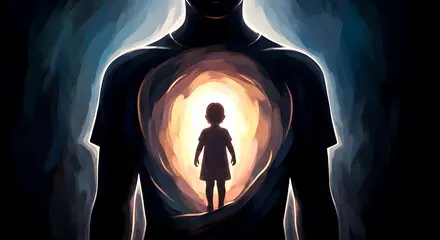
The Little Girl Who Still Shows Up
People see me today and recognize the titles:
- Mother.
- U.S. Army Iraq War veteran.
- Founder.
- Certified Peer Specialist.
- Author.
- Women veterans advocate.
They see the woman standing on stages, leading conversations, writing a memoir, building organizations, and fighting to ensure women veterans have access to the support they deserve.
What they don't always see is the six-year-old little girl who still shows up sometimes.
For years, I thought healing meant leaving her behind.
I was wrong.
The older I become, the more I realize that healing isn't about pretending she never existed. It's about recognizing when she is the one responding instead of the 44-year-old woman I've worked so hard to become.
That realization changed everything.
The Lessons No Child Should Have to Learn
I entered foster care before I understood what stability felt like. I learned very early that the people who were supposed to protect you sometimes couldn't.
By the time I was adopted at five years old, I had already learned lessons no child should have to learn:
- Be careful.
- Don't trust too quickly.
- Don't be too much.
- Don't need too much.
Those lessons didn't disappear when I grew up.
They followed me.
Who Am I?
I thought joining the Army would finally answer the question I'd been asking my entire life:
Who am I?
After September 11th, like so many others, I wanted purpose. I wanted to belong to something bigger than myself. Wearing the uniform gave me an identity I desperately wanted to believe would last forever.
But life has a way of reminding us that titles don't heal wounds.
- Combat didn't erase childhood trauma.
- Military sexual trauma didn't simply become another chapter.
- Coming home didn't mean I was home within myself.
When I left the military, I wasn't just grieving my service.
I was grieving another identity I thought would finally make me enough.
What followed were years of addiction, domestic violence, homelessness, shame, and believing that every bad thing that happened somehow confirmed what that little girl had quietly believed all along:
Maybe I'm the problem.
The Constant Search for Somewhere to Belong
Looking back now, I don't think addiction was my biggest struggle.
I think it was the constant search for somewhere to belong.
I kept trying to find externally what had never been built internally.
- I searched for identity in achievement.
- In relationships.
- In military service.
- In being needed.
- In being everything for everyone else.
Each time one of those things disappeared, the six-year-old inside me panicked.
She thought she was being abandoned all over again.
For a long time, I didn't understand why certain situations affected me more than others.
- Why criticism felt devastating.
- Why rejection felt unbearable.
- Why I could sit in a room full of people who loved me and still feel completely alone.
It wasn't because I was weak.
It was because old wounds have a way of convincing us that they are current realities.
Triggers Aren't Signs That You've Failed
Healing taught me something I wish more people understood.
Triggers aren't signs that you've failed.
Sometimes they're invitations.
They're opportunities to ask a different question.
Instead of asking:
"What's wrong with me?"
I began asking:
"How old does this feeling feel?"
That question changed my life.
Because many times, it wasn't the 44-year-old woman responding.
- It was the six-year-old who still believed love had to be earned.
- Who still believed acceptance could disappear overnight.
- Who still feared being left behind.
Today, When She Shows Up
Today, when she shows up, I don't shame her.
I don't tell her to be quiet.
I don't pretend she doesn't exist.
- I remind her that she's safe now.
- That we survived.
- That we're no longer fighting to prove our worth.
- That we don't have to chase belonging because we're building it.
Not only for ourselves, but for other women who have spent years wondering why they still carry childhood pain into adulthood.
This realization has changed the way I lead.
It's changed the way I parent.
It's changed the way I advocate.
It's even changed the way I wrote Wounds They Don't Give Medals For.
Because my story isn't only about war.
It's about understanding that some of our deepest battles began long before we ever put on a uniform.
Some of Our Deepest Battles
Some people will read my story because they're veterans.
Others will read it because they've experienced addiction, abuse, homelessness, or trauma.
But I hope everyone walks away with the same understanding:
- We all have a younger version of ourselves who learned how to survive.
- Sometimes that younger version still grabs the steering wheel.
- Healing isn't pretending that child never existed.
- Healing is gently taking the wheel back.
Today, I still have moments when fear whispers louder than confidence.
When rejection feels personal.
When self-doubt tries to convince me I'm not enough.
The difference is that today, I recognize whose voice I'm hearing.
And then I let my adult self answer.
Finally Becoming the Person Your Younger Self Always Needed
That little girl deserved someone to believe in her.
Today, she has me.
And maybe that's what healing really looks like.
Not becoming someone completely different.
But finally becoming the person your younger self always needed.
Because sometimes the greatest act of courage isn't surviving what happened to you.
It's introducing your younger self to the person you fought so hard to become.
I tell my truth so others don't feel alone.
I build spaces where healing can begin.
And I don't just share my story.
I create solutions from it.


