What If It's Too Late?
Why the fear that you're behind in life is rarely what it seems—and what to do about it.

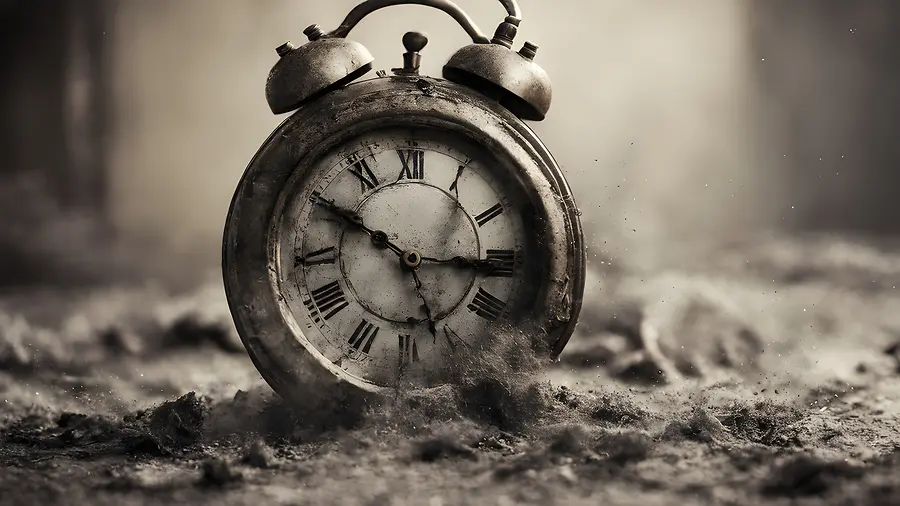
Few fears are as quiet - or as powerful - as the fear that it is too late.
It often arrives without warning. You are scrolling through social media, attending a reunion, celebrating someone else's success, or reflecting on where you thought life would be by now. Suddenly, a thought appears that is difficult to ignore:
I should be further along.
At first, the thought seems harmless. But if it lingers long enough, it begins attaching itself to other questions.
- Did I miss my opportunity?
- Did I make too many mistakes?
- Have I wasted too much time?
- Is everyone else moving forward while I'm falling behind?
Eventually, those questions often lead to one final conclusion:
Maybe it's too late.
The painful part about this fear
The painful part about this fear is that it rarely comes from the present moment. It comes from comparing the life we are living to the life we imagined. Somewhere along the way, most of us created a timeline for how our lives were supposed to unfold. We expected certain achievements by a certain age, certain milestones by a certain season, and certain dreams to become reality within a certain window of time.
When life unfolds differently, we assume something must be wrong.
We begin measuring our progress against expectations that may no longer fit our reality. We compare our unfinished chapters to someone else's highlight reel. We focus on what has not happened while overlooking everything that has.
The result is a growing belief that opportunity belongs to the people who arrived sooner.
But does it?
History, experience, and everyday life suggest otherwise.
Life has never followed a universal schedule
Some people discover their purpose early. Others discover it later.
Some people build successful careers in their twenties. Others find their calling after forty, fifty, or sixty.
Some relationships begin quickly. Others arrive after years of waiting.
Some dreams unfold according to plan. Many do not.
Life has never followed a universal schedule. Yet we continue judging ourselves as though one exists.
Perhaps that is because timelines create the illusion of control. They allow us to believe that if we do the right things in the right order, life will reward us according to our expectations. The problem is that life is often far more unpredictable than that.
Doors open unexpectedly. Opportunities appear without warning. Circumstances change. People change. And sometimes the very experiences we wish had never happened become the experiences that prepare us for what comes next.
Regret can teach. But regret can also trap.
That does not mean regret is not real.
Most people can identify decisions they would change if given the opportunity. They can point to mistakes, missed opportunities, seasons of fear, or moments when they chose comfort over courage. Looking back, it is easy to imagine how different life might be if only one decision had been made differently.
But living in that space too long can become dangerous.
Regret can teach. But regret can also trap. When we become consumed by what could have been, we lose sight of what still can be.
The truth is that many people spend more time mourning the years behind them than investing in the years ahead of them. They become so focused on missed opportunities that they fail to recognize the opportunities standing directly in front of them.
The future has never asked your permission to arrive on schedule. Nor has it required your life to unfold according to the timeline you imagined.
One of the greatest misconceptions about purpose
One of the greatest misconceptions about purpose is that it operates according to age. We often assume there is a deadline attached to our dreams, our growth, our contribution, or our ability to begin again. Yet some of the most meaningful chapters in a person's life begin long after they expected them to.
Wisdom rarely arrives on a predictable timetable. Neither does healing. Neither does purpose. Neither does transformation.
Perhaps that is because the timing of our lives is influenced by more than our plans alone. Sometimes growth requires experiences we could not have anticipated. Sometimes opportunities require preparation we did not know we needed. Sometimes the delay itself becomes part of the development.
What feels late to us may simply be unfolding differently than expected. And different is not the same as finished.
The fear convinces people not to begin
There is another reason the fear of being too late can be so destructive. It convinces people not to begin.
- They stop applying.
- Stop writing.
- Stop creating.
- Stop pursuing.
- Stop believing.
Not because they lack ability, but because they assume the opportunity has already passed.
In that way, the fear becomes self-fulfilling.
The dream does not die because time ran out. The dream dies because hope did.
This fear must be challenged
That is why this fear must be challenged. Not with unrealistic optimism. Not with empty promises. But with the recognition that no one truly knows what opportunities, relationships, breakthroughs, or possibilities still exist ahead.
The chapter you are living today is not the final chapter. The setback is not the conclusion. The delay is not the ending. And the fact that life has not unfolded the way you expected does not mean your future has been disqualified.
If anything, it means your story is still being written.
Perhaps the better question
Perhaps the better question is not, "Is it too late?"
Perhaps the better question is, "What can I do with the time I still have?"
That question shifts the focus from loss to possibility. It moves attention away from what cannot be changed and toward what still can. It reminds us that while none of us can rewrite the past, every one of us has the opportunity to influence what happens next.
One day, you may look back and realize that the years you thought were wasted were actually preparing you. The setbacks you thought disqualified you may have strengthened you. The delays you resented may have developed qualities that success alone never could.
Or perhaps you will simply discover that your life was never behind schedule. It was simply unfolding in a way you could not yet understand.
You are not behind in your own story
So if you find yourself wondering whether it is too late, take a breath and remember this:
- You are not behind in your own story.
- You have not missed every opportunity.
- You have not exhausted every possibility.
- And you have not reached the end unless you decide to stop moving forward.
The future remains unwritten. The next chapter remains unfinished. And some of the most meaningful stories begin at the exact moment people believe there is no time left.
Because it is rarely too late to grow. Rarely too late to heal. Rarely too late to learn. Rarely too late to begin again. And it is certainly not too late to become the person you were always capable of becoming.
The calendar may say one thing. The fear may say another. But your future has not been determined by either.
It is still waiting for you to turn the page.


