What I’ve Learned: The Power of Positive Disruption
From Corporate Stability to Meaningful Leadership: How Disruption Became My Path to Purpose

Positive Disruption: Challenging the Status Quo
Nearly 30 years in the corporate world taught me a great deal about business, leadership, people—and myself.
One of the most important lessons I learned is that we do not have to accept the status quo in our work environment.
Salary matters. Titles matter. Career advancement matters. But over time, I learned that those things alone do not define a meaningful or successful work experience. What stays with us are the relationships we build, the value we create, the influence we have on others, and the feeling that our work matters.
I also learned that feeling stuck does not mean you have to stay stuck.
Education as Positive Disruption
For me, education became a form of positive disruption. It gave me a way to challenge myself, expand my thinking, and remain relevant at a time in my career when I was beginning to question what I wanted my future to look like.
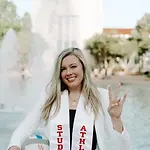
In 2024, I completed my master's degree in Organizational Psychology. Going back to school later in my career wasn't about replacing nearly 30 years of experience. It was about complementing that experience with a deeper understanding of the science behind what I had observed throughout my career.
I had spent decades experiencing the realities of organizations—leadership, relationships, change, collaboration, conflict, performance, and growth. My education helped me better understand why people and organizations behave the way they do and how that knowledge can be applied to create better outcomes.
It also reinforced something I strongly believe today: experience is incredibly valuable, but we have a responsibility to keep learning.
Education doesn't always mean earning another degree. It can mean developing a new skill, finding a mentor, reading, asking better questions, seeking different perspectives, or simply becoming curious again.
Continuing to learn is one of the most powerful ways we can remain relevant—and regain momentum when we feel stuck.
I didn't realize it at the time, but I wasn't simply continuing my education.
I was preparing myself for what came next.
When Disruption Found Me
After 24 years with the same company, I was laid off.
In many ways, I was ready. I knew I had reached a point in my career where I wanted something different. But knowing that didn't make the experience easy.
After investing so much of my professional life in one organization, the ending was still a personal blow.
For a while, I needed something I hadn't given myself enough of during my corporate career:
Time to rest.
And then came reflection.
Without the title, the deadlines, the meetings, and the constant momentum of corporate life, I had the opportunity to think about what I had learned—and, more importantly, what I wanted to do with it.
I began to see that the next chapter wasn't about replacing the position I had lost.
It was about creating something that reflected who I had become.
That reflection helped me find my path.
Turning Experience Into Purpose
I created Fader Consulting Alliance around a simple belief: individuals and organizations do not have to accept ways of working simply because "that's the way they've always been done."
My nearly 30 years of corporate experience gave me practical knowledge. My education in organizational psychology gave me a deeper understanding of human behavior. And my own career transition gave me a renewed appreciation for the importance of purpose, relationships, resilience, and continued growth.
Together, those experiences became the foundation for People | Performance | Growth and my belief in the power of positive disruption.
Positive disruption doesn't have to mean tearing something down. Sometimes, it simply means having the courage to ask:
Why do we do it this way?
Is this still working?
Are we creating value—or simply maintaining a process?
Could there be a better way?
Today, my goal is to use what I've learned to help individuals and organizations ask those questions—and then help them find the answers.
What I Hope to Influence
My experiences have shaped not only what I've learned, but also what I now hope to influence.
I want to encourage leaders to lead from within, not from above.
Leadership is not simply about having the highest title, making the decisions, or directing the work. The leaders who make the greatest impact are willing to be part of the team—to listen, share knowledge, provide support, build trust, and recognize the value each person brings.
I also want to challenge the idea that compensation alone communicates an employee's value.
People want to know that they matter.
They want their ideas to be heard. They want their contributions to be recognized. They want opportunities to learn and grow. They want leaders who understand that a person's value cannot be measured only by a salary, title, or position on an organizational chart.
This is where I believe positive disruption can make a meaningful difference.
Imagine workplaces where leaders spend less time demonstrating authority and more time building trust. Where success isn't measured only by results, but also by how those results are achieved. Where employees understand not only what they are responsible for, but why their contribution matters.
That doesn't mean performance becomes less important. I believe the opposite is true.
When people feel valued, supported, and connected to purpose, we create the conditions for stronger performance—and ultimately, sustainable growth.
That is the connection behind People | Performance | Growth.
What I've Learned
Perhaps the greatest lesson I've learned is that disruption can feel like an ending when you're standing in the middle of it.
But it doesn't have to be.
Sometimes, positive disruption is a decision we make ourselves—to learn something new, challenge the status quo, change how we lead, or choose a different path.
And sometimes, disruption chooses us.
Either way, with continued learning, time, reflection, and the willingness to ask, "Could there be a better way?" disruption can become the beginning of something far more meaningful.
For me, it led to a new purpose: using what I've learned to help create workplaces where people feel valued, leaders lead from within, performance has purpose, and growth is shared.
That is the influence I hope to have.