What No One Teaches Us About Change
Why navigating change is the most important skill no one teaches us.

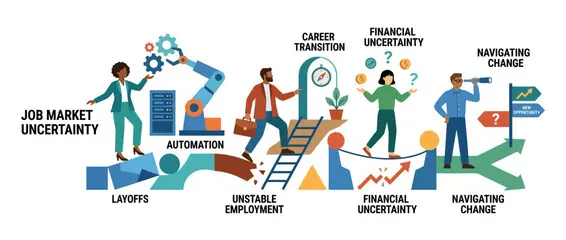
What No One Teaches Us About Change
Several years ago, my life changed in an instant.
My brother passed away unexpectedly. In the midst of my grief, I found myself asking questions I had been too busy to ask before. Was I spending my time on what mattered most? Was I making the difference I wanted to make? If tomorrow wasn't guaranteed, what kind of legacy did I want to leave behind?
Those questions led me to make one of the biggest decisions of my life. After a successful corporate career spanning more than three decades, I retired early—not because I wanted to stop working, but because I realized my work had a deeper purpose.
While I had spent years helping organizations manage change, I realized my life's work would become helping people prosper through it.
That experience taught me something I wish we all learned much earlier.
No one teaches us how to navigate change.
We spend years learning how to read, write, solve problems, manage projects, build careers, and lead teams.
Yet almost no one teaches us how to navigate change—the one constant every one of us will face.
Whether it's a career transition, organizational restructuring, a new leader, retirement, a health challenge, or an unexpected life event, change has a way of showing up uninvited. And the pace of change is accelerating rapidly. Technology is evolving overnight. Industries are transforming. Expectations continue to shift. It's no wonder so many people feel overwhelmed.
The problem isn't that change exists.
The problem is that most of us were never taught how to move through it.
Instead, we learn by trial and error. We second-guess ourselves. We cling to what feels familiar. We wonder why something that looks manageable on paper can feel so difficult in real life.
People don't struggle because they can't understand change
For years, I believed the challenge was simply learning to communicate change more effectively. After more than three decades leading executive and employee communications, I knew that clear communication mattered. But over time, I discovered something even more important.
People don't struggle because they can't understand change; they struggle because change is deeply human.
Every change asks us to let go of something familiar before we've fully embraced what's next. It tests our confidence, our relationships, and often our sense of identity. That's why the best change leaders don't just communicate information—they build trust.
That realization changed my own work and eventually led me to develop a simple framework built around four essential leadership practices: Clarity, Connection, Caring, and Courage.
- Clarity helps us understand where we're going and why it matters.
- Connection reminds us that we don't have to navigate change alone.
- Caring acknowledges that people need to feel valued before they can move forward.
- Courage gives us the confidence to take the next step, even when we don't have every answer.
I've watched these principles help leaders guide organizations through uncertainty, professionals navigate career transitions, and individuals rediscover purpose after unexpected life changes.
The real opportunity isn't to become better at avoiding change
The truth is, change isn't going away. If anything, it will continue to accelerate. The real opportunity isn't to become better at avoiding change. It's to become better at navigating it.
Imagine what would happen if we taught people how to build resilience before they experienced disruption. Imagine if we equipped leaders to create trust instead of fear. Imagine if we viewed change not as something to survive but as a skill that could be developed over a lifetime.
I believe that's one of the greatest leadership opportunities of our time.
Because when we learn how to navigate change with intention instead of fear, something remarkable happens.
We stop merely getting through change.
We begin to prosper through it.
And perhaps that's the lesson we should have been teaching all along.