
What Venus Retrograde Can’t Explain About Cornell
How Venus retrograde reveals the cyclical pattern of institutional reckoning with sexual violence.

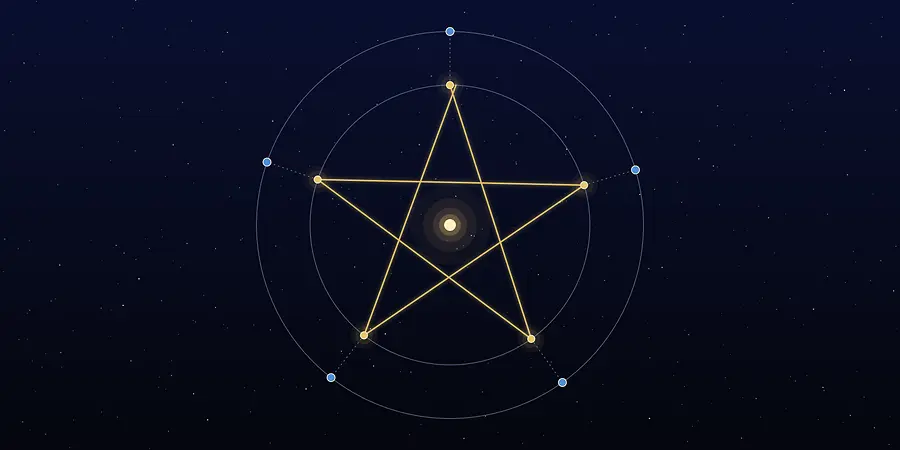
I've been following allegations that seven Cornell fraternity members sexually assaulted a 20-year-old woman, partly because they surfaced just as Venus was about to station retrograde in Scorpio, the latest turn in an eight-year cycle I'd recently started reading about. So I went looking for a pattern.
According to a civil lawsuit filed by a former Cornell student, seven members of the Chi Phi fraternity sexually assaulted her over several hours in October 2024, while she was incapacitated by alcohol and drugs. The complaint cites a fraternity Snapchat group chat in which a woman upstairs was allegedly advertised as available for sex. Additional messages made public since the lawsuit was filed suggest something larger than the actions of the seven men she has accused: fraternity members discussing her as an opportunity, asking whether the "shop" was still open, and sharing a photo of her in the chat. No criminal charges were filed at the time. Two years later, New York's attorney general has been appointed special prosecutor, Cornell has agreed to an independent review of its response, and public outrage continues to grow.
The alleged assault happened in 2024. The reckoning is happening now. That gap is what kept me thinking, because by now, the gap itself is painfully familiar.
The astrology, briefly
I'm interested in astrology, but I'm also a public health professional and a writer committed to evidence, so I'm wary of the distance between correlation and causation. When I ran across the idea that Venus's eight-year cycle might line up with public attention to gender-based violence, my reaction wasn't "obviously." It was "huh."
The astronomy is real. Venus takes about 584 days to return to the same position relative to Earth and the Sun, and five of those cycles add up to almost exactly eight years. Every eight years, Venus turns retrograde within a few degrees of where it did before. In this sequence, that's in Scorpio: about 20 degrees in 1986, 16 in 2002, 11 in 2018, and 8 in 2026.
What follows is astrology, which is interpretation rather than measurement. If you don't speak the language, here's a quick translation.
Venus is usually reduced to the planet of love, the newspaper-horoscope version. In astrology, it does govern relationships, attraction, and pleasure, but also value and reciprocity: what matters to us, whom we value, what we think things are worth, and the terms on which we deal with one another. Underneath the romance, Venus is asking whose safety matters, and whose future.
Scorpio is the sign associated with sex, intimacy, power, secrecy, control, betrayal, taboo, and exposure. It's linked to Pluto, named for the Roman god of the underworld, which in astrology covers whatever has been buried: things a person, family, or institution has decided not to look at. You don't have to believe anything mystical about Pluto to see the metaphor. Scorpio asks who had power, who was vulnerable, who knew, and what happens when a secret becomes public.
Retrograde may be the most misunderstood word of the three. Planets don't actually reverse direction. Earth and Venus orbit the Sun at different speeds, and when Venus passes between us and the Sun, our changing line of sight makes it appear to drift backward against the stars for a few weeks before it resumes its forward path. Astrologically, that apparent reversal stands for return, review, and unfinished business: go back and look again at what you thought was settled.
In this cycle, Venus begins its retrograde in Scorpio and eventually backs into Libra, the sign it traditionally rules. Libra is symbolized by the scales and associated with balance, reciprocity, and fairness. If Scorpio is the locked room, Libra is the courtroom: now that we know, what would be fair, and what do we owe one another?
I'm not claiming Venus causes sexual violence. It happens every day, transit or not. My question was narrower: does this cycle line up with moments when hidden or dismissed violence became public, and an institution's response became part of the story?
What lined up
In 2018, Christine Blasey Ford testified on September 27 that Brett Kavanaugh had assaulted her when they were teenagers; he denied it. Venus stationed retrograde in Scorpio on October 5, and Kavanaugh was confirmed on October 6. The question in front of one of the country's most powerful institutions was how to respond to a serious allegation against a powerful man.
In 2002, Venus stationed retrograde on October 10. Nineteen days later, Air Force Academy cadet Jessica Brakey emailed roughly 150 government and media contacts, saying that female cadets, herself included, had been sexually assaulted and that the Academy offered no real recourse. The story became about a system in which reporting could bring punishment or ostracism, and the people responsible for protecting women were also responsible for protecting the institution.
In 1986, four Berkeley football players were accused of assaulting an 18-year-old student. Prosecutors declined to charge them, and the university handled the matter internally: apologies, counseling, community service, and no change to their academic or athletic standing. Women students and faculty protested, calling themselves the Coalition to Break the Silence. That same October, a paper appeared titled "The Transformation of Sexual Harassment from a Private Trouble into a Public Issue." I'll admit that one got my attention.
Other cycles fit less well. In 2010, the White House held an event on ending violence against women, which was policy rather than reckoning. In 1994, the Simpson murders and the Violence Against Women Act both landed, but VAWA was signed in September, before Venus stationed. I wrote that down. I knew if I had to move events around the calendar to make them fit, I wasn't finding a pattern. I was making one.
The control test
So I searched the years in between. In 1993, Congress held hearings on rape, stalking, and domestic violence, and the Supreme Court clarified that a hostile work environment doesn't require serious psychological injury. In 2009, Chris Brown's assault on Rihanna set off a national conversation about intimate-partner violence. And in 2017, #MeToo, the movement Tarana Burke started years earlier, went global. That alone sinks any claim that this cycle uniquely produces reckonings.
The most unsettling counterexample came from 1985, a year before Berkeley, when the Association of American Colleges published Campus Gang Rape: Party Games?, documenting more than 50 campus gang rapes. Researchers described fraternity culture, alcohol, and brothers who took no part in the assaults but did nothing to stop them. In 1985, more than forty years ago. At that point, I stopped thinking about Venus and started thinking about Cornell.
What I found instead
Public health separates incidence, recognition, reporting, and institutional response. More public attention doesn't necessarily mean more violence; sometimes it means we've built the language and the willingness to see what was already there. Feminism has made this argument for generations. Violence in a marriage was once a private family matter, harassment something a woman endured at work, rape an individual tragedy rather than a problem of law, culture, and power.
That's why the history looks cyclical even though the astrology doesn't hold. What repeats is women pulling private harm into public view and institutions being asked what they'll do about it. This is where the astrological language still helps me, as metaphor rather than mechanism. Scorpio's premise is that what gets buried doesn't go away; it waits. And the feminist insight is that the burying is rarely an accident. When families, fraternities, and institutions stay quiet about harm, the silence protects whoever holds power, so what eventually resurfaces is a reckoning with the silence as much as with the act itself.
Which brings me back to Cornell. If I claimed Venus retrograde causes assault, Cornell would be terrible evidence, since the alleged assault was in 2024. What's happening now is the return: a lawsuit, exposed messages, a reopened investigation, decisions under new scrutiny. The questions move outward from what seven men allegedly did to who knew, who could have stepped in, and what the fraternity, the university, and law enforcement did.
I don't know whether Venus has anything to do with any of it. My eight-year hypothesis didn't survive its own control test.
But I went looking for recurrence in the sky and found something more durable in the record.
I went looking for an eight-year cycle.
What I found was forty years of women still asking institutions the same question.

Amy Cronin DiCaprio has nearly two decades of experience in public health and about a decade in strategic communications. She earned bachelor’s degrees in journalism and women’s studies from UMass Amherst, followed by master’s degrees in public policy and public health, and completed doctoral studies in public health, advancing to candidacy. Her recent work in municipal public health included building communications…





