When All Hope Is Lost: The Light That Sustains the Human Spirit
Exploring the Power of Hope as an Essential Force for Human Flourishing and Spiritual Growth



There is a little four-letter word that carries an extraordinary amount of power.
Hope.
We use it so casually in everyday conversation.
"I hope tomorrow is better."
"I hope everything works out."
"I hope things will change."
But have we ever stopped to consider what hope actually means to the human spirit?
What happens inside us when we have hope?
And perhaps more importantly, what happens when we begin to lose it?
I have been contemplating these questions because I believe hope is much more than a pleasant emotion or an optimistic way of looking at life.
Hope is one of the forces that keeps human beings moving forward.
When we have hope, we are often willing to try again, even after disappointment. We can imagine possibilities beyond our present circumstances. We may find the courage to take another step, even when we cannot see the entire path ahead.
But when hope begins to disappear, something profound can happen.
The world may not have changed overnight, yet our relationship with the world can feel entirely different.
The future begins to look smaller.
Possibilities become harder to imagine.
And the spirit, that deeply personal dimension of meaning, connection, purpose, and inner life, may begin to feel as though its light is fading.
That is why I believe we need to talk about hope.
Not as a sentimental expression.
Not as an empty promise.
But as an essential part of the human experience.
Hope Is Not the Same as Wishing
There is an important distinction between wishing for something and having hope.
Wishing can be passive.
We wish circumstances were different. We wish someone would change. We wish a problem would disappear.
Hope can involve something more.
Hope allows us to recognize that another possibility may exist, even when we do not yet know how to reach it.
Psychologist C. R. Snyder developed a theory of hope involving two important elements: the ability to identify pathways toward meaningful goals and the motivation to pursue those pathways.
In simple terms, hope involves both the possibility of a way forward and some belief in our capacity to move toward it.
Of course, not every form of hope is directed toward a specific goal.
Sometimes hope is quieter.
It may be the belief that life can still hold meaning after loss.
It may be the possibility of experiencing joy again.
It may be the realization that we are not entirely alone.
For someone who has endured prolonged hardship, hope may begin with something as simple as believing that tomorrow does not have to be identical to yesterday.
And sometimes that small possibility is enough to encourage another step.
Hope and the Human Spirit
Throughout my work in education, creativity, and holistic approaches to wellbeing, I have become increasingly interested in the relationship between mind, body, and spirit.
We readily acknowledge that our thoughts and emotions affect our physical wellbeing.
We recognize that prolonged stress can influence sleep, concentration, energy, and health.
But what about the spirit?
What happens to our sense of meaning, purpose, connection, and identity when life becomes overwhelming?
I believe hope occupies a remarkable place within this relationship.
Hope is both an expression of the human spirit and something that nourishes it.
Imagine a seed resting beneath the soil.
Within that seed is the potential for growth.
Yet potential alone does not guarantee that a plant will flourish.
It needs water, warmth, nourishment, and an environment where its roots can develop.
I wonder whether the human capacity for hope works in a similar way.
We may carry the potential to imagine a different future, but that capacity can be strengthened or weakened by our experiences.
Kindness can nourish hope.
Safety can nourish hope.
Belonging can nourish hope.
Opportunities to make meaningful choices can nourish hope.
And perhaps most importantly, experiencing even a small amount of positive change can help us believe that further change is possible.
Hope is not simply something we possess.
It is also something we cultivate.
When All Hope Is Lost
There is an expression we have all heard.
"When all hope is lost."
Those five words carry an extraordinary emotional weight.
They suggest more than disappointment.
They describe a moment when a person may no longer believe that anything can improve.
And that experience deserves compassion rather than judgment.
Prolonged hopelessness can be associated with depression, diminished motivation, withdrawal, and difficulty imagining a meaningful future.
For someone experiencing trauma, repeated experiences of powerlessness may also affect their expectations about whether their actions can make a difference.
When people repeatedly encounter circumstances they cannot control, they may become less likely to attempt change, even when new opportunities eventually become available.
Psychological research on learned helplessness has explored aspects of this process.
But I believe there is another dimension worth examining.
What happens when someone begins to lose not only confidence in the future, but also their connection to who they are?
When a person can no longer imagine possibilities, they may struggle to recognize their own strengths, aspirations, and sense of purpose.
Spiritually, they may describe themselves as feeling empty, disconnected, or lost.
This does not mean their spirit has literally disappeared.
Nor does it mean that every person who experiences hopelessness responds in the same way.
It means that our experience of hope can be deeply connected to how we understand ourselves and our place in the world.
And when that connection is damaged, healing may require more than changing our thoughts.
It may require rebuilding relationships, safety, agency, meaning, and trust.
The Difference Between Surviving and Living
Human beings can survive extraordinary circumstances.
History is filled with stories of people who endured war, displacement, poverty, oppression, illness, and personal tragedy.
But survival and flourishing are not necessarily the same thing.
A person may continue fulfilling responsibilities while feeling disconnected from joy.
They may work, care for others, and meet daily obligations without believing that their own future holds anything meaningful.
From the outside, they may appear to be functioning.
Inside, they may feel as though they are merely existing.
This is one reason I believe we should be careful when telling people how strong they are.
Strength is not always evidence that someone is thriving.
Sometimes strength is what a person has been required to demonstrate because they had no other choice.
And while resilience deserves recognition, we should never use someone's ability to endure hardship as an excuse to leave harmful circumstances unchanged.
People deserve more than the expectation that they will continue surviving.
They deserve opportunities to experience safety, belonging, dignity, creativity, and purpose.
They deserve conditions in which hope has room to grow.
We Cannot Demand Hope from People
How often have we heard someone say:
"Just stay positive."
"Everything happens for a reason."
"Look on the bright side."
These expressions may be offered with good intentions.
But they can also leave someone feeling that their pain is being dismissed.
Imagine telling a woman living in an unsafe environment that she simply needs to remain hopeful.
Imagine telling a family facing homelessness that positive thinking will solve their circumstances.
Imagine telling a grieving child to focus on the future before anyone has helped them feel safe in the present.
Hope cannot be demanded.
And it should never be used to minimize suffering.
We cannot continually place people in conditions that undermine hope and then criticize them for struggling to find it.
If we want hope to flourish, we must pay attention to the environments in which people live.
Do they have access to support?
Are they treated with dignity?
Can they make meaningful choices?
Do they have opportunities to learn, create, connect, and contribute?
Are their voices heard?
These questions matter because hope is not created through words alone.
It can also be strengthened through lived experiences that demonstrate that change is possible.
Sometimes Another Person Holds the Light
One of the most beautiful aspects of human connection is our ability to support one another during difficult times.
Sometimes a person cannot see a way forward.
Their circumstances may feel overwhelming.
Their confidence may have been damaged.
They may have stopped believing that their life can become different.
And then someone enters their world who sees possibilities they cannot yet see.
A teacher recognizes potential in a struggling student.
A neighbor offers practical support to a family in crisis.
A mentor encourages someone to pursue an opportunity.
A friend listens without judgment.
A community welcomes someone who has spent years feeling excluded.
These moments do not erase trauma or magically resolve every difficulty.
But they can interrupt isolation.
They can help restore trust.
And they can provide evidence that the world contains possibilities beyond what someone has previously experienced.
I find something deeply moving about the idea that we can help one another rediscover hope.
Not by taking control of another person's life.
Not by insisting that we know what is best for them.
But by offering support, respect, and opportunities that allow them to reconnect with their own capacity to choose.
Sometimes we cannot create hope for another person.
But we can help create the conditions in which they may begin to experience it again.
Children Learn Hope Through Experience
As an educator, I believe the relationship between hope and childhood deserves particular attention.
Children are constantly developing their understanding of the world.
They learn through relationships, experiences, observation, and exploration.
When children encounter adults who listen, encourage curiosity, establish appropriate boundaries, and respond consistently to their needs, they may develop a stronger sense of safety and confidence.
They begin discovering that their actions can make a difference.
That problems can sometimes be solved.
That mistakes can become opportunities for learning.
And that the future contains possibilities worth exploring.
But children who experience chronic instability, neglect, violence, or repeated disappointment may struggle to develop these expectations.
Their responses are not evidence of personal failure.
They are often understandable adaptations to difficult circumstances.
This is why trauma-informed education is so important.
Education should not focus solely on academic achievement.
It should also consider the emotional and relational conditions that make learning possible.
A child who feels unsafe may struggle to concentrate.
A child who feels powerless may hesitate to participate.
And a child who believes failure is inevitable may stop trying before discovering what they are capable of accomplishing.
We can support hope by creating learning environments where children experience belonging, encouragement, meaningful choices, and achievable challenges.
Not false promises.
Not praise without substance.
But genuine opportunities to discover their own capabilities.
Hope, Creativity, and the Imagination
There is another connection I find fascinating.
The relationship between hope and creativity.
Before we can create something new, we must first imagine that it could exist.
An artist sees possibilities on a blank canvas.
A writer imagines a story that has not yet been told.
An inventor envisions a solution to a problem.
A community organizer imagines a different way for people to live and work together.
And someone rebuilding their life may begin by imagining a future they have never experienced before.
Creativity allows us to explore possibilities beyond the limitations of the present.
It does not guarantee that every dream will become reality.
But it can expand our sense of what might be possible.
I believe this is one reason expressive arts, storytelling, music, gardening, and other creative experiences can be meaningful within supportive educational and community settings.
They provide opportunities for expression, exploration, connection, and personal agency.
A person who creates something has participated in bringing a possibility into existence.
And sometimes, that experience can become a small but meaningful reminder:
I can still contribute.
I can still learn.
I can still create.
My story is not finished.
Hope Is Not Denial
I want to be clear about something.
Hope does not require us to ignore reality.
We can acknowledge injustice and still work toward change.
We can recognize suffering without surrendering our belief that meaningful action is possible.
We can grieve what has been lost while remaining open to what life may yet hold.
In fact, I believe genuine hope must make room for truth.
There is little value in telling someone that everything will be fine when we cannot know that.
But we can say something different.
We can acknowledge that the future is uncertain.
We can recognize that some circumstances may remain difficult.
And we can still explore what choices, resources, relationships, and opportunities are available.
Hope does not need certainty to exist.
Sometimes it begins with the simple recognition that the future has not yet been fully written.
Building Communities Where Hope Can Grow
As I continue developing the educational philosophy behind Mama Star's Healing Circle and Unity Grove Cooperative, I return again and again to the importance of community.
Human beings do not exist in isolation.
Our wellbeing is influenced by relationships, environments, opportunities, and the systems in which we participate.
That is why I believe healing-centered communities must offer more than encouragement.
They must provide meaningful experiences of dignity, cooperation, creativity, and belonging.
A safe place to learn.
An opportunity to contribute.
A chance to develop practical skills.
Relationships grounded in mutual respect.
Access to nature, artistic expression, and shared experiences.
These are not magical solutions to every form of suffering.
But they can become important foundations for rebuilding confidence and possibility.
I have often said that healing should be allowed to unfold at the pace of nature.
A garden does not flourish because we demand that its flowers bloom.
We prepare the soil.
We provide nourishment.
We protect what is growing.
And we allow development to take place over time.
Perhaps hope deserves the same consideration.
The Light That Remains
I keep returning to the question of whether a person can lose the feeling of hope without completely losing the capacity for hope.
I believe it is possible.
There are times when hope becomes difficult to access.
Times when grief, exhaustion, trauma, or uncertainty obscure our ability to imagine a different future.
But the absence of a hopeful feeling today does not prove that hope can never return.
People can experience changes in their circumstances, relationships, health, and sense of meaning that make hope possible again.
And sometimes the first sign of that change is very small.
A genuine smile.
A moment of curiosity.
The desire to learn something new.
The willingness to accept help.
The courage to imagine a different tomorrow.
These moments may seem insignificant to someone who has never struggled to find hope.
But to a person emerging from prolonged hardship, they can represent something extraordinary.
The possibility of reconnecting with life.
I believe that is why hope deserves a place in our conversations about human wellbeing.
Not as a cure.
Not as an obligation.
And certainly not as a substitute for practical support.
But as a meaningful part of how we experience purpose, possibility, and connection.
Hope is both the light that lives within the human spirit and the nourishment that allows that light to continue burning.
When we nurture hope, we are doing more than encouraging positive thoughts.
We are helping create space for human possibility.
And perhaps one of the greatest gifts we can offer another person is not the promise that their future will be easy.
It is the opportunity to discover that their future may still hold meaning, connection, and choices they have not yet imagined.
Because sometimes hope does not arrive as a brilliant sunrise.
Sometimes it begins as the smallest flicker in the darkness.
And sometimes, that flicker is enough to help us find our way toward tomorrow.
About the Author
Mylee Star Hawk, MAEd, known as Mama Star, is an award-winning educator, author, artist, and founder of Mama Star's Healing Circle and Unity Grove Cooperative. A doctoral student in Transpersonal Psychology, she explores the interconnected dimensions of mind, body, spirit, trauma, creativity, and community wellbeing. Her work emphasizes dignity, compassionate education, and the creation of environments where people can rediscover possibility and develop their own paths forward.
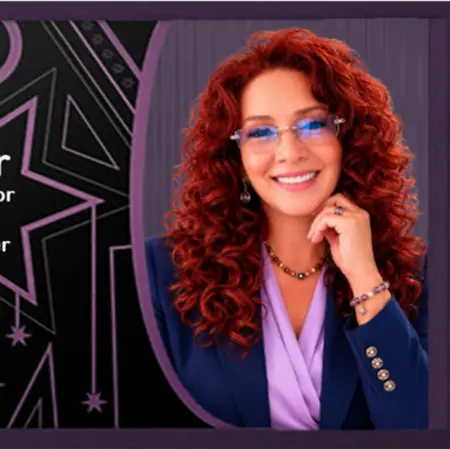
Mylee Star Hawk, MAED, founded Mama Star's Healing Circle to support healing through education, art, and community. With 25+ years in education and community support, Star specializes in addressing generational trauma through creative expression, culinary arts, and spiritual practices. An ordained minister and master chef pursuing a doctorate in Transpersonal Psychology, she integrates education, creativity, and…