
When Did We Become Comfortable With Injustice? Remembering the Humanity in Martin Luther King Jr.'s Dream
Revisiting Dr. King's Teachings on Justice, Dignity, and Our Responsibility to Protect the Most Vulnerable Among Us

There are moments when I read the news and find myself wondering what has happened to our humanity.
Not because I believe the world was ever perfect.
Not because injustice is something new.
But because there are times when the language we use to explain suffering becomes almost as disturbing as the suffering itself.
Recently, I learned about the death of Kohen Wiley, a one-year-old Black child who was shot by a police officer in a Walmart parking lot in Mississippi.
A child.
One year old.
His life had barely begun.
According to news reporting, state authorities determined that the officer's use of force was justified. Kohen's family disputes that conclusion and has called for further investigation.
I recognize that legal findings require examination of evidence, applicable law, and the circumstances surrounding an incident.
But I cannot read about the death of a one-year-old child without asking a question that reaches beyond the legal process.
How do we preserve our humanity when a child's death becomes something we debate rather than something that brings us together in grief and a determination to prevent it from happening again?
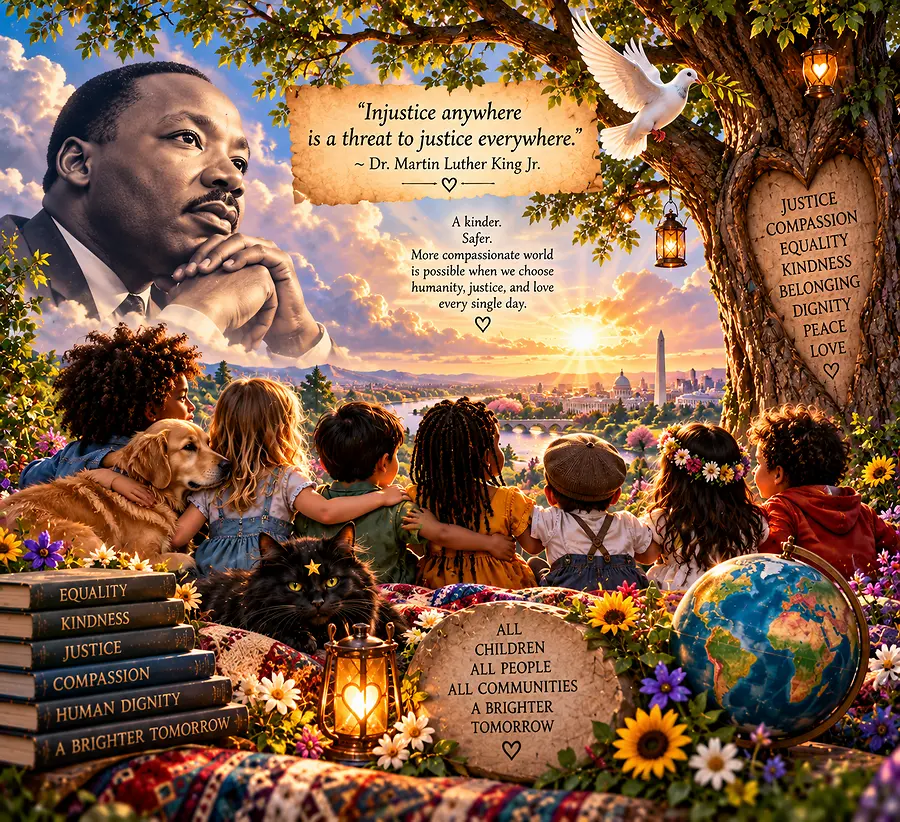
This is where I find myself returning to the teachings of Dr. Martin Luther King Jr.
Not simply the familiar words we repeat during commemorations.
Not the carefully selected quotations that fit neatly onto posters.
But the deeper moral challenges he placed before society.
The questions about justice, human dignity, racial inequality, nonviolence, and our responsibility toward one another.
Because I believe we need to revisit those teachings with the same seriousness with which he offered them.
The Dream Was Never Just About Getting Along
When people speak about Dr. King, they often focus on his dream of a society in which people are not judged by the color of their skin.
It is a beautiful and enduring vision.
But I believe we diminish his legacy when we reduce it to a general reminder to be nice to one another.
Dr. King challenged institutions, laws, social practices, and deeply established systems of racial inequality.
He understood that kindness without justice was insufficient.
He understood that peaceful coexistence could not be built upon the expectation that those experiencing injustice should simply remain patient.
And he understood that meaningful change required people to examine their own participation in systems that allowed inequality to continue.
His philosophy of nonviolence was not passive.
It required courage, discipline, moral clarity, and a willingness to confront injustice without surrendering one's commitment to human dignity.
That distinction matters today.
Because it is possible for a society to speak beautifully about equality while struggling to practice it.
It is possible to celebrate a civil rights leader while overlooking the very conditions he asked us to confront.
And it is possible to admire the idea of justice while becoming uncomfortable when someone demands that justice be examined in practice.
The dream was never simply about learning to tolerate one another. It was about creating a society in which human dignity could no longer be selectively recognized.
A Child Is Not a Political Argument
When I think about Kohen Wiley, I do not begin with politics.
I begin with the fact that he was a child.
A little boy who should have had birthdays ahead of him.
Opportunities to discover the world.
A chance to learn, laugh, play, and become whoever he might have grown up to be.
His family will never know the full story of the person he could have become.
And no legal conclusion can return that future to them.
I believe we must be capable of holding more than one responsibility at the same time.
We can recognize that law enforcement officers sometimes face dangerous, rapidly evolving circumstances.
We can insist that investigations be fair, thorough, and grounded in evidence.
We can respect the importance of due process.
And we can still ask whether policies, training, tactics, and institutional decisions adequately protect innocent people, particularly children.
These responsibilities do not cancel one another out.
They belong together.
A determination that a particular use of force met a legal standard does not end every question about whether the tragedy was preventable.
Nor does questioning that determination mean abandoning fairness toward the people involved.
It means recognizing that accountability has legal, institutional, and moral dimensions.
When a child dies, our responsibility should extend beyond determining what the law permits to examining what human life requires us to prevent.
The Danger of Becoming Desensitized
I worry about the way repeated exposure to suffering can change our responses.
Another shooting.
Another grieving family.
Another investigation.
Another disagreement over what happened.
Another news cycle.
Eventually, the details begin to blur.
We recognize the familiar language before we have even finished reading the story.
And that familiarity can become dangerous.
Because human suffering should never become so routine that we stop recognizing the individual lives behind it.
Every headline represents people.
Families.
Relationships.
Communities.
Futures interrupted.
I understand that we cannot emotionally absorb every tragedy in the world without becoming overwhelmed.
We need boundaries around how we engage with distressing information.
But protecting our emotional well-being should not require abandoning our compassion.
There is a difference between acknowledging our limits and becoming indifferent.
Dr. King's teachings remind me that injustice cannot be understood solely as something happening to someone else.
The moral health of a community depends, in part, on whether its members are willing to recognize suffering beyond their own immediate experiences.
When we stop caring because the people affected do not resemble us, live near us, or share our circumstances, something essential begins to erode.
Our sense of shared humanity.
Race Cannot Be Ignored
I believe every child's life deserves protection, regardless of race.
That conviction should be universal.
But saying that all lives have equal value does not mean we should ignore the historical and contemporary experiences of Black Americans.
Dr. King's work emerged from a society in which racial discrimination was embedded in law and public institutions.
He challenged unequal treatment in education, employment, housing, voting, and public life.
He also confronted the violence and intimidation used to maintain those inequalities.
Those historical realities matter when we examine present-day concerns about policing and accountability.
Race should never determine the value assigned to a person's life.
And we must remain willing to investigate whether race influences how people experience institutions intended to serve and protect them.
That requires evidence, careful research, transparency, and a willingness to confront findings that may be uncomfortable.
It also requires listening to communities whose experiences have not always been taken seriously.
We cannot address discrimination by pretending that history has no relationship to the present.
Nor can we establish fairness by making assumptions about an individual's actions solely because of their race or professional role.
The goal must be accountability grounded in evidence and equal human dignity.
Justice must be capable of seeing both the individual circumstances of a case and the larger patterns that deserve examination.
Nonviolence Is Not Silence
One of the most important lessons I take from Dr. King's work is that nonviolence should never be confused with doing nothing.
He did not advocate indifference.
He did not ask people to remain silent in the face of discrimination.
He demonstrated that people could confront injustice through organized, disciplined, nonviolent action.
His approach included gathering facts, seeking negotiation, preparing participants for nonviolent engagement, and taking direct action when necessary.
This was not simply an emotional response to injustice.
It was an organized moral and civic strategy.
And I believe that distinction remains important.
Anger can tell us that something deserves attention.
Grief can reveal what we value.
But lasting change requires us to move beyond emotion alone.
It requires asking difficult questions.
Seeking reliable information.
Supporting transparent investigations.
Examining laws and institutional policies.
Listening to affected communities.
And participating in constructive efforts to reduce preventable harm.
We do not honor Dr. King's commitment to nonviolence by demanding silence from people who are grieving.
We honor the seriousness of his work by understanding that peaceful action and meaningful accountability can exist together.
What Are We Teaching Our Children?
As an educator, this is the question I cannot escape.
What are children learning when they observe the way adults respond to injustice?
Are they learning that every human being deserves dignity?
Are they learning that questions are welcome when something appears wrong?
Are they learning that authority comes with responsibility?
Are they learning that people can disagree without abandoning compassion?
Or are they learning that human worth changes depending on who is involved?
Education is not limited to classrooms.
Children learn from our conversations.
Our reactions.
Our silences.
The explanations we offer.
The behavior we excuse.
And the examples we set when difficult circumstances arise.
If we want children to become thoughtful, compassionate adults, we must demonstrate those values in the world they inhabit.
We must teach them that respect is not blind obedience.
That fairness requires consistency.
That courage sometimes means asking uncomfortable questions.
And that compassion should not depend on whether someone belongs to our family, community, or cultural group.
I believe children deserve to grow up understanding that their lives matter and that the lives of others matter equally.
That is not a complicated moral principle.
But living according to it requires intention.
The Difference Between Justice and Revenge
There is another distinction I believe we must protect.
Justice is not revenge.
Accountability is not the same as hatred.
And compassion for a victim does not require us to abandon the principles of fairness.
When a tragedy occurs, it is understandable that people experience anger.
But our response should be guided by the desire to establish the truth, prevent future harm, and ensure that appropriate responsibility is recognized.
That means resisting the temptation to decide every fact before the evidence is examined.
It also means refusing to treat an official finding as a reason to stop asking legitimate questions.
Both errors can undermine public trust.
Dr. King's commitment to nonviolence offers an important ethical challenge here.
We can be firm without being cruel.
We can demand accountability without dehumanizing others.
We can challenge institutions while recognizing that the individuals working within them are also human beings.
And we can refuse to accept preventable suffering as inevitable.
The goal should not be to replace one form of dehumanization with another.
It should be to build systems in which human dignity is more consistently protected.
The Responsibility of Those Who Are Not Directly Affected
It is relatively easy to recognize injustice when it affects our own family.
When it happens to our child.
Our neighbor.
Our friend.
Someone whose experiences resemble our own.
The greater test is whether we remain concerned when the people affected are strangers.
When they live in another state.
When they come from a different racial or cultural background.
When the circumstances challenge our assumptions.
Dr. King's understanding of human interconnectedness asks us to recognize that our communities do not exist independently of one another.
The way we respond to suffering helps shape the standards we accept.
If we want fairness for our own families, we must be willing to consider what fairness requires for others.
If we expect institutions to protect our children, we should care whether those institutions are adequately protecting children elsewhere.
And if we believe human dignity is universal, we must be prepared to apply that principle consistently.
This does not mean every person must participate in every public debate or campaign.
But it does mean that we should resist the temptation to dismiss suffering simply because it is distant from our daily lives.
Compassion is not diminished when we extend it beyond the people we know.
It becomes more meaningful.
Remembering the Human Being
There is a reason I continue returning to the importance of human dignity in my writing.
Whether I am discussing education, trauma, community, leadership, or personal transformation, I find myself confronting the same underlying question.
Do we see people as human beings?
Or do we reduce them to categories?
A student becomes a test score.
A survivor becomes a diagnosis.
A person experiencing homelessness becomes a statistic.
A grieving family becomes a headline.
A child becomes part of a public controversy.
And somewhere in that process, the fullness of the person can disappear.
I do not want to live in a world where we become so accustomed to explaining suffering that we forget to grieve it.
I do not want children growing up believing that their safety depends on whether society considers them important enough to protect.
And I do not want Dr. King's legacy reduced to words we admire without examining the responsibilities those words place upon us.
His teachings invite us to do more than remember history.
They invite us to examine the present.
The Dream Is Still a Responsibility
I am not suggesting that there is a simple answer to every difficult question involving public safety, policing, or institutional accountability.
There is not.
These issues require careful examination, evidence, and thoughtful consideration of competing responsibilities.
But complexity should not become an excuse for indifference.
We can acknowledge complexity without losing sight of human suffering.
We can respect legal processes while examining whether laws and policies adequately protect vulnerable people.
We can recognize the challenges faced by public servants while insisting that public institutions remain accountable.
And we can honor a grieving family without pretending to know every detail of an investigation.
What we cannot afford is to become comfortable with the loss of human life.
Especially the lives of children.
When I think about Kohen Wiley, I think about the childhood he will never experience.
I think about his family.
And I think about the responsibility we share to ask whether tragedies like his can be prevented.
I return to Dr. King's teachings because they remind me that justice is not simply a concept we celebrate.
It is a responsibility we must continually examine.
It requires courage.
It requires compassion.
It requires honesty.
And sometimes, it requires us to confront circumstances we would rather not see.
I believe we owe our children more than beautiful words about equality.
We owe them a serious commitment to their safety, dignity, and opportunity to grow.
We owe grieving families compassion and fair consideration.
And we owe future generations the willingness to learn from tragedies rather than allowing them to become ordinary.
A child's life should never become less precious because of the color of their skin.
A family's grief should never become less worthy of compassion because of where they live.
And our commitment to justice should never depend on whether injustice has reached our own doorstep.
Dr. King's dream remains unfinished work.
Not because his vision lacked meaning.
But because every generation must decide how seriously it intends to live by the principles of human dignity, equality, and nonviolence.
For my part, I will continue to believe that compassion and accountability belong together.
That justice requires more than comforting words.
And that the humanity of a child must never be lost beneath the arguments surrounding their death.
Because before we are divided by race, status, profession, ideology, or circumstance, we are human beings.
And surely, after everything history has taught us, we can agree that protecting the lives and dignity of children is a responsibility worthy of our deepest attention.
About the Author
Mylee Star Hawk, MAEd, known as Mama Star, is an award-winning educator, author, artist, and founder of Mama Star's Healing Circle. A doctoral student in Transpersonal Psychology, she explores human dignity, trauma-informed education, creativity, community, and compassionate leadership. Her writing encourages reflection on the responsibilities we share in creating environments where individuals and communities can thrive.
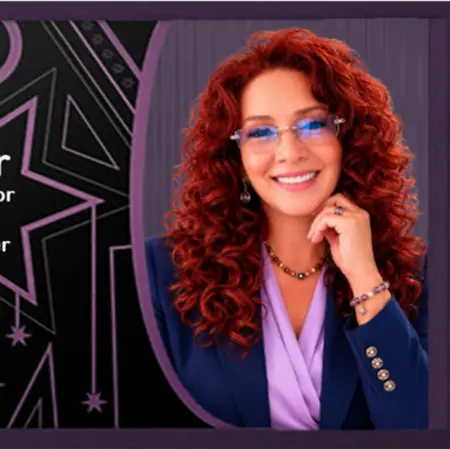
Mylee Star Hawk, MAED, founded Mama Star's Healing Circle to support healing through education, art, and community. With 25+ years in education and community support, Star specializes in addressing generational trauma through creative expression, culinary arts, and spiritual practices. An ordained minister and master chef pursuing a doctorate in Transpersonal Psychology, she integrates education, creativity, and…





