When Extroverts Want the Introvert to Join Them.
Understanding the Introvert: A Different Operating System, Not a Flaw

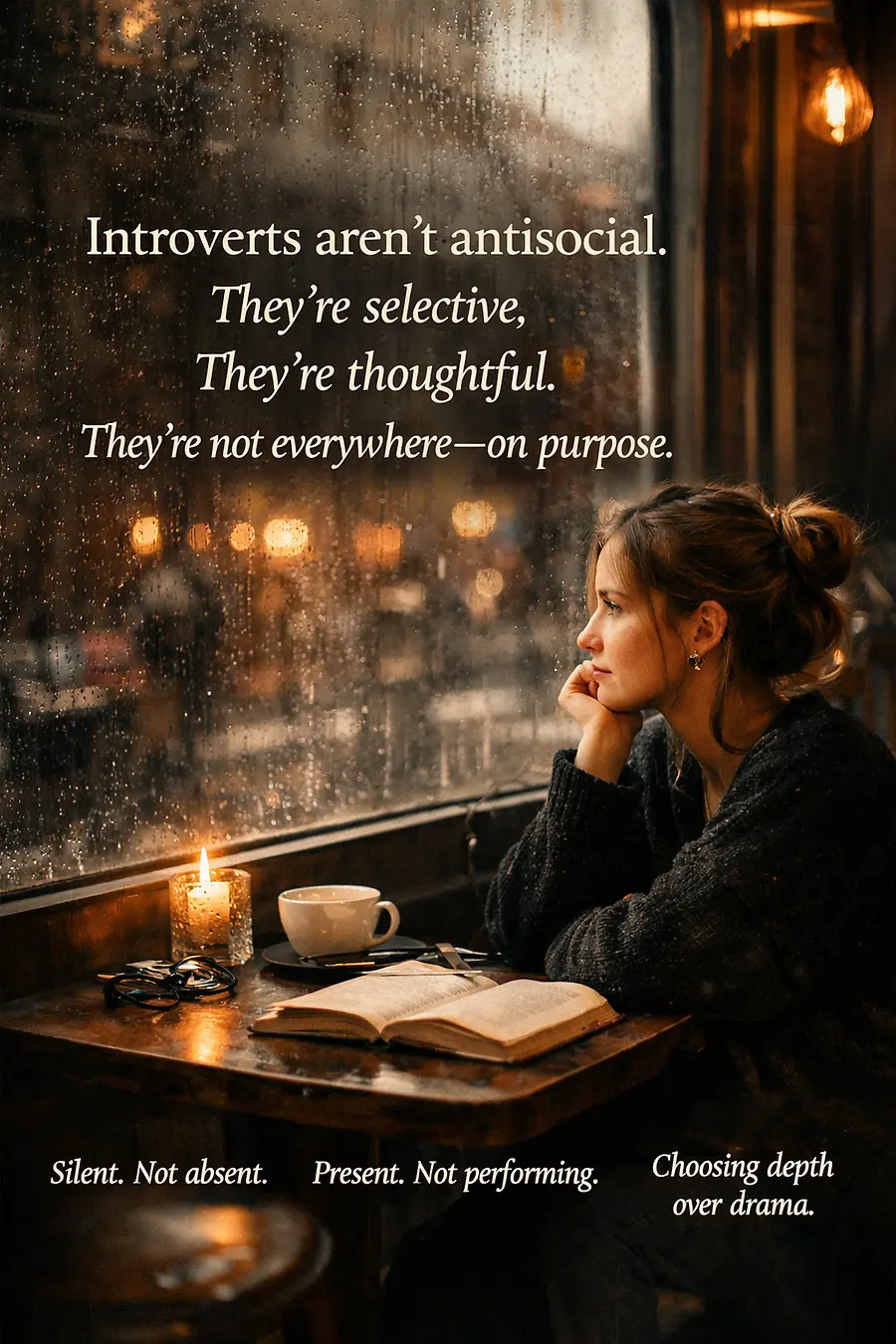
Two Operating Systems, No Update Required
Introverts and extroverts aren’t variations of the same personality—they run on entirely different operating systems. Extroverts recharge through people, stimulation, and constant interaction. Introverts recharge by stepping away from it. This isn’t a flaw or something that needs correcting—it’s design. The problem is that only one of these systems is loudly celebrated, while the other is constantly encouraged to “come out more.”
Selective Is Not Socially Awkward
Introverts are selective in how they move through life. They don’t attend everything, engage in every conversation, or accept every invitation. Not because they can’t—but because they won’t. Time and energy are finite resources, not to be spent on chaos, shallow interactions, or environments that feel misaligned. That’s not antisocial behavior—it’s discernment.
Yes, Introverts Like People—Just Not on Demand
Introverts do enjoy social circles. They value connection, humor, and meaningful conversation. What they don’t do is revolve their identity around being seen, included, or constantly available. Socializing is a choice, not a personality obligation. Their life doesn’t shrink when they stay home—it often expands.
The Quiet Mental Labor No One Notices
While extroverts are talking, introverts are processing. They’re reading the room, tracking energy, interpreting tone, and deciding what actually needs to be said. That silence isn’t emptiness—it’s cognitive activity. Which is why “just one more drink” or “stay a little longer” feels less like fun and more like unpaid overtime.
Presence Without Performance
Introverts don’t perform their personalities for approval. They don’t fill silence to make others comfortable. They don’t compete for attention. And somehow, that restraint makes them very noticeable. Calm in a noisy space looks like confidence. Silence looks like control. Boundaries look like power.
When Invitations Come With Expectations
Extroverts often invite introverts with good intentions—but also with expectations: be louder, stay longer, loosen up, blend in. The invitation may be casual, but the pressure to adapt is real. When introverts decline, it’s suddenly framed as distance, arrogance, or change. In reality, it’s self-respect without theatrics.
Why Quiet People Make People Uncomfortable
Introverts intimidate without trying. They don’t overshare. They don’t explain themselves. They don’t seek validation from the room. In a culture that confuses noise with confidence, someone who is grounded without an audience can feel deeply unsettling.
Alignment Over Attendance
With maturity, introverts stop apologizing. They choose fewer plans, better conversations, and environments that don’t require personality cosplay. They don’t disappear—they curate. Their absence isn’t a statement—it’s alignment.
Final Word
When extroverts want introverts to join them, the invitation itself isn’t the issue. The assumption that introverts must change to belong is.
Introverts aren’t antisocial.
They’re energy-conscious.
Their silence is intentional.
Their selectivity is strategic.
Their presence is powerful—even when it’s quiet.
Quiet strength doesn’t announce itself.
It simply decides whether it’s staying.