
When Is It Okay to Say No?
Learning to honor your boundaries without guilt or shame.

There is a small word in the English language that can carry an extraordinary amount of guilt.
No.
Two letters. One syllable. And yet, for some people, saying it can feel like committing an act of betrayal.
We say yes when we are exhausted. Yes when we are uncomfortable. Yes when we don't have the time. Yes when something doesn't feel right. Yes when we know we are giving more than we have.
And sometimes, we say yes because experience has taught us that saying no comes with consequences.
Someone becomes angry. Someone withdraws affection. Someone questions our loyalty. Someone reminds us of everything they have done for us. Someone calls us selfish.
And so we learn to keep the peace by sacrificing our own.
But I have been thinking about something lately. When did being a good person begin requiring us to abandon ourselves?
The Woman Who Always Says Yes
Many of us were raised with expectations about what it means to be a good woman. Be polite. Be helpful. Don't make a fuss. Put others first. Be grateful. Be understanding. Be the bigger person. Smile. Forgive. Give people another chance. And another. And another.
There is nothing inherently wrong with generosity, kindness, or forgiveness. These are qualities I value deeply. But there is a difference between choosing to give and believing we have no right to refuse.
Somewhere along the way, kindness can become an obligation rather than an expression of love.
We become the person everyone calls when something needs to be done. The one who listens. The one who helps. The one who rearranges her schedule. The one who understands why someone else cannot show up. The one who makes everything work.
And eventually, something strange happens. People become so accustomed to our availability that our boundaries begin to feel like inconveniences to them.
When we finally say no, they may act as though we have changed. Perhaps we have. Perhaps we have finally begun including ourselves among the people deserving our care.
When Survival Teaches Us to Say Yes
For people who have experienced trauma, particularly in relationships where disagreement carried consequences, saying no can be complicated.
Sometimes compliance was not a personality trait. It was a survival strategy.
We learned to read the room. Anticipate another person's needs. Recognize changes in tone. Avoid situations that might lead to conflict. Keep everyone comfortable. Make ourselves useful. Stay agreeable. Because sometimes, saying no wasn't safe.
And even after those circumstances change, the body may continue responding as though disagreement is dangerous. A simple request can trigger an overwhelming sense of responsibility. A disappointed expression can feel like rejection. Someone else's frustration can feel like an emergency we must solve.
It takes time to recognize that we may no longer need every strategy that once helped us survive. And sometimes, we need support as we learn to make different choices.
Healing isn't simply learning that we can say no. It is discovering that our no deserves respect.
Gratitude Is Not a Lifetime Contract
Here is something I believe deserves more attention.
Someone can help us, support us, love us, or show us tremendous kindness. We can appreciate that deeply. We can acknowledge what they have contributed to our lives. We can even return that kindness when we are able.
But gratitude does not mean surrendering our autonomy. A favor is not ownership. Generosity does not create unlimited access to another person's time, body, labor, or emotional energy. And helping someone does not entitle us to make decisions for them.
We can be grateful for what someone has given us without owing them the rest of ourselves. Healthy relationships allow appreciation and independence to exist together.
When Is It Okay to Say No?
Perhaps the simplest answer is this: Whenever saying yes would require you to betray something important within yourself.
- When you are physically exhausted and need rest.
- When someone asks you to take on responsibilities that are not yours.
- When your time has already been committed elsewhere.
- When a request conflicts with your values.
- When you feel pressured into intimacy, affection, or physical contact.
- When someone expects you to neglect your own needs to meet theirs.
- When you are being asked to participate in something that makes you uncomfortable.
- When a relationship has become one-sided.
- When you simply do not want to do something.
That last one can be particularly difficult. We have become accustomed to believing that every no requires a sufficiently convincing explanation. But not wanting to do something can be a legitimate reason.
We are allowed to have preferences. We are allowed to make choices. We are allowed to decide how we spend our time. And we are allowed to change our minds.
No Is Not the Opposite of Love
I think this is where many people struggle. We confuse boundaries with rejection.
If I say no, will they think I don't care? Will I hurt their feelings? Will they leave? Will they be disappointed?
Perhaps. People are allowed to feel disappointed. But disappointment is not automatically evidence that we have done something wrong. We cannot build meaningful relationships around the promise that nobody will ever experience an uncomfortable emotion.
Love requires honesty. Friendship requires respect. Community requires reciprocity. And healthy cooperation requires the freedom to disagree.
A relationship in which one person cannot safely say no is not a relationship built on mutual choice. It is a relationship built around compliance.
Love that cannot tolerate a boundary may need to examine what it has been calling love.
The Difference Between Kindness and Self-Abandonment
I have spent years thinking about compassion and human dignity. I believe we need more kindness in the world. More community. More cooperation. More people willing to help one another.
But I have also come to believe that compassion must include the person offering it. Otherwise, what we call kindness can become self-erasure.
We give until we are empty. We listen until we are overwhelmed. We help until our own work falls behind. We accommodate until our lives no longer feel like our own.
Then we wonder why we are exhausted, resentful, or disconnected from ourselves.
Perhaps the problem was never that we cared too much. Perhaps it was that we forgot caring should travel in more than one direction.
You are not required to disappear in order to make someone else feel important.
Learning to Say No Without Becoming Cruel
Boundaries do not require hostility. We can be clear without being unkind. We can decline without humiliating someone. We can disagree without attacking their character.
Sometimes the words are simple.
- Thank you for thinking of me, but I can't take that on.
- I understand this matters to you, but I need to prioritize something else.
- I'm not comfortable with that.
- I need time to consider what works for me.
- I care about you, but I cannot be responsible for that decision.
- No, thank you.
And sometimes: No. Nothing more.
We do not always owe someone an elaborate defense of our boundaries.
Of course, relationships involve communication, shared responsibilities, and compromise. A boundary is not a way to avoid every difficult conversation or responsibility.
But compromise requires two people who are free to choose. It cannot exist where one person's needs consistently erase the other's.
What Happens When We Begin Choosing Ourselves?
At first, it may feel uncomfortable. We may experience guilt. We may second-guess ourselves. We may worry that we are becoming selfish. People who benefited from our constant availability may resist the change.
But slowly, something else can begin happening.
We discover we have time. Time to rest. Time to create. Time to study. Time to pursue dreams that have been waiting patiently. Time to enjoy our own company.
We begin recognizing which relationships respect our independence and which depend upon our compliance.
We learn that helping someone because we genuinely want to feels very different from helping because we are afraid of what will happen if we don't.
And perhaps most importantly, we begin hearing our own voices again.
The Right to Belong to Yourself
As an educator, artist, author, and advocate for trauma-informed approaches to healing, I return repeatedly to one principle: Autonomy is part of human dignity.
People deserve opportunities to make meaningful choices about their lives. That includes children learning independence. Students developing their own voices. Survivors reclaiming decision-making. Women establishing boundaries. Older adults choosing how they wish to live. And every human being learning that their needs, preferences, and values matter.
We cannot speak sincerely about empowerment while expecting people to surrender their right to choose. We cannot advocate for compassion while dismissing someone's discomfort. And we cannot build genuine community by demanding that individuals sacrifice themselves to keep everyone else satisfied.
A healthy community is not one where everyone says yes. It is one where people can say no and still be treated with dignity.
Perhaps No Is Where a New Life Begins
There comes a time when we may need to examine the agreements we have made with the world. Some were spoken. Others were never discussed. We simply accepted them.
- I will always be available.
- I will always understand.
- I will always forgive.
- I will always put myself last.
- I will never disappoint anyone.
But perhaps those agreements no longer serve the people we are becoming. Perhaps we are allowed to rewrite them.
- I will help when I can.
- I will care without abandoning myself.
- I will listen, but I also deserve to be heard.
- I will love, but I will not surrender my autonomy.
- I will be compassionate, but I will also protect my peace.
- I will make room for others without disappearing from my own life.
And when something does not belong in the life I am creating, I will give myself permission to say no.
Not because I have stopped caring. Not because I have become selfish. Not because I believe my needs matter more than everyone else's. But because my needs matter, too.
And perhaps that is the lesson many of us have waited a lifetime to learn.
No is not always the end of something. Sometimes it is the first honest word in a new beginning. Sometimes it is how we protect the things we love. Sometimes it is how we make room for something better. And sometimes, after years of saying yes to everyone else, it is how we finally begin saying yes to ourselves.
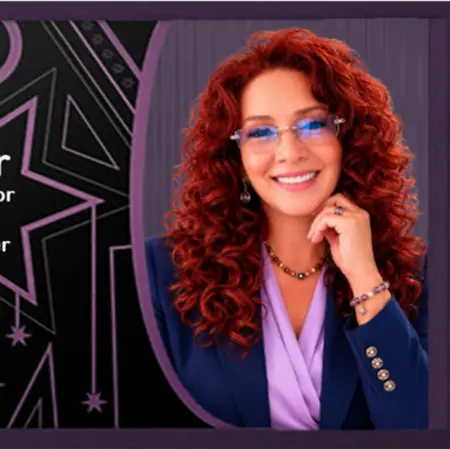
Mylee Star Hawk, MAED, founded Mama Star's Healing Circle to support healing through education, art, and community. With 25+ years in education and community support, Star specializes in addressing generational trauma through creative expression, culinary arts, and spiritual practices. An ordained minister and master chef pursuing a doctorate in Transpersonal Psychology, she integrates education, creativity, and…





