When Someone Else Takes Credit for Your Work: The Silent Challenge of Project Management
When recognition becomes invisible and communication stops, project managers must learn to advocate for their contributions while maintaining professional integrity.

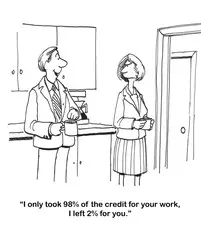
Project management has a side we don't discuss enough. It is not about missed deadlines, budget overruns, scope creep, or even difficult stakeholders. It is about what happens when you put in the work, build the relationships, solve the problems, and move a project forward, only to watch someone else step into the conversation and receive recognition for what you accomplished.
What makes the situation even more frustrating is when that individual does not communicate with you.
They may present updates on work you completed, participate in leadership discussions without including you, or speak as though they directed decisions they were never involved in making. Meanwhile, you are left wondering how your contributions became someone else's accomplishments.
As a technical project manager, I understand that project success is rarely the result of one person's efforts. We depend on developers, business analysts, quality assurance teams, product owners, leadership, and other stakeholders. Recognition should reflect that shared effort.
But there is an important difference between sharing credit for team success and letting someone take ownership of work they didn't do.
Collaboration should never require someone to become invisible.
This article explores how project managers can address these situations professionally, protect their contributions, improve communication, and maintain the leadership standards they expect from others.
The Difference Between Collaboration and Taking Credit
One of the first lessons I learned in project management is that we cannot accomplish everything alone. We rely on people with different skills, perspectives, and responsibilities.
A project manager might coordinate schedules, identify risks, facilitate meetings, manage dependencies, and communicate with stakeholders. Developers build solutions. Business analysts clarify requirements. Quality assurance teams validate functionality. Product owners help establish priorities.
Everyone contributes something important.
But what happens when someone begins presenting your work as their own?
Perhaps you spent weeks coordinating a difficult release. You worked with the technical teams, addressed obstacles, documented decisions, and ensured everyone understood the expectations.
Then someone who was minimally involved presents the accomplishments to leadership without acknowledging your contribution.
At first, you might dismiss it. After all, the project succeeded, and that should be the goal.
But when the behavior continues, it becomes more than a recognition issue. It becomes a question of accountability, transparency, and professional respect.
Research published by the Project Management Institute (PMI) has addressed this exact situation. In When Bad Things Happen to Project Managers, the author discusses how people sometimes associate themselves with successful projects and claim recognition. The article emphasizes the value of consistent communication and documentation in establishing who contributed to project outcomes.
Project Management Institute
That is an important distinction.
You do not need to compete for recognition when the work, responsibilities, and contributions are clearly documented.
However, documentation alone does not solve every problem. An organization must also have leaders who recognize the difference between contributing to a project and taking credit for someone else's contribution.
When Communication Stops, Trust Begins to Break Down
What concerns me most about these situations is not always the recognition itself. It is the lack of communication.
Imagine working on a project when someone starts participating in discussions about your responsibilities without including you.
Decisions are made without your knowledge. Leadership receives updates without your input. Questions are directed elsewhere, even though you have the information needed to answer them.
Eventually, you learn about decisions affecting your work after they have already been communicated.
This creates several problems:
- First, it introduces confusion about who is responsible for what.
- Second, it increases the risk of inaccurate information reaching stakeholders.
- Third, it weakens the relationships that project managers depend on to deliver successful outcomes.
- Finally, it can make the person doing the work feel that their contribution is no longer valued.
PMI's Proactive Communication for Project Managers explains the importance of aligning stakeholders, defining expectations, documenting concerns, and establishing accountability.
Project Management Institute
Those principles are not limited to project initiation. They apply throughout the project life cycle.
Communication is not simply about sending emails, holding meetings, or publishing status reports.
It means ensuring the right people are involved in the right conversations.
I often think about how easily a project can become disconnected when individuals begin communicating around one another rather than with one another.
A project may still appear successful on paper, but behind the scenes, trust may be deteriorating.
Once trust is damaged, even routine decisions become harder.
Project Management Is Not a Competition for Visibility
There is a difference between wanting your work recognized and needing to be the center of attention.
I believe good project managers should want their teams to succeed, even when they aren't the ones receiving public recognition.
When a developer solves a difficult technical issue, they deserve recognition.
When a business analyst identifies a requirement that prevents rework, that contribution should be acknowledged.
When a QA professional catches a defect before production, their work matters.
And when a project manager coordinates the effort, resolves dependencies, and helps the team reach its objectives, that contribution matters too.
Recognition should not be a limited resource people compete for.
The problem begins when individuals believe they must diminish another person's work to increase their own visibility.
That is not leadership.
That is competition disguised as collaboration.
PMI's Code of Ethics and Professional Conduct identifies responsibility, respect, fairness, and honesty as foundational professional values. These principles establish an ethical basis for representing contributions accurately and treating colleagues fairly.
Project Management Institute +1
For me, those principles matter most when no one is watching.
It is easy to acknowledge a team member when leadership is present. The real test is whether you keep respecting that person's contributions when they are absent from the conversation.
Professional integrity means giving credit where it belongs, even when you could easily take it for yourself.
The Danger of Being Left Out of Decisions About Your Own Work
Consider a common project management scenario.
A technical project manager has been coordinating a software release for several weeks.
The PM has worked with developers, QA, business stakeholders, and operational teams to prepare the release. The PM has identified dependencies, tracked outstanding issues, and reviewed the deployment schedule.
Another individual attends a leadership meeting and provides a release update.
The update sounds positive. Leadership is pleased.
However, the presenter has not communicated with the PM responsible for coordinating the work.
They may not know about a testing dependency, an unresolved issue, or a pending approval.
Leadership now believes the release is ready, while the project team is still waiting for a critical decision.
The issue is no longer simply who receives credit.
It has become a delivery risk.
This is why project managers should distinguish between visibility and accountability.
Someone can be highly visible to leadership without having the most accurate understanding of the project's current condition.
Similarly, someone can do the work without the visibility needed to influence decisions.
Both situations create organizational risk.
PMI's article The Brick and Mortar of Project Success discusses the importance of clear work expectations, relationship expectations, and responsibility assignment tools such as RACI matrices.
Project Management Institute
A RACI matrix can help identify who is responsible, accountable, consulted, and informed. But it only works when people respect those responsibilities.
A chart cannot prevent someone from excluding a colleague from a meeting.
A communication plan cannot force someone to acknowledge another person's contribution.
Those tools provide structure. Leadership behavior determines whether people respect that structure.
Why Silence Should Not Always Be Mistaken for Professionalism
I believe many professionals have felt the urge to speak up but chose to stay quiet.
Perhaps they did not want to appear difficult.
Perhaps they feared being labeled uncooperative.
Perhaps they believed leadership would eventually recognize who was doing the work.
Or perhaps they simply wanted to avoid creating conflict.
I understand those concerns.
Project managers are often expected to remain calm, diplomatic, and solution-focused. We spend much of our time resolving disagreements and helping others work together.
But professionalism should not require us to accept repeated misrepresentation.
There is a difference between creating unnecessary conflict and addressing a legitimate concern.
Harvard Business Review's article How to Respond When Someone Takes Credit for Your Work, by Amy Gallo, examines the difficulty of responding when colleagues or supervisors receive recognition for another person's contributions. It discusses ways to respond constructively rather than letting resentment drive the response.
Harvard Business Review
That distinction matters.
Speaking up does not have to mean embarrassing someone in a meeting or publicly challenging their character.
It can mean having a private conversation, clarifying responsibilities, or respectfully correcting inaccurate information.
For example, I might say:
"I appreciate you sharing the project update. Since I have been coordinating this work directly with the team, I would like to be included in future discussions so we can ensure leadership receives the most accurate information."
That statement is professional, factual, and focused on the project.
It does not accuse someone of having bad intentions.
It establishes an expectation.
And sometimes establishing that expectation is the most important step we can take.
How Project Managers Can Protect Their Work Without Becoming Defensive
I do not believe project managers should spend their days proving their value. Our work should be visible through the results we deliver and the relationships we build.
However, I also believe we have a responsibility to maintain accurate records of our contributions.
Here are several practices I consider important:
- Document decisions and ownership. Keep project documentation current. Record important decisions, responsibilities, action items, risks, and approvals in the organization's approved project management tools.
- Communicate accomplishments through established channels. Status reports should explain what has been completed, who contributed, what remains outstanding, and which decisions are needed. This is not self-promotion. It is responsible reporting.
- Maintain direct relationships with stakeholders. Do not depend entirely on another person to communicate your work. When appropriate, participate in discussions involving your responsibilities.
- Clarify roles before confusion develops. When multiple individuals lead a project, establish who owns delivery coordination, technical decisions, stakeholder communication, and executive reporting.
- Address concerns privately before escalating. Give the other person an opportunity to explain. There may be a misunderstanding about responsibilities or communication expectations.
- Escalate patterns, not assumptions. If the behavior continues, document specific examples and explain the impact on project delivery. Focus on inaccurate reporting, excluded decision makers, missed dependencies, or unclear accountability.
These practices reflect the broader principles of proactive communication, role clarity, and accountability discussed in PMI's project management literature.
Project Management Institute +1
I would also add one more consideration.
Don't let frustration with someone else's behavior change how you treat the rest of your team.
Continue recognizing their contributions. Continue sharing information. Continue supporting the project.
You can establish boundaries without abandoning your professional values.
What If the Person Taking Credit Is in Leadership?
This is where the situation becomes more complicated.
It is one thing when a colleague presents your work as their own.
It is another when the individual is a manager, senior leader, or someone who influences your performance evaluation or career opportunities.
The power difference can make it difficult to challenge the behavior.
You may worry that speaking up will damage the relationship or create career consequences.
In these situations, I believe the approach should be especially thoughtful.
Start with the facts.
What work did you perform? What decisions did you coordinate? What documentation demonstrates your involvement? How was the work represented to others?
Then consider the actual impact.
Was your contribution overlooked in one meeting, or is there an ongoing pattern?
Was the omission accidental, or is someone repeatedly excluding you from discussions directly related to your responsibilities?
The answer matters because not every omission is intentional.
A leader may summarize team accomplishments without naming every contributor. That is not automatically misconduct.
However, repeatedly misrepresenting ownership or excluding the responsible PM from critical decisions deserves attention.
I would approach the conversation by explaining the operational consequences rather than focusing exclusively on recognition.
For example:
"I want to make sure we are aligned on project responsibilities. I have been coordinating the delivery activities and working directly with the technical teams. When project updates or decisions occur without my involvement, it creates a risk that important dependencies or outstanding issues may be missed. I would appreciate being included in those conversations moving forward."
This approach doesn't diminish your contribution.
It places the concern where leadership should recognize its importance: accountability, communication, and project outcomes.
If direct communication doesn't resolve a persistent problem, consider using the organization's established management, HR, or ethics channels, depending on the seriousness of the behavior.
The Human Cost of Taking Credit for Someone Else's Work
We often discuss project management in terms of schedules, resources, deliverables, budgets, and performance indicators.
But every project has a human side.
People invest time, energy, knowledge, and personal commitment into their work.
They attend difficult meetings, solve unexpected problems, support colleagues, and sometimes spend hours addressing issues that leadership never sees.
When those efforts are repeatedly overlooked or attributed to someone else, the consequences can extend beyond disappointment.
People may become less willing to share ideas.
They may stop volunteering for difficult assignments.
They may question whether their contributions are valued.
And they may begin to lose trust in the people responsible for leading them.
I believe one of leadership's most important responsibilities is to create an environment where people know their work matters.
This does not mean everyone needs public praise for every task.
It means treating people fairly and representing their contributions accurately.
PMI's The Brick and Mortar of Project Success connects effective leadership with trust, respect, accountability, and clear expectations for working relationships.
Project Management Institute
These are not merely interpersonal preferences.
They influence how teams function.
A project manager who no longer trusts the people sharing project information may spend more time verifying conversations than managing delivery.
A team member who believes their contributions will be ignored may become less engaged.
A workplace where recognition depends more on visibility than contribution risks rewarding the wrong behaviors.
And that should concern every leader.
Leadership Means Making Others Visible, Not Making Them Disappear
One leadership principle I value most is that you don't need a title to lead.
You demonstrate leadership through your actions, decisions, accountability, and how you treat others.
I have never believed that leadership requires someone else to become smaller so that you can appear more important.
In fact, I believe the opposite.
The strongest leaders make the people around them more visible.
They recognize who solved the problem.
They acknowledge who completed the work.
They include the people responsible for delivery in important conversations.
And when something goes wrong, they accept their share of responsibility rather than blaming the people doing the work.
This is especially important in project management because so much of our success depends on influence rather than formal authority.
We cannot demand trust.
We earn it through consistency.
We cannot expect transparency if we are unwilling to communicate openly.
And we cannot ask teams to take accountability while allowing others to misrepresent their contributions.
For me, this is where leadership and ethics intersect.
Delivering the project is not enough.
How we treat people while delivering the project matters just as much.
A Lesson for Every Project Manager: Your Work Deserves Respect, but So Does Your Response
I believe one of the hardest lessons in professional development is understanding that doing good work does not guarantee recognition.
You can be prepared, dependable, knowledgeable, and committed to your team, yet still encounter people who take advantage of your contributions.
You cannot control every conversation that happens when you are not in the room.
You cannot control whether someone chooses to acknowledge your work.
And you cannot control another person's professional integrity.
But you can control how you respond.
- You can maintain documentation.
- You can communicate directly.
- You can clarify expectations.
- You can address concerns respectfully.
- And you can refuse to let another person's behavior determine your own standards.
I believe project managers should remember something else.
Being professional does not mean being passive. Being collaborative does not mean accepting exclusion. And being a team player does not mean letting others misrepresent your contributions.
We should be willing to share credit generously. We should also be willing to correct the record when necessary.
Those two principles are not contradictory.
They are both part of responsible leadership.
Final Thoughts: Do Not Confuse Someone Else's Visibility With Your Value
If there is one message I want other project managers to take away from this article, it is this:
Your contributions do not become less valuable because someone else receives the recognition.
But that doesn't mean you should stay silent when the situation affects your responsibilities, professional reputation, or the project's success.
I believe project management is about more than coordinating work. It is about building trust, creating accountability, communicating effectively, and treating people with respect.
When someone takes credit for another person's work, they may gain temporary recognition, but they risk damaging the relationships that make long-term success possible.
And when communication is deliberately avoided, the problem becomes larger than recognition. It becomes a leadership concern.
I want to be the kind of project manager who celebrates others' success, acknowledges the people doing the work, and speaks up when something is not right.
I also want to continue learning when to have difficult conversations, how to establish boundaries, and how to advocate for myself without losing sight of the team.
Because leadership is not about who gets to tell the story of success.
It is about who helped make that success possible, who is willing to acknowledge those contributions, and who remains accountable when the story becomes difficult.
You do not have to take credit from someone else to demonstrate your value. You should never have to become invisible to prove you are a team player.
References and Further Reading
The following sources informed the article's discussion of professional ethics, communication, accountability, leadership, and recognition.
- Project Management Institute. (2025). Code of Ethics and Professional Conduct. Explains the professional values of responsibility, respect, fairness, and honesty. PMI Code of Ethics
- Project Management Institute. When Bad Things Happen to Project Managers. Discusses challenges project managers face, including situations in which others claim credit for project accomplishments. Read the PMI article
- Project Management Institute. Proactive Communication for Project Managers. Examines stakeholder alignment, communication planning, documentation, and accountability. Read the PMI article
- Bristol, P. (2012). The Brick and Mortar of Project Success: Core Values and Key Accountabilities. PMI Global Congress. Discusses trust, leadership, responsibility assignment, and organizational accountability. Read the PMI paper
- Fister Gale, S. (2005). Clear Channels. PM Network, 19(9), 60–66. Explores effective stakeholder communication and the importance of maintaining clear channels for project decisions and expectations. Read the PMI article
- Gallo, A. (2015, April 29). How to Respond When Someone Takes Credit for Your Work. Harvard Business Review. Examines professional responses to misattributed work and the importance of constructive conversations. Read the HBR article
- Harvard Business Review. (2018). The Art of Claiming Credit. A discussion of workplace recognition, professional advocacy, and difficult conversations. Listen to the HBR discussion

Dawn Dahlke is a Technical Project Manager II at Vail Systems with over a decade of progressive career advancement in project management. Starting with 18 years as a 911 dispatcher and a BA in Organizational Leadership (Project Management) from Arizona State University (summa cum laude), she brings resilience and leadership to her role. She specializes in Agile/Scrum methodologies, stakeholder management, and…