Why 95% of Small Businesses Don't Sell—They Just Close Down
Why most business owners fail to sell—and how to avoid becoming another statistic.

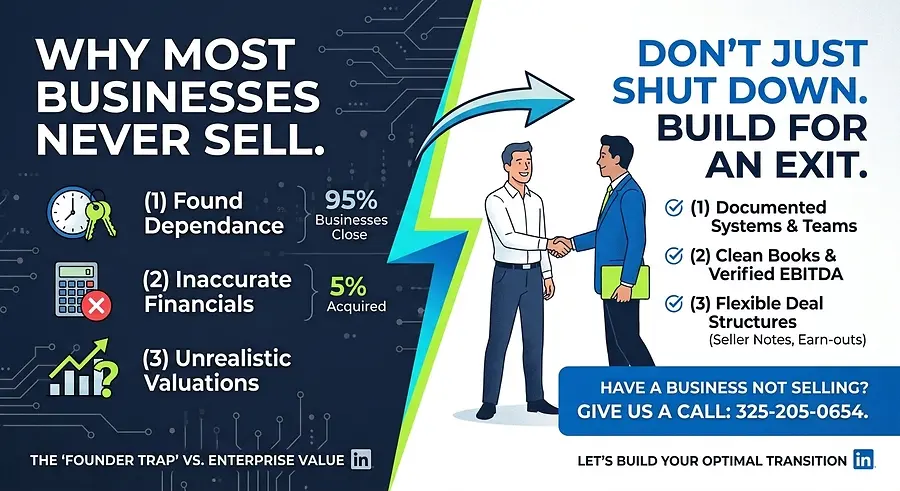
Up to 95% of business owners who attempt to sell their companies fail to complete a deal.
They don't get acquired. They don't cash out.
They simply close the doors, walk away from years of hard work, and leave millions of dollars in unrealized enterprise value on the table.
Why does this happen?
Personal Reliance: The Founder Trap
If your business cannot run seamlessly without you on a daily basis, you don't own a business-you own a job.
Buyers want cash-flowing assets with strong operations, not a contract to buy your personal time.
Flawed Financials and Unrealistic Valuations
Sloppy bookkeeping, commingled personal expenses, and relying on "gut-feeling" valuations can instantly undermine seller credibility.
Institutional buyers and investors underwrite deals based on clean EBITDA and verifiable revenue streams.
Poor Deal Structuring
Too many owners demand 100% cash at closing or reject creative deal structures.
Deals often cross the finish line using seller financing, earn-outs, capital stacking, or rollover equity-structures that can bridge valuation gaps while helping protect downside risk.
Waiting Too Long to Exit
Owners frequently wait until burnout sets in, revenue declines, or market trends shift.
The best time to sell or bring in capital is often while performance is trending upward.
Closing up shop shouldn't be your default exit strategy.
If you own a business that isn't selling, or if you're struggling to structure a viable deal that unlocks your equity, give me a call.
Let's review your financials, identify and address the structural bottlenecks, and execute a transition plan that actually gets done.


