Why Do We Outgrow People?
Understanding why relationships change as we grow, and learning to appreciate them for their season rather than their permanence.

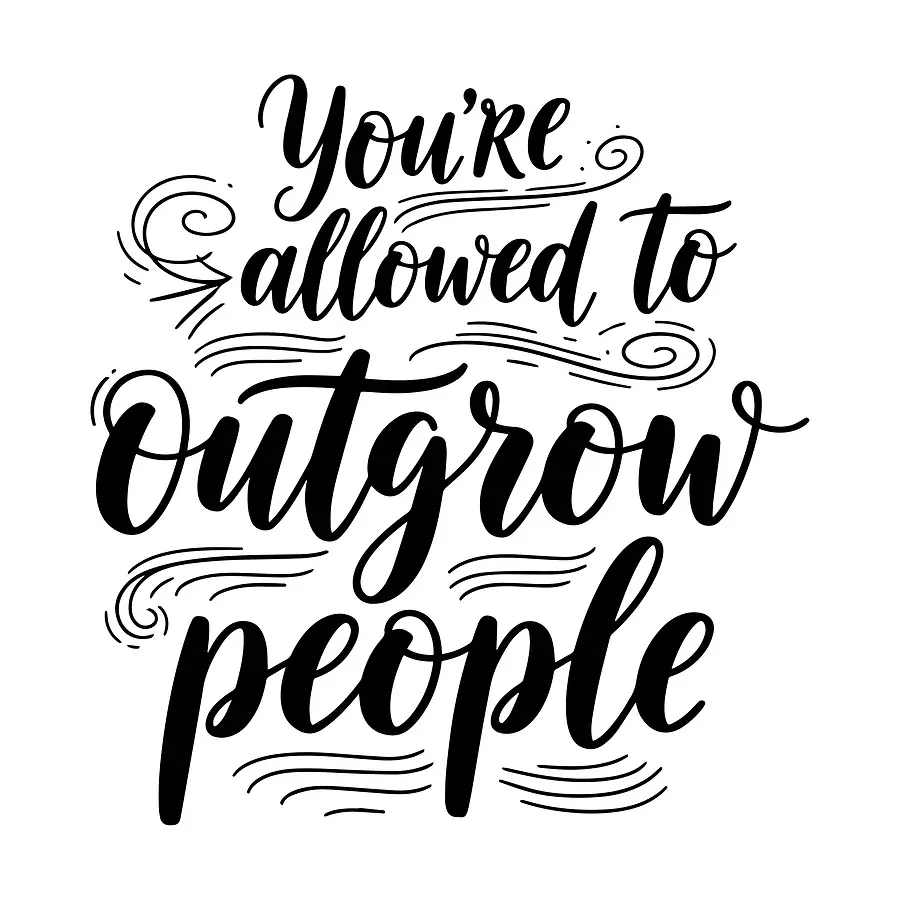
One of the more difficult realities of adulthood is discovering that relationships do not always evolve at the same pace as the people within them.
When we are younger, relationships often form around proximity and shared experiences. We attend the same schools, work in the same environments, live in the same communities, or find ourselves navigating similar stages of life. Common circumstances create natural connections, and those connections can feel permanent because we rarely imagine how much life will change over time.
Yet change is one of life’s few guarantees.
People develop new interests, encounter new challenges, pursue different goals, and acquire experiences that reshape how they view themselves and the world around them. As those changes occur, relationships are often affected in ways that are both subtle and significant.
When the Shift Begins
At first, the differences may seem minor. Conversations become less engaging. Shared priorities begin to diverge. The topics that once brought energy to the relationship no longer hold the same meaning. What was once effortless gradually requires more intention.
This shift can be confusing because there is often no obvious conflict.
No betrayal.
No dramatic disagreement.
No clear ending.
Instead, there is simply a growing awareness that something has changed.
Many people struggle to make sense of these moments because they assume every meaningful relationship should remain exactly as it was. When change occurs, they search for someone to blame. They wonder whether they have failed the relationship, whether the other person has changed too much, or whether something important has been lost.
Sometimes the answer is much simpler.
People grow.
And growth is not always a shared experience.
Growth Is Not Always a Shared Experience
Two people can begin in the same place, care deeply about one another, and still evolve in different directions. That divergence does not necessarily mean someone is right and someone is wrong. It may simply mean that the relationship was built for a season that has now changed.
This can be difficult to accept because many of us associate change with loss. We assume that if a relationship no longer functions the way it once did, something must have gone wrong. In reality, some relationships complete their purpose without continuing indefinitely.
Consider the people who influenced you during a specific chapter of your life. A mentor may have provided guidance when you needed direction. A colleague may have helped shape your professional development. A friendship may have carried you through a challenging season. The value of those relationships is not diminished simply because they no longer occupy the same place in your life.
Their significance remains.
What changes is their role.
Permanence Is Not the Only Measure of Success
One of the greatest misunderstandings about relationships is the belief that permanence is the only measure of success. By that standard, any relationship that changes, fades, or ends must be viewed as a failure.
Life suggests otherwise.
Some relationships are lifelong.
Others are seasonal.
Some are built for a specific purpose, a particular season, or a unique stage of personal growth. Their contribution to our lives remains meaningful even if their presence does not remain constant.
Understanding this distinction can bring a sense of freedom. It allows us to appreciate relationships for what they contributed rather than judging them solely by how long they lasted.
When Growth Creates Challenges
At the same time, growth can create its own challenges.
There are moments when personal development requires difficult decisions. New priorities may demand different boundaries. Greater self-awareness may change the kinds of conversations we are willing to have. Increased clarity about purpose may influence how we spend our time and energy.
When these shifts occur, some relationships adapt and deepen.
Others struggle.
Neither outcome automatically reflects a lack of care.
Sometimes it simply reflects a difference in direction.
That reality can produce guilt, particularly for people who value loyalty. They worry that changing means abandoning others or that personal growth requires distancing themselves from relationships that once mattered deeply.
Healthy growth, however, is not about looking down on others. It is not about believing we have outgrown people because we have become better than they are.
It is about recognizing that alignment matters.
Relationships thrive when there is mutual respect, shared values, and a willingness to grow together, even if growth looks different for each person. When those elements are absent, maintaining the same level of connection can become increasingly difficult.
Evolving vs. No Longer Aligned
This does not mean every relationship should be released at the first sign of change. Meaningful relationships often require patience, communication, and intentional effort. Many can withstand significant differences when both people remain committed to understanding and supporting one another.
The key is learning to distinguish between relationships that are evolving and relationships that are no longer aligned.
That distinction requires honesty.
It requires maturity.
And it requires the willingness to accept that not every relationship is meant to remain exactly as it was.
Growth Reveals Rather Than Creates
Perhaps the most helpful perspective is to recognize that growth reveals rather than creates many of these differences. The distance we suddenly notice may have been present for years. Personal development simply brings greater clarity to what was already there.
Growth does not always create distance.
But it often reveals it.
That realization allows us to approach relationships with greater wisdom and less resentment. Instead of focusing exclusively on what has changed, we can appreciate what was gained. Instead of viewing every transition as a loss, we can recognize it as part of the natural evolution of life.
The people who have shaped us deserve gratitude, even when they no longer occupy the same place in our story.
The lessons remain.
The memories remain.
The influence remains.
And in many cases, the appreciation remains as well.
Growth Is Not the Enemy of Connection
So if you find yourself wondering whether you have outgrown a relationship, resist the urge to reduce the situation to a simple conclusion. Relationships are rarely that straightforward.
Instead, consider whether the relationship is changing, evolving, or serving a different purpose than it once did. Consider what it contributed to your life and what it continues to contribute now.
Most importantly, remember that growth is not the enemy of connection.
When approached with wisdom, honesty, and respect, growth can deepen the relationships that are meant to continue and bring clarity to those that are not.
Because the goal of personal growth is not to leave people behind.
The goal is to become the person you were created to be while appreciating those who helped you along the way—even when the journey eventually leads in different directions.


