
Why I Teach
From a childhood game in a Philippine nipa hut to a lifelong calling, one educator discovers that teaching is about far more than lessons—it's about transforming lives through encouragement and compassion.


I never planned to become a teacher.
In kindergarten, I wanted to be a doctor. In high school, I dreamed of becoming an opera singer. In college, I majored in Communication.
So how did I find my way into teaching?
Looking back, perhaps the signs were there all along. When I was about seven, growing up in the Philippines, I set up my own classroom in a small nipa hut in our backyard. I brought books from the previous school year and pretended to teach a roomful of imaginary students. Dad even got me a small chalkboard. I scheduled my classes—and, of course, recess.
Once, I persuaded my younger brother to be my student. I imitated our teachers so faithfully that I even “punished” him for not participating or turning in his “homework.”
At the time, it was simply a game. Years later, teaching would become much more than that.
After passing the Licensure Examination for Teachers in 2002, I accepted my first teaching job at a small private school in my hometown of Bacolod, Philippines. The pay was modest, but I was excited to finally teach. My assignments ranged from English to music and Bible classes, with students across grade school and high school.
However, as a single mother, I soon realized that my salary was not enough to support my child and myself. I left teaching for a better-paying job at a call center.
Two years later, I returned to teaching, this time at a local college. Looking back, I believe God was guiding me back to a profession whose purpose I was still discovering.
At the college, I found a supportive community where colleagues helped one another. I looked forward to coming to school and sharing new lessons with my students. Teaching began to feel like something I wanted to keep doing.
Then, in 2017, I moved to the United States through the J-1 Teacher Exchange Program and taught in the Navajo Nation in Arizona.
It was a whole new world: a different culture, a new work environment, and classroom challenges I did not yet know how to handle. During my first six months, I struggled with classroom management. I cried at night and sometimes considered returning to the Philippines. My students’ benchmark scores were low, and I did not know how to motivate them to improve their scores.
My Filipino colleagues encouraged me to keep going. Along with support from my principal and academic coach, I stayed long enough to begin building stronger relationships with my students.
I learned to celebrate progress. When a student earned 70 percent on a benchmark, I celebrated that achievement. I created a “Wall of Fame” where I posted the names of students who performed well on our quarterly assessments. Students began hoping to see their names on the wall, and over time, I saw their scores improve.
Those experiences helped me understand the importance of encouragement. Alongside the lessons and assessments, my students needed to know that I noticed their efforts and believed they could succeed.
As my exchange program drew to a close, saying goodbye was emotional. Students expressed their gratitude in ways I still remember. One gave me a friendship band.
“I want you to have it,” he told me. I have kept this friendship band to this day because that small gift reminds me that the relationships we build in the classroom can stay with us long after our time together ends.
Working with Diné students and colleagues also broadened my understanding of a culture different from my own. I was there to teach, but I had much to learn. Looking back, I believe God had a purpose in placing me there.
Even now, there are days when I consider changing careers. I sometimes tell my husband that the work feels overwhelming. Weekends can disappear into lesson planning, preparing materials, and grading essays. It is discouraging when students seem unwilling to listen or participate.
Then a former student returns.
Sometimes, they tell me that a skill they learned in my classroom helped them at work. Sometimes, they share what they have accomplished and simply say, “Thank you.”
Those moments remind me why I continue. I may not always see the impact of a lesson while I am teaching it. Sometimes, I learn about that impact years later.
What began as a childhood game has become a calling and, for me, a ministry. I teach because I have seen how encouragement, patience, and the skills we share can make a lasting difference in a student’s life.
For as long as I am able, I shall continue to teach, guided by the Lasallian educational motto: “TEACHING MINDS, TOUCHING HEARTS, and TRANSFORMING LIVES.” Rooted in the mission of St. John Baptiste de La Salle, these words embody the purpose I have found in teaching and the commitment that continues to guide my work as an educator.
*Nipa: Known locally as a bahay kubo (meaning “country house”), is an indigenous stilt house native to the Philippines, designed to adapt to a tropical climate.
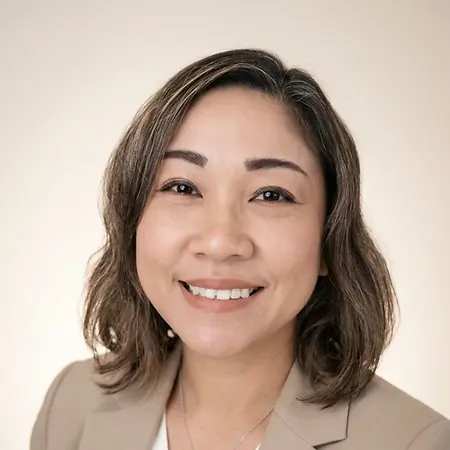
Annie delos Santos-Jones is an accomplished English educator and researcher with nearly two decades of experience in secondary and higher education. She currently teaches at Holbrook High School in Arizona while serving as a graduate professor. With degrees in Mass Communication, Education, and a PhD in Applied Linguistics, her research focuses on literacy development, educational technology, and AI's ethical…





