
Why Mentoring Matters in Affordable Housing
Investing in People: Why Mentoring and Knowledge-Sharing Are Essential to the Future of Affordable Housing

Affordable housing is a complicated industry. It requires us to understand regulations, compliance requirements, resident needs, property operations, financial performance, fair housing, and constantly changing federal, state, and local requirements.
But after working in affordable housing, I have come to believe that one of our greatest challenges—and one of our greatest opportunities—isn't found in a regulation, a budget, or a software system.
It is our people.
More specifically, it is how we develop the people who will carry this industry forward.
Affordable Housing Has a Steep Learning Curve
When I first began working in affordable housing, I quickly realized there was a tremendous amount to learn.
You can read a handbook. You can attend a training. You can complete a certification. You can learn a software system.
But there are lessons that only come from experience.
How do you explain a complicated compliance requirement to a resident in a way that makes sense? How do you balance enforcing a policy with treating someone with dignity and compassion? How do you recognize that a seemingly small issue could become a much larger compliance or operational problem?
And perhaps most importantly: Who do you call when you don't know the answer?
I've been fortunate throughout my career to learn from people who were willing to share their knowledge with me. Managers, coworkers, and other housing professionals have taken the time to answer questions, explain the "why" behind a process, and let me learn from their experiences.
Those conversations have shaped the professional I am today.
Some of the Best Training Happens Between People
Affordable housing professionals develop an incredible amount of institutional knowledge.
Some of it is documented in policies, regulations, compliance manuals, and training materials. Some of it isn't.
There is knowledge that comes from managing a difficult resident situation, preparing for an inspection, navigating an unusual compliance issue, or simply making a mistake and learning what to do differently next time.
I've found that some of the most valuable professional development happens in informal moments—a quick conversation in the office, a coworker explaining why something is done a certain way, or a manager giving me the opportunity to take on something outside my normal responsibilities.
Those moments can change the trajectory of someone's career.
We Need to Pass Knowledge Forward
I believe this is especially important as our industry works to recruit and retain experienced housing professionals.
When someone leaves affordable housing, we don't just lose a position. We can lose years of knowledge about residents, properties, programs, compliance, operations, and the countless lessons that person learned along the way.
We need to be intentional about passing that knowledge forward.
That doesn't necessarily mean creating another formal program or adding another meeting to everyone's calendar. It can be as simple as cross-training a coworker, inviting someone into a project, explaining the reasoning behind a decision, or encouraging someone to take on a challenge.
Sometimes, it means recognizing potential in someone before they recognize it in themselves.
I've Learned That Teaching Is Part of Leadership
One of the things I enjoy most about working in affordable housing is having opportunities to help others learn.
I've had the chance to train and support newer Community Managers, help coworkers navigate unfamiliar processes, and share knowledge I've gained throughout my own experience.
And I've learned from those experiences, too.
Teaching someone else forces you to slow down and really understand what you're doing. It makes you ask why a process exists instead of simply following it because that's the way you've always done it.
It also reminds me how much there is still for me to learn.
I've come to believe that you don't have to know everything to be a mentor. Sometimes the most valuable thing you can say is:
"I don't know. But let's figure it out together."
We All Have Something to Teach
You don't need decades of experience to make an impact on someone else's career.
Maybe you've only been in your current role for a couple of years, but you've learned something a new employee hasn't.
Maybe you understand compliance. Maybe you've mastered a software system. Maybe you're great at resident relations or difficult conversations. Maybe you've simply learned how to stay calm when everything seems to be going wrong.
Whatever you've learned, someone else can benefit from it.
And in return, you'll probably learn something from them.
That exchange is what makes a strong housing team. Knowledge shouldn't be something we protect or keep to ourselves. It should be something we share.
The Future of Affordable Housing Is People
We spend a lot of time talking about the future of affordable housing—funding, legislation, technology, development, compliance, and the rising cost of operating our communities.
All of those things matter.
But behind every property, every program, and every resident interaction are people.
If we want a strong future for affordable housing, we have to invest in those people.
The professionals who invested their time and knowledge in me have had a lasting impact on my career. I want to do the same for the people coming behind me.
Because someday, the person I'm teaching today may be the person leading a community, training a new Community Manager, solving a compliance problem, advocating for residents, or helping someone else find their place in this industry.
And when that happens, the knowledge doesn't stop with me.
It moves forward.
That, to me, is the real power of mentoring in affordable housing.
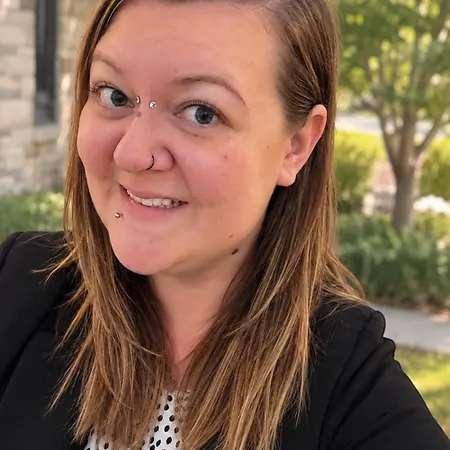
Lauryn Rubash is an affordable housing professional serving as Community Manager at Dominium with eight years of industry experience. She holds HCCP and FHS certifications and oversees low-income housing for seniors aged 62+. Despite overcoming a 2023 stroke, Rubash demonstrates exceptional dedication to resident services, operational management, and creating welcoming communities while balancing motherhood and…





