Women Who Changed Healthcare: Honoring Pioneers During Women’s History Month
Celebrating the pioneering women who revolutionized healthcare and transformed the future of medicine.
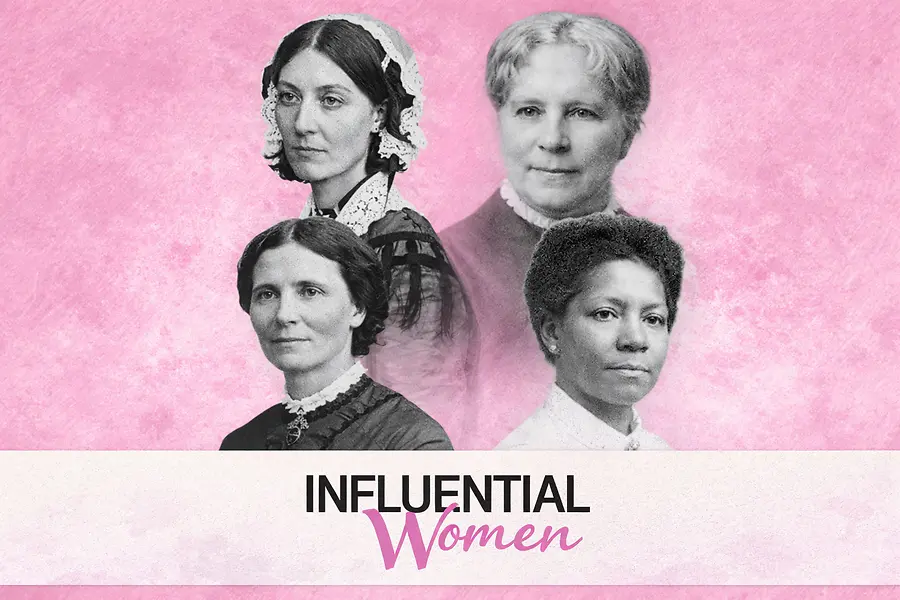
March marks Women’s History Month, a time dedicated to recognizing the countless contributions women have made to society, industry, and progress around the world. Throughout the month, Influential Women is honoring historical figures who broke barriers, challenged expectations, and paved the way for future generations of leaders.
Each week, we will spotlight women who reshaped their fields and whose influence continues to be felt today. Our first focus is healthcare, an industry that has been profoundly shaped by women who refused to accept limitations and instead used their knowledge, compassion, and determination to transform the way care is delivered.
The women we highlight this week did more than work within healthcare systems. They reimagined them.
Florence Nightingale
Florence Nightingale is widely recognized as the founder of modern nursing. During the Crimean War, she dramatically reduced death rates among soldiers by introducing improved sanitation practices and hospital organization. She also pioneered the use of statistical analysis in healthcare, demonstrating how data could be used to improve patient outcomes and shape better hospital systems.
Elizabeth Blackwell
Elizabeth Blackwell became the first woman in the United States to earn a medical degree in 1849, breaking barriers in a profession that openly rejected women at the time. She later helped establish medical institutions dedicated to training women and providing care to underserved populations, opening doors for generations of female physicians.
Clara Barton
Clara Barton earned the nickname “Angel of the Battlefield” for her work delivering medical supplies and providing care directly to soldiers during the American Civil War. She later founded the American Red Cross, creating an organized system for disaster relief and emergency response that continues to serve communities today.
Rebecca Lee Crumpler
Rebecca Lee Crumpler became the first African American woman to earn a medical degree in the United States in 1864, overcoming immense racial and gender discrimination. She dedicated her career to caring for women and formerly enslaved individuals and later authored one of the first medical texts written by a Black physician.
At Influential Women, we believe leadership is defined by the ability to create opportunity, inspire progress, and pave the way for others. The stories of these healthcare pioneers remind us that influence can change industries and create lasting impact for generations to come.