Women Who Shaped Education: Honoring Pioneers During Women’s History Month
Celebrating Women Educators Who Transformed Learning and Empowered Generations
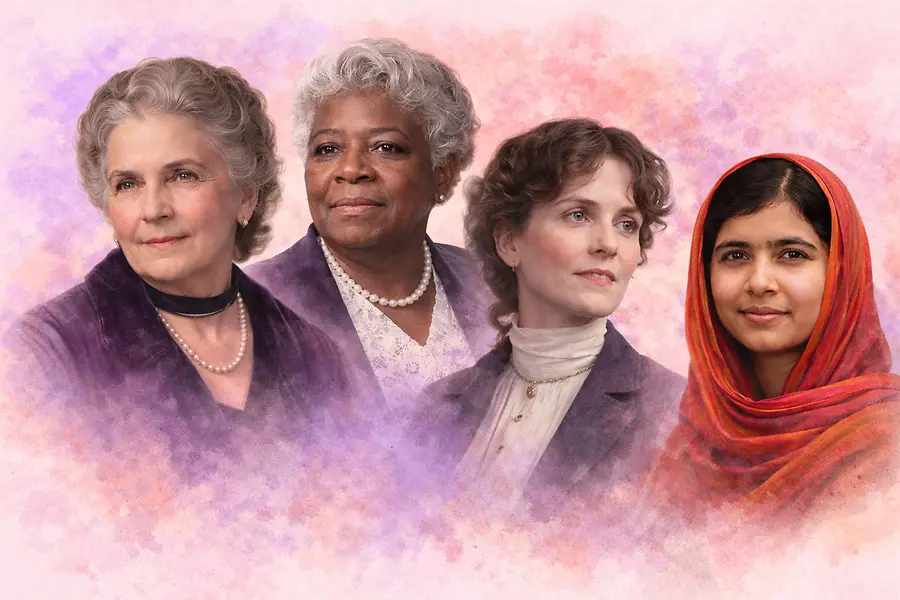
Women’s History Month is an opportunity to reflect on the leaders who expanded opportunity, challenged barriers, and transformed industries for future generations. Throughout March, Influential Women is highlighting trailblazers whose work continues to influence the world today.
This week, we turn our focus to women who reshaped education. From building institutions to advocating for access to learning, these leaders believed that education is one of the most powerful tools for empowerment and progress.
Maria Montessori
Maria Montessori transformed early childhood education by developing a child-centered learning approach that emphasized independence, curiosity, and hands-on exploration. Her methods encouraged educators to view children as active participants in their own learning rather than passive recipients of instruction. Today, Montessori schools operate around the world, demonstrating the lasting influence of her innovative approach to education.
Mary McLeod Bethune
Mary McLeod Bethune was a pioneering educator and civil rights leader who founded a school for Black students in Florida that later became Bethune-Cookman University. At a time when access to education was deeply unequal, she believed that learning was the foundation for empowerment and opportunity. Her leadership extended beyond the classroom as she became a national advocate for education, civil rights, and equality.
Anne Sullivan
Anne Sullivan is best known as the teacher and lifelong mentor of Helen Keller, helping her student learn to communicate despite being both blind and deaf. Through patience, creativity, and an unwavering belief in Keller’s potential, Sullivan demonstrated the transformative power of individualized education. Her work remains one of the most powerful examples of how dedicated educators can unlock human potential.
Malala Yousafzai
Malala Yousafzai became a global advocate for girls’ education after speaking out against restrictions that prevented girls from attending school in her home country of Pakistan. Even after surviving an attack for her activism, she continued her advocacy and became the youngest Nobel Peace Prize laureate in history. Today, she remains a leading voice for ensuring that every girl has the opportunity to receive an education.
Education has long been one of the most powerful drivers of progress. The women we honor this week did more than teach. They expanded access, challenged systems, and helped shape a future where knowledge could open doors for generations to come.
At Influential Women, we believe leadership is about creating opportunities for others and inspiring meaningful change. The educators we celebrate this week remind us that influence often begins in classrooms, mentorship, and the belief that every person deserves the chance to learn and grow.