You Are the Star of Your Own Life. Stop Dimming Your Light.
Discover how stepping into your own power and speaking your truth can transform your life and leadership.



There is a stage with your name on it.
Not necessarily the kind with velvet curtains, bright lights, and an audience waiting for you to make your grand entrance.
I'm talking about the stage of your own life.
The one where you get to decide who you are, what matters to you, what dreams are worth pursuing, and how brightly you're willing to shine.
And here's something I've learned over the years:
You don't have to dim your light to make someone else's shine brighter.
You don't have to shrink yourself to make others feel larger. You don't have to apologize for your accomplishments, minimize your experiences, or pretend you have nothing worthwhile to contribute.
And you certainly don't have to spend your life playing a supporting role in your own story. I know this because, for a long time, that's exactly what I did.
The Woman Who Sat Quietly in the Room
Years ago, when I first became involved in local business organizations and the Chamber of Commerce, I often found myself surrounded by people I considered far more accomplished, knowledgeable, and important than I was.
There were accountants, attorneys, hospital administrators, public relations professionals, retail executives, and other respected community leaders.
And then there was me. A florist. An entrepreneur, yes. A business owner, certainly. Someone who had built a business, managed employees, served customers, solved problems, and navigated the daily challenges of entrepreneurship.
But somehow, when I looked around those boardroom tables, I didn't see any of that.
I saw people with impressive titles, credentials, and careers.
And I wondered what on earth I was doing there.
So I did what many women do when they question their own value. I became quiet.
For months, I attended meetings, listened carefully, took notes, and kept most of my opinions to myself. I didn't want to say something foolish. I didn't want to draw attention to myself.
And I certainly didn't want anyone to discover what I secretly feared: that perhaps I didn't belong in that room after all.
Looking back, I realize I was waiting for someone else to give me permission to participate.
But then something happened that changed everything.
The Question Nobody Had Asked
One of our fellow board members had become increasingly difficult to work with.
He was disruptive, negative, and sometimes downright mean. He criticized people openly. He badmouthed colleagues. And if someone disagreed with him, he made absolutely certain they—and anyone within earshot—knew exactly where he stood.
Complaints were mounting.
The atmosphere at meetings was becoming uncomfortable, and the board was struggling to decide what to do.
Why was he behaving this way? What had happened to make him so angry?
As the discussion continued, I listened.
And then, almost before I realized I was doing it, I spoke up.
"Has anyone actually asked him why he's acting this way? Has anyone tried to find out what's going on in his life?"
The room became quiet.
One by one, the other board members admitted that no one had approached him to ask.
We had discussed his behavior. We had complained about his behavior. We had considered what to do about his behavior. But nobody had asked about the person behind it.
Our president decided to take the lead and have that conversation.
What he discovered changed the way we understood the situation.
The man's wife had been diagnosed with a terminal illness.
He was struggling with the devastating reality of what his family was facing. He was overwhelmed, frightened, and apparently unable to manage the emotional pressure. And yet he continued showing up for meetings and trying to fulfill his responsibilities.
He felt obligated to perform. He felt guilty about the possibility of letting people down.
And somewhere along the way, his pain had begun spilling over onto the people around him.
Did that excuse his behavior? Absolutely not.
His words had hurt people. His actions had disrupted the organization. Those things still mattered.
But understanding someone's pain doesn't mean excusing their behavior. It means recognizing that there may be more to the story than what we can see.
Our president encouraged him to step away from his board responsibilities and devote his time and attention to his wife.
He accepted that advice and resigned.
We never saw him again.
To this day, I don't know what happened to him or his family. I hope he was able to spend meaningful time with his wife and find some peace during an extraordinarily difficult chapter of their lives.
But I have never forgotten him.
Or that meeting.
The Moment I Discovered My Own Voice
Afterward, the president thanked me for speaking up.
It was a simple acknowledgment.
But for me, it was enormous.
Because something shifted inside me that day. I realized I had contributed something valuable. Not because I had the most impressive credentials.
Not because I had the highest position or the greatest expertise. But because I had brought a different perspective to the conversation.
While everyone else was focused on solving the problem of a difficult board member, I had wondered about the human being behind the behavior.
And that question mattered.
I began to understand something I wish I'd known much earlier.
You don't have to be the most accomplished person in the room to make a meaningful contribution. You simply have to recognize that your perspective has value, too.
My experiences as a florist, business owner, employer, community volunteer, and woman navigating the world had given me insights that were different from those of my fellow board members.
Not better. Not worse. Different. And different was exactly what the conversation had needed.
For months, I had been measuring my worth against everyone else's résumé.
That day, I began recognizing the value of my own.
Three Years Later, I Became President
Yes, you read that correctly.
The woman who once sat quietly at the boardroom table, afraid to draw attention to herself, eventually became president of that very organization.
Three years later, I was the one helping lead the meetings, guide the conversations, and make decisions.
WOW.
Even now, thinking about that journey makes me smile. Because the transformation didn't happen overnight.
I didn't suddenly become fearless. I didn't wake up one morning with all the answers. I simply began to believe that I belonged. And once I believed that, I started showing up differently.
I asked more questions. I shared more ideas. I trusted my experience. I stopped assuming that everyone else knew more than I did.
And perhaps most importantly, I stopped waiting for someone to tell me that I was worthy of being heard.
That one moment of speaking up didn't make me a leader.
It helped me recognize the leadership qualities I had been developing all along.
Stop Playing Small in Your Own Story
How many women are sitting quietly in rooms right now, convinced that everyone else belongs there more than they do?
How many are minimizing their accomplishments, dismissing their ideas, or waiting for permission to speak?
How many are afraid to celebrate a success because someone else might feel uncomfortable?
And how many have become so accustomed to supporting everyone else's dreams that they've forgotten they have dreams of their own?
I've met extraordinary women who can list everyone else's strengths without hesitation but struggle to name even three of their own.
They celebrate other people's promotions, accomplishments, and milestones.
But when something wonderful happens to them?
"Oh, it was nothing."
"I just got lucky."
"Anyone could have done it."
Sound familiar? I've said some of those things myself. But here's what I want you to consider.
What if celebrating your own life isn't arrogance? What if it's gratitude?
What if acknowledging your accomplishments isn't bragging? What if stepping into the spotlight doesn't mean pushing someone else into the shadows? What if you can applaud another woman's success while still being proud of your own?
There is room for more than one woman to shine.
In fact, I believe we shine even brighter when we encourage one another.
Go Ahead. Romanticize Your Life.
I love the idea of romanticizing your life.
Not because life is always beautiful or easy. Believe me, it isn't.
Life can be messy, heartbreaking, frustrating, unpredictable, and occasionally downright exhausting.
There are chapters we'd rather skip, plot twists we never saw coming, and characters we wish had never entered the story.
But there are also extraordinary moments hiding inside ordinary days. The first sip of cappuccino in the morning. The way sunlight dances across the water. A conversation that changes your perspective. A compliment you weren't expecting. The satisfaction of finishing something you once thought impossible. The moment you realize you've become someone your younger self would have admired.
Why shouldn't we celebrate those things?
Why shouldn't we dress up for no particular reason, buy ourselves flowers, take the photograph, plan the adventure, or turn an ordinary Tuesday into something worth remembering?
Why shouldn't we treat our own lives as stories worth telling?
After all, if you don't recognize the beauty, courage, and possibility in your own life, who will?
And even if someone else does, why should you have to wait for them to point it out?
You are allowed to love the life you're building. You are allowed to be proud of the person you're becoming. You are allowed to make your own happiness a priority. And you are allowed to stand in the spotlight without apologizing for the light.
Being the Star Doesn't Mean Being the Only Star
There's an important distinction I want to make.
Being the star of your own life doesn't mean believing you're more important than everyone else.
It doesn't mean demanding attention, dominating conversations, or making every situation about you.
In fact, one of my favorite beliefs is:
"Either everyone is important, or no one is."
I still believe that with all my heart.
Every person has value. Every voice deserves consideration. Every life contains stories we may never fully understand.
That difficult board member taught me something about compassion.
But the experience also taught me something about myself. I could care about someone else's struggles without dismissing my own perspective. I could help another person find the support they needed while discovering my own strength. I could be compassionate and confident.
Humble and accomplished.
Supportive and visible.
Those qualities aren't opposites.
They belong together.
Your Spotlight Is Waiting
If I could go back and speak to that younger version of myself sitting quietly at the boardroom table, I would tell her something: "You belong here."
I would remind her that her years of running a business mattered. That her experiences mattered. That the lessons she'd learned through successes, mistakes, disappointments, and unexpected detours mattered. And that she didn't need an impressive title to have an important voice.
I would tell her that one day she would lead that very organization.
And I suspect she would look at me in complete disbelief.
Then again, isn't that one of the most wonderful things about life?
Sometimes we become people we never imagined we could be. Not because someone handed us a spotlight. But because we finally stopped hiding from it.
So here's my invitation to you.
Take center stage in your own life.
Speak when you have something to say.
Celebrate what you've accomplished.
Give yourself credit for how far you've come.
Find the beauty in ordinary moments.
And never make yourself smaller simply to make someone else feel bigger.
You are not an extra in the story of your life. You are its leading lady.
And the spotlight?
It's been yours all along.
Now go ahead and shine.
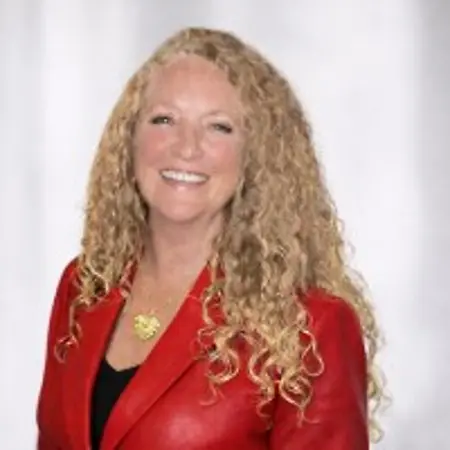
Founder & CEO of Redhead Marketing, Inc., a South Florida–based web design and social media marketing firm helping businesses build powerful online brands since 2005. Also President & CEO of Eden Florist & Gift Baskets, a multi-award-winning floral and event company serving South Florida for over four decades. Founder of Women in Ecommerce and Publisher of WE Magazine for Women, championing women entrepreneurs…