You Don't Have a People Problem, You Have a Standards Problem
No Excuse Management

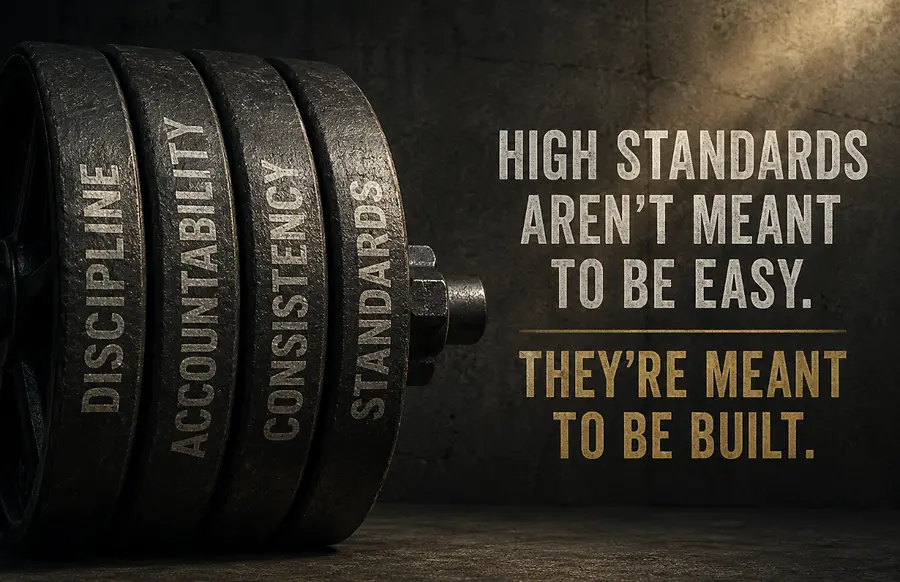
You Don’t Have a People Problem. You Have a Standards Problem.
One thing I’ve learned after years of leading teams across different markets, states, and levels of performance is that it’s usually not a people problem—it’s a standards problem. That’s a harder truth to accept because it’s easier to blame others. It’s easy to point at turnover, staffing shortages, burnout, generational differences, or struggling leadership and decide that must be the issue. It feels cleaner to believe the wrong people are sitting in the seats than to ask whether the standard inside the building has quietly shifted over time.
The reality is that standards rarely collapse overnight. They erode slowly—one excuse at a time. One missed expectation that gets ignored because everyone is tired. One tough conversation that gets avoided because it feels uncomfortable. One moment where “good enough” becomes acceptable because addressing it head-on feels harder in the moment. Most of the time, we justify it to ourselves without even realizing we’re doing it. We tell ourselves the team is short-staffed, it’s been a rough week, or people are trying their best. The problem is that when enough excuses pile up, they stop sounding temporary and start becoming culture. That’s how mediocrity gets normalized—not through one massive failure, but through hundreds of small compromises that slowly move the bar lower until nobody remembers where it used to be.
It can happen to struggling teams and successful teams alike. In fact, some of the most dangerous moments for a team are when things are performing “well enough,” because that’s when blind spots form. The urgency fades. Standards soften. Things that would have stood out immediately a year ago barely get noticed anymore. That’s the difficult part about lowered standards: eventually, you stop seeing them. The lens changes. What once felt unacceptable starts feeling normal simply because it has become familiar, and teams adjust faster than leaders realize.
People perform to the level of what is reinforced, not what is written on a poster or repeated in a meeting. You can talk about excellence all day long, but if accountability disappears the moment things get difficult, your team quickly learns that the standard is flexible. Your best people usually see it first. They see who gets coached and who gets a pass. They notice when expectations shift depending on the person, the workload, or whether someone feels like dealing with conflict that day.
Eventually, top performers adjust too. Some lower their standards to match the environment around them. Others leave entirely and go find a culture that already matches the standard they hold themselves to. That’s why burnout is often misunderstood. Most high performers are not burned out because expectations are too high—they are burned out because standards are inconsistent. There is a significant difference. People will work incredibly hard for a winning culture when they believe everyone around them is held to the same standard. What drains people is feeling like they are giving everything while others are allowed to operate at half the level without consequence. That imbalance wears teams down faster than pressure ever will.
Leadership has to own that honestly, without becoming defensive. Because leadership is not just reacting once problems become visible—it is paying attention before they become normal. That requires stripping away your own blind spots first. Every leader has them at some point. You get used to the pace, the pressure, and the constant need to solve problems quickly so you can move on to the next thing. Over time, things settle into the background that should have been addressed immediately. That is usually the moment where culture either begins slipping or begins strengthening. The difference comes down to whether the leader is willing to stop, reassess, and raise the standard again before the drift becomes permanent.
Remind yourself: your people are capable of far more than you think. They just haven’t been led clearly enough, challenged consistently enough, or pushed beyond the comfort zone that average environments create. So when performance starts slipping, when the culture feels off, or when frustration starts building, leaders need to ask themselves a different set of questions before pointing fingers at their team:
What have I allowed to become normal?
What standards have quietly drifted?
What excuses have I started accepting?
What conversations have I avoided?
At the end of the day, winning cultures are not built through motivational speeches, slogans, or talent alone. They are built through standards that stay firm when excuses would be easier. And the moment leaders fully commit to that, everything changes—not because the people suddenly changed overnight, but because the standard finally did.


