
You Don’t Have to Leave Your Heart at the Door to Lead
Redefining Leadership: Why Women Don't Have to Abandon Their Hearts to Lead with Strength

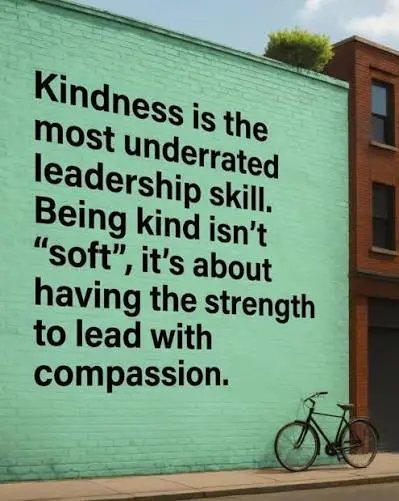
For a long time, women entering leadership were often given an unspoken rulebook: Don’t be too emotional. Don’t take things personally. Develop a thick skin. Keep your personal life out of the workplace. And whatever you do…
Don’t. Ever. Cry.
The implication was clear: emotion undermined credibility.
We were taught that if we wanted to be taken seriously as leaders, we had to leave part of ourselves at the door. Be confident, but not intimidating. Be compassionate, but not soft. Be assertive, but not difficult. Speak up, but be careful how you say it. Set high expectations, but make sure no one thinks you’re demanding.
So many rules. So many controls on who we are as women.
And while every leader may occasionally wonder whether they handled a situation correctly, women have spent generations navigating an especially narrow space between being perceived as “too much” and “not enough.” Too emotional or too cold. Too soft or too aggressive. Too quiet or too opinionated.
At some point, I started asking myself: Why am I allowing someone else to define what my leadership is supposed to look like?
I am a natural-born nurturer.
It is simply part of who I am. And yes, sometimes I “mother” my team.
I lead them. I guide them. I teach them. I celebrate their successes. I hold them accountable when they need it. I challenge them when I know they are capable of more. But I also listen. I am open with them. I have compassion when life happens, because life does happen. And I genuinely care about the people on my team as human beings, not simply as employees responsible for completing a list of tasks.
None of those things make me less of a leader.
In fact, I believe they make me a better one.
Somewhere along the way, we confused being strong with being hardened.
We began believing that authority required distance and that vulnerability somehow diminished credibility.
I don’t believe that anymore.
My team doesn’t need me to be invulnerable. They need me to be dependable.
They need to know that I will make the difficult decision when it needs to be made. That I will hold them accountable. That I will tell them the truth. That I will advocate for them, teach them, challenge them, and give them room to grow.
But they can know all of those things while also knowing that their leader has a heart.
Those two things were never mutually exclusive.
My team knows they can count on me—not only to guide them, but to roll up my sleeves and jump in when I see them drowning. I’ll show them how to do something, give them the tools they need, and then give them the freedom to find their own path to the destination.
I don’t do it for them. I model the way forward and then let them find their own footing.
Isn’t that what any “mother” does?
When they stumble, I’m not condescending or harsh. I remind them of the path we’re on, help them figure out where they got off course, and ask them to start again. I don’t hold their mistakes over their heads. I celebrate their successes and give them permission to be human.
Because we are human.
And maybe one of the most important lessons I can teach my team is that we all make mistakes—including me.
I don’t hide mine.
When I make a mistake, I own it. If I need to apologize, I apologize. If I need to correct something, I correct it. And then I move forward. Because I don’t just want to tell my team that mistakes are part of growth. I want to model what it looks like to recover from one.
That’s leadership, too.
And yes…
I’ve cried at work.
There. I said it.
I’ve cried because I was frustrated. I’ve cried because I cared. I’ve had moments when the emotions I was supposed to leave neatly tucked outside the office door followed me inside anyway.
And you know what happened?
I was still a leader afterward.
My knowledge didn’t disappear. My experience wasn’t erased. My ability to make decisions didn’t suddenly vanish because there were tears in my eyes.
What my team saw wasn’t a weak leader.
They saw a human one.
They saw that I have feelings. That I get frustrated. That sometimes things are hard for me, too. And perhaps more importantly, they saw that you can have a difficult moment, collect yourself, and keep going.
Strength isn’t pretending nothing affects you. Strength is knowing that being affected by something doesn’t have to stop you.
So maybe it’s time we stop trying so hard to fit ourselves into someone else’s definition of what a leader is supposed to look like.
As women, we need to get better at building one another up instead of measuring one another against the same impossible standards we’ve spent generations trying to escape. We need to cheer for the woman who leads differently than we do. Celebrate her successes. Make room for her voice. Remind her of her strength when she temporarily forgets it.
Most importantly, we need to recognize that the qualities that helped bring us to leadership don’t somehow become liabilities once we get there. We don’t have to strip away our femininity to prove that we belong. We can embrace our empathy. Our compassion. Our intuition. Our emotion.
We can nurture people and still hold them accountable. We can be compassionate and still make difficult decisions. We can admit when we’re wrong and still command respect. We can care deeply and still lead decisively. And yes, sometimes we can even cry.
None of it diminishes our leadership.
So perhaps it’s time to throw away that old rulebook. Don’t make yourself smaller. Don’t harden yourself just to prove that you’re strong. Don’t silence the parts of yourself someone once told you didn’t belong in leadership.
Bring your experience. Bring your knowledge. Bring your courage. Bring your expectations and your accountability. But bring your heart, too. Because what you bring to the table matters.
And you never needed to become less of a woman to earn your seat there.
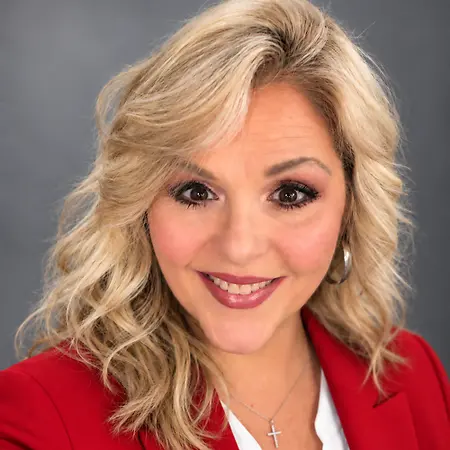
Deb Van Dyne has more than 13 years of experience in professional development and training, including five years at Exult, which was later acquired by Aon Hewitt, and eight years at IFMA in the facilities association industry. Her career trajectory has consistently centered on education, learning, and helping others succeed—beginning with recruitment into corporate training roles, followed by leadership in college…





