🤖 Your Doctor Is Using AI. You Should Be Too.

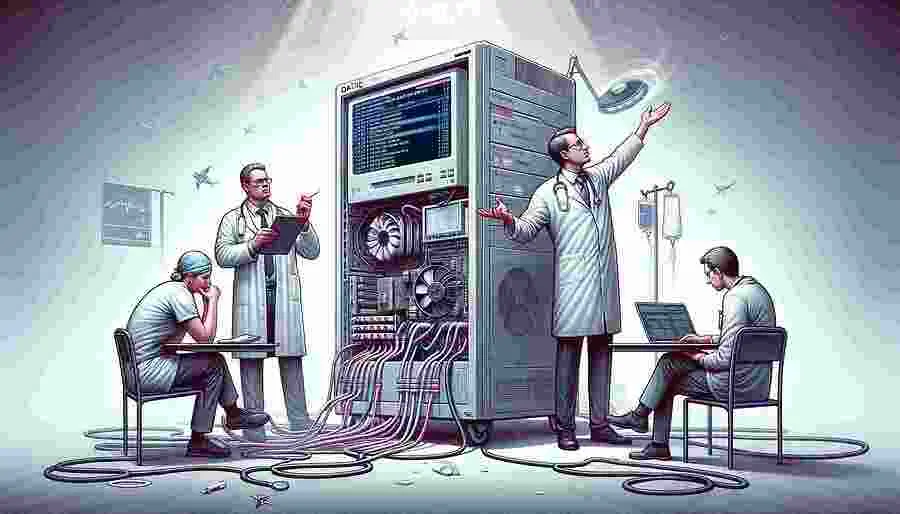
81% of physicians are already using AI professionally.
That's not according to an AI company. That's according to the American Medical Association.
So yes, patients should be using AI too. Actually, you probably already are—but are you using it correctly?
There's an enormous difference between using AI and having AI health literacy—and as artificial intelligence becomes increasingly integrated into healthcare, patients need to understand that difference just as much as physicians do.
AI can be an extraordinary tool. It can also give you an extraordinarily polished answer based on an incomplete picture. And when we're talking about your health, the picture matters.
AI Didn't Suddenly Arrive With ChatGPT

Artificial intelligence in medicine isn't new. Long before ChatGPT, researchers were exploring ways computers could assist with clinical reasoning. One of the best-known early examples was MYCIN, developed at Stanford in the 1970s to help evaluate serious bacterial infections and recommend antibiotic treatment—remarkably sophisticated for its time.
But MYCIN worked from structured information provided to it and the medical knowledge encoded within the system. It could reason impressively within the information it had. It couldn't know what hadn't been represented.
More than 50 years later, that remains one of the most important concepts patients need to understand about AI.
 I Think About AI Like a Spreadsheet
My day job is in construction project accounting. I live in spreadsheets—and if you've ever worked with a complicated one, you know a formula can be completely correct and still produce an answer that doesn't accurately represent reality. A variable was missing. A cost wasn't entered. A cell referenced the wrong information. The formula did exactly what it was designed to do.
The formula can work perfectly. The context can still be wrong.
AI is obviously far more sophisticated than an Excel formula. But the underlying lesson still applies: AI's answer is shaped by the information and context available to it. That becomes incredibly important when patients start asking AI questions about their health.
"What Should I Take for Fatigue?" Isn't Much of a Health Question
Imagine opening ChatGPT and typing: What supplements should I take for fatigue? You'll probably get a perfectly reasonable-looking answer—iron, B12, vitamin D, magnesium, maybe thyroid testing, maybe sleep, maybe stress. Nothing necessarily looks wrong.
But what does the AI actually know about you? Your diagnoses, medications, complete supplement list, recent labs, ferritin, thyroid history, menstrual or menopausal status, diet, digestive symptoms, genetics, sleep, infections, surgeries, reactions to previous supplements, family history, symptom timeline, what changed right before the fatigue began?
Probably not—unless you've given it that information.
Before AI can help you connect the dots, it needs the dots.
This Is Where Patients Are Getting AI Wrong
The problem isn't that patients are using ChatGPT—I think patients should learn to use AI. The problem is that many people are using an extraordinarily powerful contextual reasoning tool almost like an upgraded Google search bar. One symptom, one question, one answer. Another symptom, another question, another answer. Eventually, you have 47 conversations containing 47 pieces of health information, with no coherent picture connecting any of them.
Ask two people the exact same question—"I'm exhausted, gaining weight, and losing my hair. What could be causing this?"—and if one has shared their full history and the other hasn't, you'll get two very different answers. Same AI, same question, completely different context.
That's especially true for people living with chronic illness and autoimmunity, where thyroid function intersects with iron status, hormones intersect with metabolism, gut symptoms affect nutrition, medications affect lab values, and sleep influences pain, cognition, and glucose regulation. One symptom can have multiple explanations. Several symptoms can share an upstream contributor.
It's also why I'm not interested in competing with the crowded market of branded health-tracking apps. Most of them require rigid daily data logging—one more task layered on top of an already exhausting health journey. Miss a few days, and the system falls apart; instead of picking back up, you feel like you're starting over. They cost money, monthly or up front, and they lock you into using only their app, their format, their interface. And if the company behind one isn't profitable, the app disappears—and your history disappears with it.
ChatGPT, Grok, Claude—these aren't small startups betting on one health-app idea. They're infrastructure, and they're only getting more capable. The AI you already have access to can do more than most of those apps combined, without asking you to log in somewhere new, log data every single day, or risk losing years of history if a company folds. You don't need five more apps for a complete picture of your health. You need one AI designed to relieve the pressure of data logging instead of adding to it—where missing a few days doesn't break anything. You just pick the conversation back up.
Context changes the conversation.
Meanwhile, Your Doctor Is Already Using AI
Physician AI use went from 38% in 2023 to 81% by 2026—more than double in three years, according to the AMA. Physicians are using it for documentation, research, summarizing medical information, and clinical workflows. Medical schools are responding too: the AAMC reported 140 U.S. and Canadian medical schools had incorporated AI into their curricula by 2024, 107 of them in required coursework.
That's a good thing. I want physicians to understand what AI does well, where it fails, how bias enters a system, how hallucinations happen, and why AI-generated information still requires human judgment.
But there's another side of this conversation that isn't getting nearly enough attention: patients need AI health literacy too.
Your Doctor Has the Clinical Record. YOU Have the Lived Record.
Your medical chart contains diagnoses, labs, imaging, medications, procedures, and clinical observations. But you carry another record that's just as important. You know your energy changed six months before a lab marker moved. You remember a symptom starting after a medication change. You know what happened when you removed a food and reintroduced it, which supplement made you feel dramatically worse, which symptoms flare together, and what your body has been doing between appointments.
Your doctor has the clinical record. You have the lived record.
AI has the potential to help patients organize that lived record in ways we simply couldn't before—and that's where things get really interesting.
AI Can Help You Ask Better Questions
The greatest misconception about AI for health is that its value is telling you what disease you have or what treatment to take. I think its real power is helping you think better: What patterns are in my history? What information is missing? What questions should I ask my physician? Are there reasonable alternative explanations I haven't considered? What research supports this claim I just saw on Instagram?
That's very different from asking, "Tell me what's wrong with me." AI doesn't need to replace your physician to dramatically improve how you participate in your own healthcare.
And Yes, Doctors Google Things
Years ago, I sat in an appointment while a physician Googled something we were discussing. Some patients would be horrified—my reaction was: good. Medicine contains an impossible amount of information, and I don't expect any human to carry it all in their head. I want practitioners who know how to find information, evaluate it, and apply it appropriately.
AI expands that ability enormously. The same standard should apply to us as patients: knowing how to find information isn't enough. We have to evaluate it, and we have to work with AI without surrendering our critical thinking to it.
AI Is Also Entering the Exam Room—and It Isn't Infallible
One of the fastest-growing applications is the AI medical scribe, which captures the appointment conversation and drafts documentation so the physician spends less time typing and more time looking at the patient. I'm all for that.
But these systems aren't infallible. During one clinical AI-scribe rollout, a physician discussed scheduling a prostate exam—the AI-generated documentation said the exam had already been performed. In another, a conversation about a patient's hands, feet, and mouth was transformed into a diagnosis of hand-foot-and-mouth disease. Those mistakes didn't sound absurd—they sounded plausible, wrapped in polished, professional language.
Which means the same rule applies on both sides of the exam room: AI-generated information requires verification. Your physician needs AI literacy. So do you.
Bad Context Can Travel
Once incorrect information enters a medical record, it follows you. A misunderstanding becomes a note. The note gets copied forward. Another clinician reads it. A future AI system summarizes it—and an error has acquired history.
AI can dramatically improve our ability to organize information. It can also dramatically improve our ability to organize incorrect information. Read your visit notes. Review your medication list. Check your test results. Ask questions when something doesn't make sense, and correct inaccuracies when appropriate. Technology doesn't eliminate self-advocacy—it makes it more important.
Generic AI Comes With a Bias You Didn't Choose
The AI didn't build its own medical worldview. It inherited one. Generic AI models are trained overwhelmingly on mainstream medical literature and reference-range thinking: symptom → test → reference range → medication, normal number → "everything looks fine." That's not a knock on the technology—it's simply the water it was trained in.
So when you ask a generic AI, "Why am I so exhausted?" you're not getting a neutral answer. You're getting one filtered through a mainstream lens that's often built to rule out disease rather than investigate dysfunction—one that tends to stop at "your labs are normal" instead of asking what's driving them there. If you've spent any time navigating chronic illness or autoimmunity, you already know how incomplete that can be.
That's exactly why the custom GPT inside Health Coach AI™ is engineered to operate from a functional-medicine, root-cause perspective instead of defaulting to conventional reference-range thinking—instructed to look for patterns and upstream contributors, not just flag whether a number falls in range. And it's exactly what I teach you to program into your own AI of choice too: how to shift the lens it reasons from, not just what information you feed it.
Context isn't only about what the AI knows about you. It's also about the framework it's using to interpret what it knows.
It's Not Just Any GPT. It's the Framework Behind It.
People naturally focus on which model, which GPT, which app. Reasonable question—just not quite the right one. A blank chatbot with no context and no structure gives a shallow answer to a shallow question, no matter how sophisticated the model underneath it is. What actually changes the conversation is the framework wrapped around it—the rails that make sure it asks for the right information, organizes it correctly, and doesn't fill gaps with a guess.
That's what's built into the custom GPT inside Health Coach AI™: the context framework, the rails, the structure, the sequencing, and the ability to connect data from health devices and apps outside the AI itself—so you're not starting from a blank box hoping you ask it the right way. And if you'd rather build that same framework into an AI of your own choosing, that's exactly what I teach too: how to structure the context, the instructions, and the device connections so any AI you use actually works the way you need it to.
Give sophisticated AI a shallow question and you'll still get a shallow answer. Give it a carefully organized longitudinal health picture, wrapped in the right framework, and you're having a very different conversation.
Health Coaching, Redefined™
I've spent more than 20 years in autoimmune patient advocacy, and I've watched patients struggle with the same problem again and again. It wasn't always a lack of information. Often, it was too much information without enough context. Another diet. Another supplement. Another practitioner. Another protocol. Another expert. Another study. Another app. Another tracker. Another social-media post telling you this is the missing piece.
Patients don't need another person—or another app—shouting another answer at them. We need better ways to organize what we know, recognize what we don't know, evaluate information, and participate intelligently in our own healthcare.
That's what AI can do for patients when it's used differently. Not as Dr. ChatGPT. Not as another symptom checker. But as a tool that helps you organize your history, research more intelligently, prepare for appointments, track changes, recognize patterns, and become a stronger advocate for yourself.
That's the philosophy behind Health Coach AI™ and the AI health-literacy education I'm building through Autoimmune 411™.

A Health Coach in Your Pocket
Because the future of AI in healthcare shouldn't belong only to healthcare systems, technology companies, and physicians. Patients belong in this conversation too. And if our doctors are learning how to use AI intelligently, it's time we do the same.
If you want to start learning how, that's exactly what the AI Health Literacy course inside Autoimmune 411 Academy™ is for—learning to use AI with your full health context, research smarter, and turn it into a real tool for self-advocacy.
Join the community Stop tracking and managing symptoms and understand your health in context.
Alice McDonnell is the founder of Hashimoto's 411® and Autoimmune 411™, and a 20+ year veteran autoimmune patient advocate. Through Autoimmune 411 Academy™, she teaches foundational autoimmune education, AI health literacy, research skills, and self-advocacy through the lens of context.
This article is for educational purposes only and isn't medical advice. AI-generated health information can be incomplete or inaccurate and should be independently verified. AI should support—not replace—appropriate professional medical care.
© 2026 Alice McDonnell | Autoimmune 411 LLC. All Rights Reserved.