
You're Allowed to Take Your Time: Leading Through Burnout and Learning to Heal
Finding strength in vulnerability: navigating burnout and learning to ask for help as a leader.


There is a particular kind of exhaustion that comes from being the person everyone knows they can count on.
You learn how to keep moving when the days are long, how to solve problems when there doesn't seem to be an easy answer, and how to show up for the people who depend on you even when you're struggling yourself. You become so accustomed to being dependable that you may not realize how much of yourself you're giving away in the process.
For many women, leadership doesn't end when the workday does. There are families to care for, responsibilities waiting at home, and a thousand small things that still need attention. Even when we finally have a moment to ourselves, our minds can remain occupied with everything we haven't finished.
My own experience with burnout has taught me that recovery can take far longer than we expect—and that recognizing the need for help is only the beginning.
The Weight of Wearing So Many Hats
I'm a leader, a wife, and a mother. Each of those roles matters deeply to me, and each comes with responsibilities I want to fulfill to the best of my ability. But these roles don't exist in separate compartments. The responsibilities of one don't disappear when I step into another.
At work, there are people counting on me to lead, make decisions, and keep things moving forward. At home, I'm still a wife and a mother, with people I love and responsibilities that deserve my attention. And somewhere in the middle of all of that, I'm also a person who needs time, rest, and room to simply be human.
I've often felt that no matter where I am, something or someone needs my attention. When I'm at work, part of my mind may be thinking about home. When I'm home, I may be thinking about work. Even when I have a moment to myself, it can be difficult to quiet the running list of things that still need to be done.
As the primary provider for my family, I've often felt that continuing to show up and make things work wasn't a choice so much as a necessity. The bills still need to be paid. Work still needs my attention. My family still needs me. There are responsibilities that don't disappear just because I'm exhausted.
And so, I keep going.
Sometimes, I show up because I genuinely want to be there for the people who depend on me. Other times, I show up because I feel I don't have another option. I get out of bed, go to work, take care of what needs to be done, and try to keep everything moving, even when I'm running on empty.
From the outside, it might look like I'm managing just fine. People see me going to work, fulfilling my responsibilities, and continuing to do what needs to be done. They may not see how much effort it takes just to get through an ordinary day.
One of the hardest things about burnout is that it isn't always visible. We can become very good at putting on a brave face, meeting expectations, and making sure the people around us aren't affected by what we're experiencing. We learn how to keep going, even when we're struggling internally.
And because we're still showing up, others may not realize how much we're struggling. Sometimes, they may not even realize anything is wrong.
For me, burnout has shown up in ways that have been difficult to ignore. I've found myself constantly running late for work, struggling to find the motivation to complete even simple tasks, and missing meetings. At home, I've noticed increased irritability, a shorter temper, and a lack of motivation to keep up with household responsibilities.
These are not the things I want to bring to my work or my home. They've forced me to acknowledge that when we spend too long operating beyond our capacity, the effects can reach parts of our lives we never intended to compromise.
It's tempting to respond by criticizing ourselves. We tell ourselves we should be more organized, more disciplined, or better at managing everything on our plates.
But what if the answer isn't always to try harder?
What if we need to acknowledge that we cannot continue doing everything the same way and expect things to improve?
Learning to Ask for Help
For someone who is accustomed to being dependable, asking for help can be surprisingly difficult.
We become comfortable being the person others turn to. We solve problems, take responsibility, and find a way forward even when circumstances are challenging. Over time, we may begin to believe that being capable means being able to handle everything ourselves.
Part of my recovery has depended on my willingness to ask for help. I opened up to my manager about what I was feeling and experiencing. At home, I finally told my husband that I needed help.
Those conversations didn't make every responsibility disappear, and they didn't mean I suddenly woke up with all the energy and motivation I had been missing. But they helped me realize something important: I didn't have to manage everything by myself the way I thought I did.
Sometimes, asking for help means admitting that things have become harder than we've let on. We may not have a solution, a plan, or even the right words to explain what we're experiencing. But we can start by being honest.
As leaders, we encourage our teams to communicate when they're struggling, ask questions when they need guidance, and lean on one another when challenges arise. We understand that collaboration makes us stronger and that no one person can reasonably be expected to have every answer.
Yet we don't always extend that same understanding to ourselves.
Opening up to the people around me didn't resolve everything, but it changed how I viewed the weight I was carrying. I began to understand that being responsible for my life didn't mean I had to be solely responsible for every part of it.
Asking for help didn't make me less capable. It gave me permission to stop pretending I could manage everything alone.
Recovery Doesn't Have to Follow a Deadline
I wish I could say that I've fully recovered from burnout and figured out how to balance every responsibility in my life. The truth is, I'm still recovering.
I'm still learning what I need and what it means to take care of myself while continuing to show up for the people who depend on me.
And I'm learning to be okay with that.
We often expect recovery to happen as soon as we recognize the problem. We ask for help, begin making changes, and assume we should start feeling like ourselves again on a predictable timeline.
But recognizing burnout doesn't automatically undo the exhaustion that has accumulated over time. Asking for help doesn't mean every challenge suddenly becomes manageable overnight, either.
Recovery takes time, and progress isn't always easy to recognize while we're in the middle of it. Some days may feel easier than others. We may make changes and still find ourselves struggling. We may understand what needs to change without knowing exactly how to make it happen.
That doesn't mean we're failing.
I'm learning that I don't need to have a finished recovery story to recognize the value of what I'm learning along the way. I can acknowledge that I'm struggling without treating it as a failure. I can continue working toward a healthier way of living and leading without expecting myself to figure everything out at once.
I also think this experience has changed how I view resilience. For a long time, I associated it with the ability to endure—to keep going, find a way through difficult circumstances, and continue showing up when things get hard.
I still believe those qualities matter. But I'm learning that resilience can also mean recognizing when we need help, acknowledging our limits, and allowing ourselves time to recover.
We cannot always control the demands placed on us or immediately change our circumstances. For some of us, stepping away from our responsibilities simply isn't an option. But we can learn to accept support rather than assuming that being strong means doing everything alone.
And as leaders, we can remember that the people around us have lives and responsibilities beyond what we see at work. We cannot always tell what someone is carrying by looking at how they present themselves each day. The person who seems to have everything under control may be working incredibly hard just to maintain that appearance.
We don't have to wait until our struggles become visible to other people before we acknowledge them ourselves.
Healing and growth don't have to be complete before they can be meaningful. We don't need to wait until we've overcome something to talk about what we're learning. Sometimes, sharing our experiences while we're still working through them is what helps someone else realize they aren't alone.
Leading Without Losing Ourselves
I don't share my experience because I've found a perfect formula for preventing burnout or because I have all the answers. I share it because I know how easy it is to feel as though you're the only person struggling to keep everything together while everyone around you continues to depend on you.
If you're in that place right now, I hope you give yourself permission to acknowledge it. You don't have to wait until things become unbearable to ask for help. You don't have to compare your struggles to someone else's. And you don't have to feel ashamed because you're not recovering as quickly as you think you should.
We can love the lives we've built, take pride in the roles we fill, and still acknowledge that the weight of carrying them all has become too much.
We can be strong and still need support. We can be leaders and still have difficult days. We can be making progress and still have a long way to go.
Healing isn't always quick. It isn't always linear. And it doesn't have to be complete for us to be worthy of patience, compassion, and support.
Sometimes, we need to hear that it's okay to still be figuring things out.
So, if no one has told you lately, let me remind you: it's okay. You're allowed to take your time.
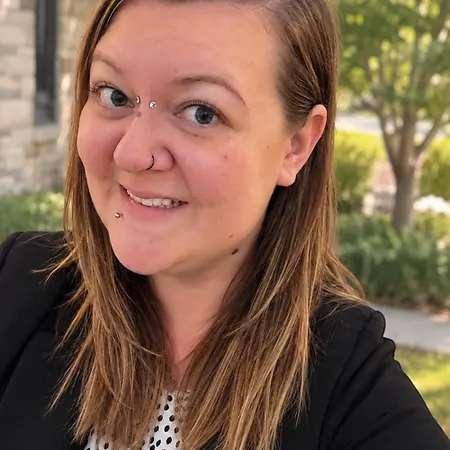
Lauryn Rubash is an affordable housing professional serving as Community Manager at Dominium with eight years of industry experience. She holds HCCP and FHS certifications and oversees low-income housing for seniors aged 62+. Despite overcoming a 2023 stroke, Rubash demonstrates exceptional dedication to resident services, operational management, and creating welcoming communities while balancing motherhood and…





