Her Story
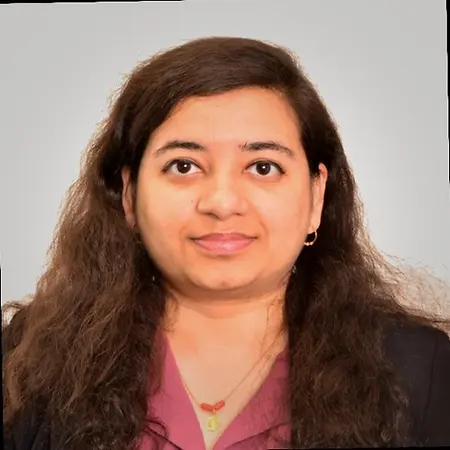
About Aditi
I'm a research scientist working in the preclinical research field, focusing on neuroscience and epilepsy research. I work primarily with rodents - both rats and mice - to find out what are the different reasons that cause epilepsy. I started my PhD in 2017 and completed it in 2024, and since then I've been working in the epilepsy field. My work requires extensive training to work with animals and involves complex techniques including surgeries on animals, computational analysis, and studying brain function. It requires a lot of computational knowledge and surgical skills because we work with brains. My most notable professional achievement is my paper from my PhD work, which focused on figuring out how molecules move in the brain - research that's very relevant to understanding how drugs work in the body. Beyond my scientific work, I also have an alternative life as a professional singer with a degree in Indian classical music, and I'm currently learning Kathak, an Indian classical dance form.
Her Interview
Ten minutes with Aditi
01What do you attribute your success to?
I attribute my success mostly to hard work and luck. I was very, very fortunate enough to have the best teachers who were willing to help me in a way that would suit me. They were willing to spend time with me, they were willing to know what I needed, and then help me exactly achieve that. So it's luck in having those amazing teachers, and then after they helped me, I was willing to do what they say. So it's hard work and luck combined - having the right mentors who invested in me personally, and then putting in the effort to follow through on their guidance.
02What’s the best career advice you’ve ever received?
The best career advice I received, especially for our field where we require a lot of patience, came from my teachers during my PhD and even before. Any project that we take up requires at least a couple of years to actually start seeing results. So the best advice I got was to treat this career as a marathon - just make sure that you have enough energy to keep going and never stop. I think that was the biggest one. It still helps me, and I'm sure it's going to continue helping me in this field. That mindset of endurance and persistence has been invaluable.
03What advice would you give to young women entering your industry?
To young people entering my industry, I would say that as much as you put effort in learning the technique, also put effort in learning scientific thinking. Because techniques is something that you can learn anytime, and you need to be flexible with techniques, meaning you need to keep learning more. However, scientific thinking is something that stays, and you need to build on that. And that's what really is required to become a successful scientist. Anything else, I think, is something that you can learn later in life as well. So focus on developing that critical thinking foundation - it's more important than any specific technical skill.
04What are the biggest challenges or opportunities in your field right now?
The biggest challenge in my field is funding. I work in a sector where I need to secure funding from various sources to be able to do the research. Funding is the biggest obstacle, and the funding environment keeps changing with political influence and other factors, even institutional factors. So that's a huge obstacle - always making sure that you have enough money to do the work that you want to do. In terms of huge opportunities, I would say that this is the perfect time for scientists to be out there talking about real science. Not keeping science only to academic institutions, but doing outreach so that everyone, not just scientists, learns how to think critically about the information they are given through social media. Critical thinking is something that you can teach everyone, and you learn it as a scientist, so outreach is a huge opportunity right now.
05What values are most important to you in your work and personal life?
The most important value to me as a scientist is making sure that I achieve the best that I can. Secondly, also making sure that we do something for the next generation. So I would say being useful to society is extremely important to me. And I think that's true in my personal life as well - I try to be as useful as I possibly can to my friends and my family. Honesty and resilience are also values that I think are most important. It's about striving for excellence while also contributing meaningfully to the people and community around me.
Join Influential Women and start making an impact. Register now.