
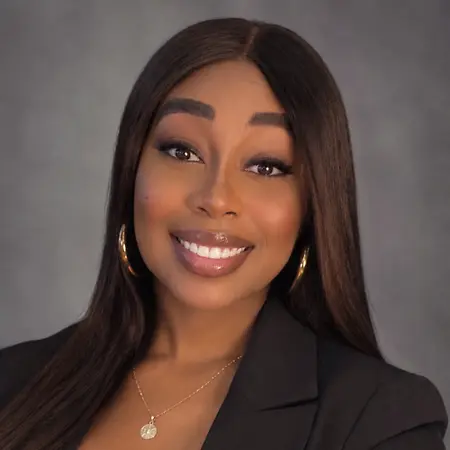
Influential Woman · Investigative Research Analyst
Adriana Diaz
Founder and Editor-in-Chief, Discordia’s Ego™ (Independent Publication)
New York, NY 10027
Her Story
About Adriana
Adriana Diaz is an author, independent investigative research scholar, and specialist in institutional governance, regulatory affairs, cultural heritage, and art law. With eight years of experience in independent investigative research, she has developed a multidisciplinary career spanning immigration compliance, legal operations, and higher education administration. Her professional experience includes serving as Assistant Director of Faculty Affairs and Administrative Operations at Cleveland Museum of Art and MD Anderson Cancer Center, Business Immigration Compliance Specialist, and Faculty Compliance and Governance Analyst at MD Anderson Cancer Center. Throughout her career, she has supported complex regulatory and governance functions, advised international scholars and faculty on immigration requirements, assisted legal professionals, and collaborated with institutional leadership on compliance, policy, and operational matters. Her areas of specialization include healthcare compliance, higher education administration, immigration compliance, institutional operation management, and regulatory affairs. Alongside her professional work, Adriana focuses her independent scholarship on art law, cultural heritage, illicit antiquities trafficking, artifact repatriation, Buddhist archaeology, and inter-Asian archaeology and literature. As a Fulbright U.S. Research Scholar in China, she conducted research while working as a archivist at Capital Normal University in Beijing, examining Tangut Buddhist traditions, religious iconography, and the historical relationship between religion, empire, and cultural preservation across China and Inner Asia. Her investigative research explores artifact provenance, museum ethics, and the legal and ethical questions surrounding the ownership and repatriation of cultural objects. Her scholarship has been featured on BBC World Service and other networks. She also has her very own series, “Transmissions of Gautama,” a podcast series in collaboration through Chai Chats Projects that explores Buddhist archaeology, history, and artistic influences along the Silk Road. Adriana is the Founder and Editor-in-Chief of Discordia’s Ego™, an independent editorial publication through which she authors op-eds, long-form essays, literary criticism, legal analysis, and social commentary addressing corporate compliance, institutional accountability, cultural heritage, and broader social issues. She is committed to making specialized scholarship more accessible through independent publishing and public research.
Beyond her professional and scholarly pursuits, Adriana is an accomplished creative writer whose literary interests encompass poetry, fiction, literary criticism, and experimental storytelling. Writing under the pen name Harley Del Monaco, her poetry explores themes of identity, mortality, spirituality, femininity, power, and the complexities of the human condition, often drawing upon philosophical inquiry, religious symbolism, and cultural history. Her fiction, currently in the works, similarly examines the intersections of human psychology, family dynamics, institutional power, cultural identity, and moral ambiguity, with a particular emphasis on psychologically complex characters and unconventional narratives. She develops original works across multiple genres, including psychological horror, crime fiction, speculative fiction, and contemporary drama. Influenced heavily by her academic background, and her cultural and religious heritage as a Caribbean American woman whose spiritual traditions encompass both Hinduism and Afro-Latin Christianity, Adriana approaches creative writing as both an artistic discipline and a means of examining the deeper tensions between individuals, societies, and the institutions that shape them. Through her poetry, fiction, and independent literary endeavors, she seeks to challenge conventional storytelling, explore uncomfortable truths, and contribute a distinctive voice to contemporary literature. Her poetry can also be found on Discordia’s Ego™ and on her Instagram.
Adriana earned dual bachelor's degrees in East Asian Studies and English Literature from John Carroll University, with a minor in Economics, and graduated cum laude. She has also pursued graduate certificates in compliance and risk management, HIPAA, regenerative medicine, employee supervision, and international tax treaties. She maintains lifetime memberships in Sigma Tau Delta, The U.S. Institute of Diplomacy and Human Rights, and NAFSA. Adriana attributes her success to the guidance of her professors at John Carroll University and the inspiration of her mother. She encourages young women entering her field to ask questions fearlessly, challenge established perspectives, and approach investigative research with integrity, compassion, and creativity.
Her Interview
Ten minutes with Adriana
01What do you attribute your success to?
I attribute much of my success to the professors I had the opportunity to work with at John Carroll University, whose guidance and support have played an important role in my development. I also credit my mother, who remains the greatest inspiration in my life and has had a profound influence on the person I am today.
02What’s the best career advice you’ve ever received?
The best advice I ever received actually came from someone outside the field of investigative research. It came from my former supervisor, Brianna Allen, whom I worked under in immigration compliance. Working in immigration taught me that the field involves much more than simply enforcing regulations and ensuring compliance. It also requires compassion, empathy, and a genuine understanding of the individuals whose lives are affected by the decisions we make.
Immigration is an incredibly sensitive and challenging field. We frequently handled complex cases involving people facing difficult circumstances and life-altering decisions that could directly affect their livelihoods and futures. My former supervisor once told me, “Don’t be afraid to be compassionate.” Of course, that doesn’t mean bending the rules or disregarding legal requirements, particularly in immigration, where compliance is essential. Rather, she taught me that you can uphold the rules and guidelines while still recognizing the humanity of the person standing in front of you. You don’t have to approach every situation as a hardline compliance officer who sees regulations as the only consideration.
That advice has stayed with me throughout my career, and I believe it is especially relevant to my work and interests in cultural heritage and investigative research. When dealing with artifacts, we must remember that we are not simply handling inanimate objects. We are also dealing with the histories, identities, traditions, and, most importantly, the people and communities from whom those artifacts originated.
03What advice would you give to young women entering your industry?
I would encourage young women entering this field not to be afraid to ask questions, challenge established practices, and push boundaries, especially when conducting investigative research involving archaeology, artifacts, and repatriation. It is important to recognize the distinction between traditional archaeological research and investigative research that examines whether artifacts rightfully belong in a particular museum or should be returned to their countries of origin. Do not be intimidated by established rules or practices; instead, be curious, think critically, and have the courage to ask difficult questions. I would also encourage them to embrace creativity and independence, as this field offers opportunities to pursue research independently rather than working within an established institution.
04What are the biggest challenges or opportunities in your field right now?
I believe some of the biggest challenges in my field are the limited accessibility of public scholarship, industry gatekeeping, and resistance from certain institutions to addressing the historical acquisition of artifacts. One of my priorities as an independent researcher is to make this area of study more accessible to young people from diverse and underprivileged backgrounds, helping them understand that opportunities exist in this field and why this work matters. Another significant challenge is overcoming gatekeeping and navigating differing perspectives, particularly when presenting research that challenges widely accepted narratives or established viewpoints. Additionally, investigating the origins of artifacts, including whether they were acquired through looting or unethical practices, can generate resistance from museums and other institutions that may prefer to emphasize their present-day contributions rather than acknowledge difficult historical circumstances. Despite these challenges, I see tremendous opportunity in independent research and scholarship to encourage transparency, accountability, and meaningful discussions about cultural heritage and repatriation. Ultimately, I believe researchers should have the confidence to defend their findings, challenge established narratives, and pursue ideas they genuinely believe in without being intimidated by others.
05What values are most important to you in your work and personal life?
The values I consider most important in both my professional and personal life are integrity, honesty, transparency, and compassion. Integrity and honesty are especially important in my work, where I deal with sensitive matters involving immigration compliance, art law, and illicit antiquities trafficking. As an independent investigative researcher, I believe in being transparent, maintaining ethical standards, and pursuing the truth about the origins and rightful ownership of cultural artifacts. Compassion is equally important because my work is not just about preserving historical objects but also about recognizing the people, communities, and cultures from which they originated. This is particularly meaningful when researching artifacts belonging to Indigenous and nomadic groups, including communities that no longer exist and cannot speak for themselves. I believe it is our responsibility to respect their history, recognize the cultural significance of their artifacts, and do everything possible to preserve and understand their heritage.
Join Influential Women and start making an impact. Register now.