
A reflective journey of personal growth through international relocation, scientific research, and mentorship, exploring how uncertainty and courage intersect to build meaningful careers and support others.
Her Story
About Alice
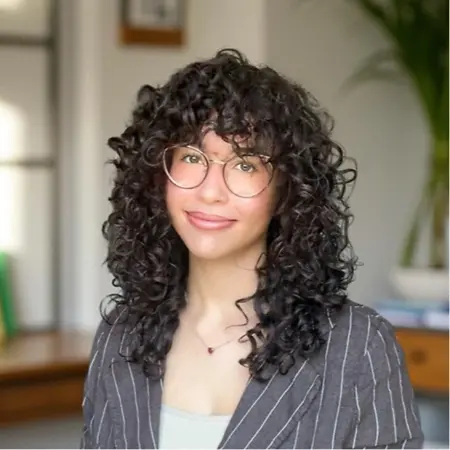
Alice Miranda is a biomedical researcher and honors student at the University of Arizona's W. A. Franke Honors College. Since August 2024, she has gained multidisciplinary research experience spanning neuroscience, human physiology, pharmacology and toxicology, molecular biology, and protein biochemistry. Her current research includes investigating the evolution and enzymatic activity of recluse spider venom proteins under Dr. Matthew Cordes and exploring the molecular mechanisms underlying hypermobile Ehlers-Danlos syndrome through multi-omics research.
Originally from Italy, Miranda is pursuing three bachelor's degrees in Biochemistry, Molecular and Cellular Biology, and Italian, with an anticipated undergraduate graduation in December 2026. She is also enrolled in the Accelerated Master's Program in Biochemistry, with an expected completion date of December 2027, and is pursuing a Certificate in Forensic Science. She recently completed the Healthcare Product Manufacturing Fast Track Program and earned a Healthcare Product Manufacturing Micro-Credential through a collaboration between the University of Arizona and Roche.
Beyond her research, Miranda is committed to mentorship, education, and community service. She serves as a peer mentor and ambassador for the Department of Chemistry and Biochemistry, as well as an undergraduate learning assistant supporting students in molecular and cellular biology. She has participated in the Women in Science and Engineering community, completed the Bioscience Leadership Academy at the Translational Genomics Research Institute, and volunteered in an intensive care unit at Mountain Vista Medical Center.
Her academic and research achievements have been recognized through numerous competitive scholarships and honors, including the Royal Society of Chemistry Undergraduate Excellence Award, the Galileo Circle Scholarship, and the American Chemical Society Hach Land Grant Scholarship. Miranda credits much of her growth to the guidance of mentors, including Dr. Matthew Cordes and Olivia Mendoza, whose encouragement has helped shape her academic journey.
Driven by curiosity, perseverance, and a desire to make a meaningful difference, Miranda hopes to bridge scientific discovery with real-world applications that improve human health. She is particularly passionate about encouraging other young women to pursue careers in science and believes that compassion, integrity, and gratitude are just as important as scientific achievement.
Her Interview
Ten minutes with Alice
01What do you attribute your success to?
I attribute my success to a combination of determination, curiosity, and the people who saw potential in me before I fully recognized it in myself. Moving from Italy to build my future in the United States meant stepping into unfamiliar environments, learning to navigate challenges independently, and taking opportunities even when I wasn't entirely sure I was ready for them. I've learned that growth rarely happens when everything feels comfortable, and some of my proudest accomplishments have come from moments when I chose to keep going despite uncertainty.
I'm also incredibly grateful for the mentors who have shaped my journey, especially Dr. Matthew Cordes, who has taught me so much about what it means to be a scientist. But perhaps the biggest lesson I've learned is that success isn't just about how much you accomplish. It's also about the people you help along the way. I hope that, as I continue growing, I can offer others the same encouragement and belief that made such a difference in my own life.
02What’s the best career advice you’ve ever received?
The best career advice I've ever received is to never turn down an opportunity simply because you don't feel ready for it. When I first started working in research, I often found myself surrounded by people who knew far more than I did, and it was intimidating. But I learned that nobody begins as an expert, and that being willing to ask questions, make mistakes, and learn from others is far more valuable than pretending to have all the answers.
That advice has encouraged me to explore different areas of science, take on responsibilities I never imagined having, and pursue opportunities that once felt beyond my reach. I've come to realize that confidence isn't something you need before taking a chance. More often, it's something you develop because you took that chance in the first place.
03What advice would you give to young women entering your industry?
My advice to young women entering science is to never let self-doubt make decisions for you. There will always be someone with more experience, more knowledge, or a different background, but that doesn't mean you have less to contribute. I've learned that some of the most rewarding experiences come from speaking up, asking questions, and pursuing opportunities that initially seem out of reach.
I would also encourage young women to support one another rather than viewing success as a competition. Find mentors who challenge and believe in you, and become that person for someone else whenever you can. Most importantly, don't feel pressured to fit a particular image of what a scientist should look like. Your perspective and experiences are part of what makes you valuable, and science becomes stronger when more women feel empowered to bring their whole selves into it.
04What are the biggest challenges or opportunities in your field right now?
I think one of the biggest challenges in biomedical research is bridging the gap between scientific discovery and the people who could benefit from it. We are generating incredible amounts of data and developing technologies that would have seemed impossible just a few years ago, but translating those discoveries into accessible treatments and meaningful improvements in patient care remains difficult.
At the same time, I think this is one of the most exciting times to enter the field. Advances in genomics, proteomics, and artificial intelligence are allowing us to investigate diseases in ways we couldn't before. Through my own experiences in research and healthcare manufacturing, I've become especially interested in how we can bring discoveries beyond the laboratory. To me, the greatest opportunity is not simply making the next scientific breakthrough, but ensuring that it actually reaches and helps the people who need it.
05What values are most important to you in your work and personal life?
The values that matter most to me are integrity, compassion, curiosity, and gratitude. In science, integrity is especially important because the work we do can ultimately affect people's lives, and I believe that responsibility should never be taken lightly. I also value humility and the willingness to keep learning, no matter how much experience I gain.
Outside the laboratory, I try to approach people with the same compassion and respect that I hope to receive. Moving to a different country and building a life far from home has taught me how much kindness and encouragement can mean to someone. Above all, I want to be proud not only of what I accomplish, but also of how I treat people along the way. I believe that success means very little if we lose sight of the people and values that make it meaningful.
Her Content Hub
Articles by Alice
The Courage to Begin Before You're Ready
How leaving everything behind taught me that courage isn't something you find—it's something you build.
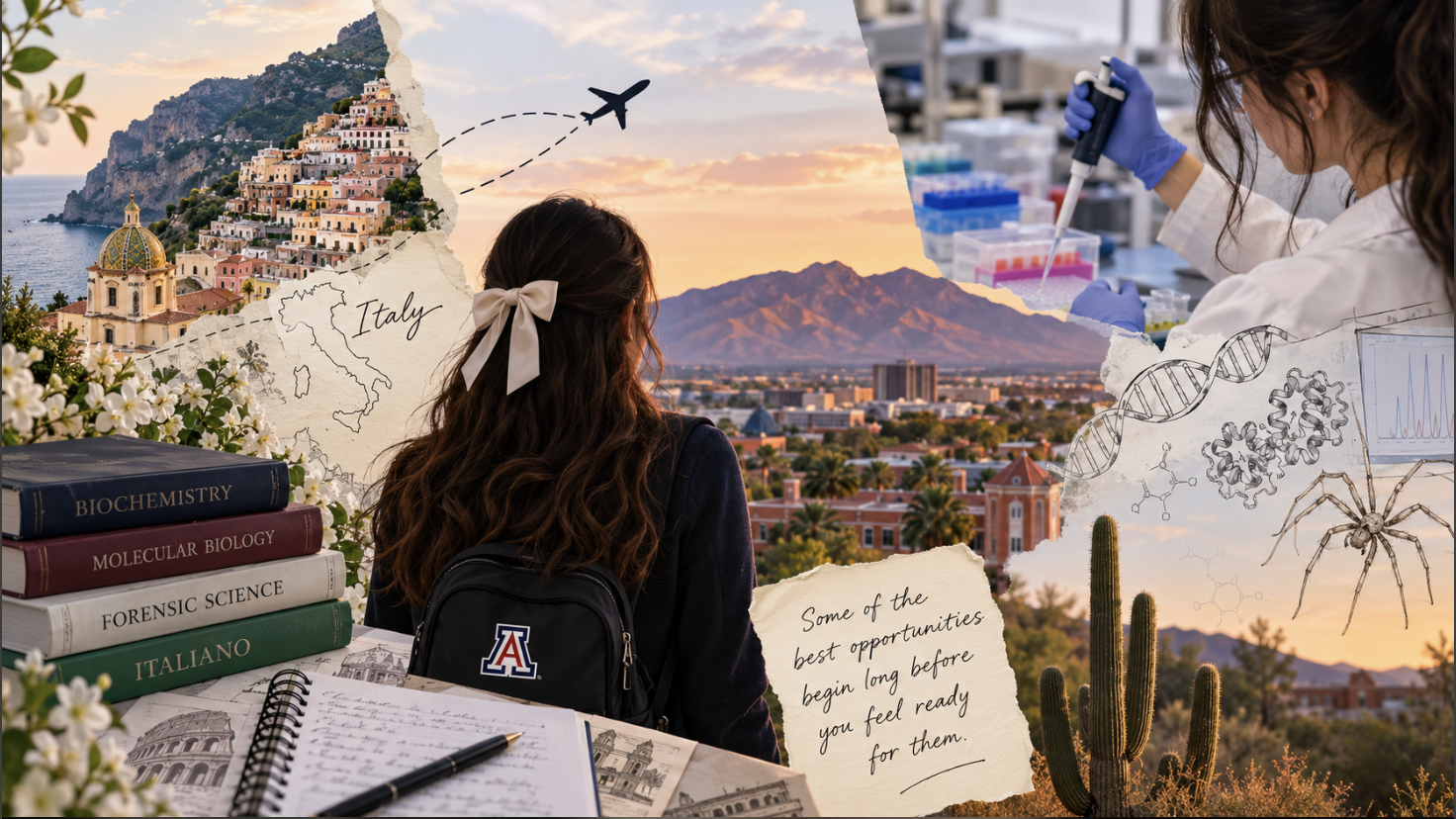
There is something both terrifying and beautiful about starting over somewhere unfamiliar. You leave behind the people, places, and routines that have always made you feel at home, and suddenly, even the smallest things require courage. When I moved from Italy to the United States to pursue my education, I knew I was taking an important step toward my future. What I didn't realize was how much that decision would teach me about myself.
I arrived with ambitions, questions, and a genuine love for learning, but certainly not all the answers. I had to find my place in a new environment, adapt to a different educational system, and learn to trust myself in situations that were completely unfamiliar. Looking back, I think one of the most important lessons I've learned is that you can be both uncertain and determined at the same time.
And sometimes, that is enough to begin.
Finding My Place in Science
When I first stepped into a research laboratory, I was surrounded by people whose knowledge and experience seemed almost impossible to match. I remember how intimidating it could feel to encounter unfamiliar techniques, complicated scientific questions, and experiments that didn't always go as planned.
But what I eventually discovered is that research isn't about knowing everything. In fact, much of science begins with admitting what we don't know.
Since beginning my research journey at the University of Arizona in 2024, I've had the opportunity to explore several areas of biomedical science, from neuroscience and pharmacology to protein biochemistry and molecular biology. Today, my work includes investigating enzymes found in recluse spider venom and exploring the molecular mechanisms associated with hypermobile Ehlers-Danlos syndrome.
These subjects may seem worlds apart, but they've taught me something similar: meaningful discoveries often begin with questions that nobody has fully answered.
Research has also taught me patience in ways I never expected. Experiments fail. Results contradict expectations. Sometimes, hours of preparation lead to more questions than answers. I've learned that frustration and progress are not necessarily opposites. Often, they're part of the same process.
Some of my most valuable experiences haven't come from getting an experiment right the first time, but from learning to understand why something went wrong and having the patience to try again.
The People Who Help Us See Our Potential
One of the things I'm most grateful for is the people who have encouraged me throughout my journey.
I've been fortunate to work with mentors who saw potential in me even when I was still learning to recognize it myself. My research mentor, Dr. Matthew Cordes, has played an especially meaningful role in helping me develop as a scientist. Through his guidance, I've learned not only how to approach scientific problems more thoughtfully but also how important patience, curiosity, and persistence are to the research process.
I think we sometimes underestimate how much a few words of encouragement can change someone's direction.
A professor who takes the time to answer a question, a mentor who trusts you with a new responsibility, or someone who reminds you that you're capable of more than you think can make an enormous difference.
Those experiences have shaped how I approach my own roles as a peer mentor, departmental ambassador, and undergraduate learning assistant.
Working with other students has become one of the most meaningful parts of my education. I know what it feels like to be uncertain, to have questions you're hesitant to ask, or to wonder whether you truly belong in a particular environment. Being able to offer another student even a little reassurance or guidance is something I value deeply.
I've come to believe that one of the best things we can do with the opportunities we've received is make them more accessible to someone else.
There Is No Single Way to Build a Future
If someone had told me a few years ago that I would be pursuing three bachelor's degrees in biochemistry, molecular and cellular biology, and Italian while also beginning an accelerated master's degree in biochemistry, I probably would have wondered how I could possibly make it all work.
My interests haven't always followed a conventional path. Alongside biomedical research, I've explored forensic science, healthcare manufacturing, languages, and education.
For a long time, I thought building a successful career meant choosing one direction and following it without looking elsewhere. But my experiences have taught me that curiosity doesn't always fit neatly into one category.
Studying Italian alongside the sciences has reminded me that communication, culture, and human connection matter just as much as technical knowledge. Exploring healthcare manufacturing through a program developed with Roche helped me appreciate the work required to turn scientific discoveries into products that can reach patients.
Each experience has given me a different perspective, and together they've helped me better understand the kind of scientist and person I hope to become.
I don't believe that having different interests means lacking direction. Sometimes, those interests are what allow us to see connections that might otherwise go unnoticed.
Making Room for the Next Generation
As a young woman pursuing a career in science, I've thought a great deal about what it means to belong in spaces where you may not always see people with experiences similar to your own.
I don't think confidence means never questioning yourself. There are still moments when I feel overwhelmed by everything I have left to learn. But I've stopped interpreting those moments as evidence that I don't belong.
Instead, I try to see them as reminders that I'm still growing.
I hope more young women feel comfortable pursuing opportunities before they feel completely prepared, asking questions without embarrassment, and allowing themselves to be ambitious without feeling the need to justify it.
I also hope we continue building environments where women encourage one another, celebrate each other's accomplishments, and recognize that someone else's success doesn't diminish our own.
There is room for more of us to succeed, and there is so much we can accomplish when we help one another get there.
The Courage to Keep Going
When I think about how much my life has changed since leaving Italy, what stands out most isn't a particular award, degree, or research accomplishment. It's the person I've become through the experiences that brought me here.
I've learned to be more independent, more patient with myself, and more willing to pursue things that initially feel beyond my reach. I've also learned that ambition and compassion don't have to exist separately. We can work hard toward our own goals while remaining genuinely invested in the people around us.
I still have so much to learn, and there are plenty of things about my future that I haven't figured out yet. But I've come to appreciate that uncertainty doesn't have to be something we fear.
Sometimes, the most important decisions we make are the ones we make without knowing exactly where they'll lead.
And if there's one thing I hope someone takes away from my story, it's this: don't wait until you feel completely ready to pursue the life you want. You may discover that the courage you were waiting for is something you build along the way.
Join Influential Women and start making an impact. Register now.