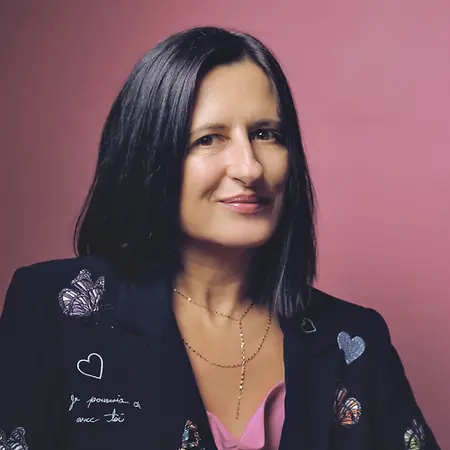
A reflection on how reading shaped leadership across two decades, from a childhood in restrictive Romania to the corner office, and why continuous learning remains the foundation of enduring leadership.
Her Story
About Alina
I am a finance and operations executive who leads at the intersection of numbers and narrative — where strategy meets culture, and where mission and margin move together.
I came to finance through an unlikely door: a bachelor's degree in Linguistics and Literature from the University of Bucharest. When I began my career in bookkeeping and accounting, I quickly saw the connection that would define everything that followed. Finance is a language. Like any language, it has structure, syntax, and nuance — and most people in an organization are not fluent in it. My work has always been about translation: making financial data legible, actionable, and compelling to every level of an audience, from frontline teams to boards of directors.
I advanced through increasingly complex financial and operational roles in creative, service-based industries — environments where the margin for error is thin, the talent is exceptional, and the mission is rarely separate from the business model. I pursued my MBA in Finance and Marketing at Baruch's Zicklin School of Business mid-career, at the moment I entered the C-suite. The academic rigor mattered, but so did the community — peers navigating the same inflection points, asking the same hard questions about growth, risk, and leadership.
My most formative executive chapter was as Chief Financial and Operating Officer for The Mixx, a women-owned, NGLCC-certified, B Corp-certified marketing agency focused on underrepresented communities — with particular depth in LGBTQIA advocacy and culture. I also served as CFO for Titanium Worldwide, the holding company of which The Mixx was a founding member: a consortium of minority-certified businesses operating under a shared model that required both financial discipline and genuine cultural fluency. In both roles, the work was inseparable from the mission. Monetizing a niche focus on equity-driven marketing wasn't a tension to manage — it was the strategy.
My current role as Chief Financial and Administrative Officer of The New Press felt less like a career move and more like a natural convergence. The New Press publishes nonfiction books on social justice, democracy, and political life — the ideas that shape the world. My background in literature and linguistics, my commitment to mission-driven organizations, and my belief that financial health is what allows a mission to endure all pointed in the same direction. I am exactly where I am supposed to be.
Her Interview
Ten minutes with Alina
01What do you attribute your success to?
I attribute my success to three things: intellectual curiosity, a people-first operating philosophy, and the ability to translate.
My linguistics background taught me to ask better questions than the numbers on the page. My experience leading through turnarounds and growth taught me that culture isn't separate from financial performance — it's one of its drivers. And my core belief — that finance is a language, and that most organizations speak it imperfectly — has made me effective in rooms where others struggle to connect strategy to execution.
I've built my career on translation: turning data into decisions, and numbers into narratives that move organizations forward.
02What’s the best career advice you’ve ever received?
The best advice I ever received was simple: build your network constantly, and don't wait until you need it. Not just professionally — but genuinely. That means being willing to show up as a full person, including the parts that are still a work in progress. Vulnerability is not a liability in leadership. It's a connector. When you're honest about where you are and what you're still figuring out, people trust you more — and they help you more.
But the advice that has shaped my day-to-day more than anything else is something I turned into a personal motto: make somebody's day, every day. It sounds simple, and it is. A coffee chat. A quick check-in. Helping someone untangle a spreadsheet or think through a deadline. Asking — and meaning it — "Is there anything getting in your way today?"
What I've learned is that those small moments compound. They build the kind of relationships and reputation that no resume can manufacture. People remember how you made them feel long after they've forgotten what you accomplished together.
At this point in my career, that principle has shifted from networking strategy to something closer to a leadership philosophy: show up for people before they ask. Give before you're asked to give. That's where real influence lives — not in titles, but in the daily practice of making someone's work a little easier, their day a little better.
03What advice would you give to young women entering your industry?
Ask for help. It is not a confession of weakness — it is an act of leadership.
Early in your career, the instinct is to prove yourself by figuring everything out alone. Resist it. The women and men who advance fastest are rarely the ones with all the answers. They are the ones who know which questions to ask, and who to ask them to.
Seeking input — from a mentor, a peer, someone with twenty more years of experience — signals self-awareness and confidence, not inexperience. It also builds the relationships that will carry your career further than any single skill ever will.
As for Finance, it can feel like a closed language. Don't let that silence you. Ask the question. The room will respect you more for it, not less.
04What are the biggest challenges or opportunities in your field right now?
The most significant challenge facing mission-driven publishing right now is a confluence of pressures that don't often arrive together — and right now, they have.
At the macro level, nonprofit fundraising has contracted meaningfully. Philanthropic dollars are being redirected toward what feel like more immediate crises — and that's an understandable human response to an overwhelming news cycle. The challenge for organizations doing essential intellectual and civic work is making the case that books are urgent. That ideas are infrastructure. That the information shaping how people understand immigration, democracy, civil rights, and social justice is not a luxury — it is the foundation of an informed society.
At the same time, the publishing market itself is shifting. Readers are gravitating toward escapism — fiction, fantasy, relief from a world that already feels like too much. Nonfiction that engages directly with that world is facing real headwinds in consumer behavior, even as the need for it has never been greater. That gap between urgency and appetite is not a reason to retreat — it is the brief.
For finance leaders in this space, the opportunity is in the tension. Organizations that use this moment to build leaner, more resilient financial models — tightening operations, diversifying revenue, strengthening their fundraising infrastructure — will be extraordinarily well positioned when the environment shifts. And it will shift.
My role right now is to help navigate that complexity: stabilize thoughtfully, operate with discipline, and build the financial framework that allows the mission to endure — not just survive the current moment, but grow from it.
05What values are most important to you in your work and personal life?
Trust — and the transparency that makes trust possible.
I've led organizations through some of their hardest moments: financial distress, layoffs, uncertainty, change. What those experiences taught me is that people don't need a leader with all the answers. They need a leader they can believe. When a team trusts that they will be told the truth — even when the truth is hard — they show up with ownership, not just compliance.
Transparency is how I build that trust. No managed narratives. No information asymmetry. What's true is what gets said.
Personally, the same values govern how I move through the world. I believe in showing up fully — in relationships, in rooms, in difficult conversations. Life is measured in the quality of its connections, and trust is the only currency that holds.
We are in this together. That is not a platitude. It is an operating principle.
Her Content Hub
Articles by Alina
The Books They Tried to Ban Made Me the Leader I Am
On Reading, Range, and the Kind of Thinking That Actually Leads
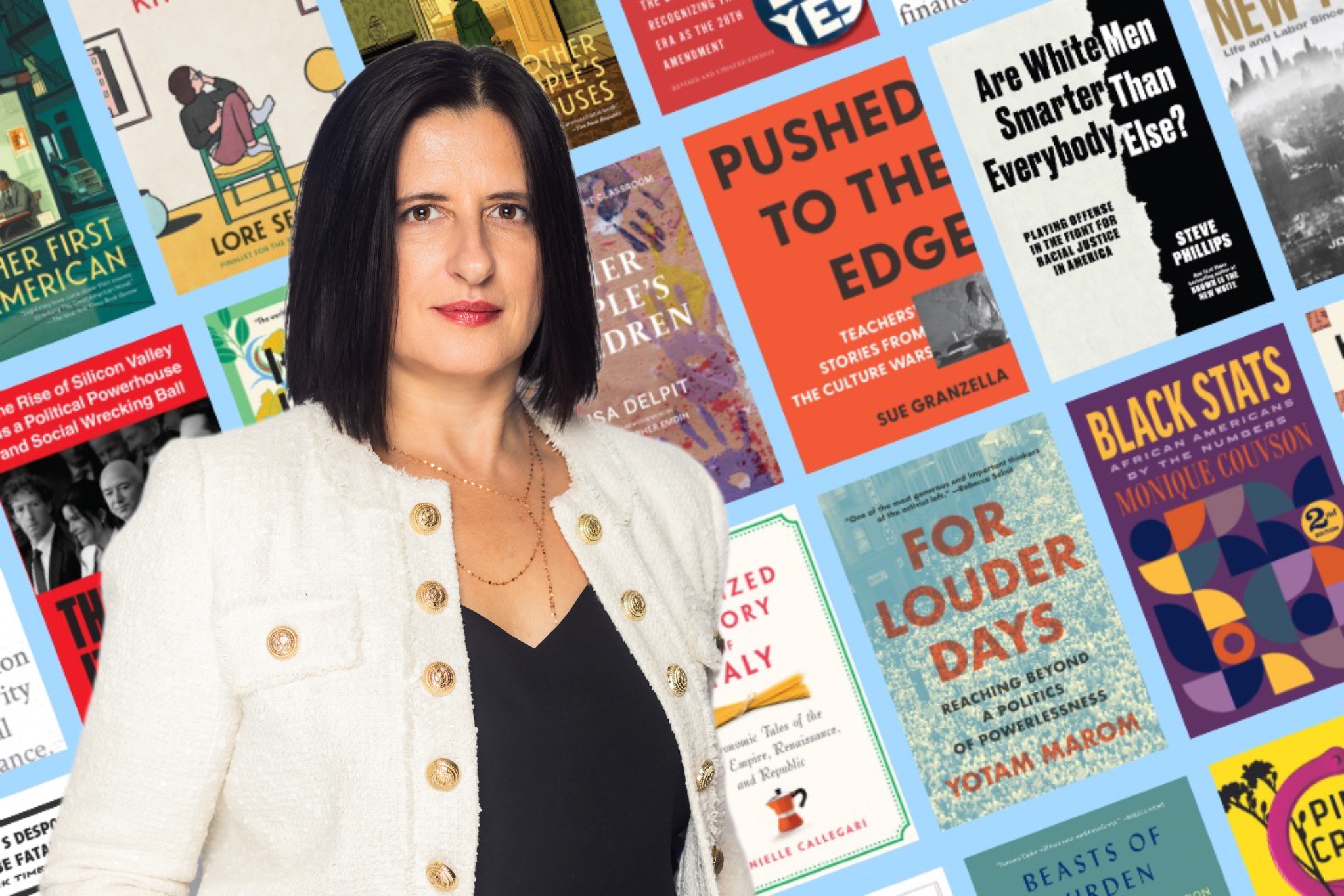
I grew up in Romania during one of the most restrictive political regimes in Eastern Europe. Books were not just entertainment—they were resistance. The authors whose words could have guided a generation were largely in exile, their work banned, their names spoken carefully. And yet, those books found their way to us: passed hand to hand, read in private, shared in whispers. In a world where the state controlled the narrative, books were how an entire nation held onto its identity, its critical thinking, and its sense of truth.
That experience shaped everything about how I see the world—and how I lead.
I came to finance through an unexpected path: a degree in Linguistics and Literature from the University of Bucharest. What I discovered early in my career is that the two are not as different as they seem. Finance is a language. And like any language, it can be used to inform, obscure, liberate, or constrain. The leaders who understand that—who can translate numbers into narratives that move people to act—are the ones who build organizations that last.
Reading is how I have stayed sharp across twenty years of leading complex organizations. My bookshelf moves between leadership and behavioral economics, history and finance, operations and fiction. Daniel Kahneman on the stories we tell ourselves to avoid hard truths. Nassim Taleb on building organizations that do not just survive volatility, but grow stronger because of it. The shelf that has served me best is the one with the widest range, because leadership draws on everything, and the best ideas rarely arrive from expected places.
Every significant leap in my career has been preceded by a period of intense learning. Not formal education alone—though that mattered—but the quieter, more personal discipline of reading widely, staying curious, and being willing to be wrong. I have led turnarounds, built financial engines from scratch, navigated crises, and managed growth and everything in between. What carried me through was not any single skill. It was the habit of continuously expanding what I knew and how I thought. That is not something you achieve once. It is something you choose every day.
The best leaders I know share one quality above all others: they are insatiably curious. They read. They question. They seek out perspectives that challenge their own. They understand that the world does not slow down to accommodate what they already know, so they keep learning—not out of insecurity, but out of a genuine hunger for what they have not yet understood.
Warren Buffett is famously reported to spend 80 percent of his day reading. Satya Nadella credits a growth mindset—the belief that every situation is an opportunity to learn—as the philosophy that transformed Microsoft. Melinda French Gates has spoken extensively about how reading shapes her thinking on global challenges. And Rishad Tobaccowala—author, strategist, and one of the most original thinkers in the creative industry, whom I have had the privilege of knowing personally—has built an entire philosophy around the idea that the leaders of tomorrow must think, question, and read their way forward. These are not coincidences. Leadership is not a destination. It is a practice, and like any practice, it atrophies without consistent investment. The leaders who endure are not the ones who arrived with all the answers. They are the ones who never stopped asking questions.
We now live in a world of infinite noise. Social media moves fast, and I am not suggesting we ignore it. There is real value in staying current and understanding what conversations are happening, even the surface-level ones. But a scroll through LinkedIn or X is not a substitute for depth. It is a watercolor sketch of a world that requires an oil painting to truly understand. The opinions are loud. The analysis is thin. And the attention these platforms demand pulls us away from the kind of sustained, focused thinking that great books are designed to develop.
The leaders I respect most are readers. Not because reading is a virtue signal, but because the problems worth solving require more than a hot take. They require context, nuance, and the kind of slow thinking that only comes from sitting with ideas long enough to be changed by them.
My advice is simple, and I give it to every young professional I mentor: read for thirty minutes every day. Not as a luxury, but as a discipline. Make it a habit the way you would a meeting or a workout—non-negotiable, protected, and consistent. Reach for books first. Reach for credible publications, peer-reviewed research, and sources that have earned their authority. The foundation of a learning mindset is not built on trending content. It is built on the accumulated wisdom of people who took the time to think deeply—and wrote it down.
That belief is also what drew me to my current role as Chief Financial and Administrative Officer of The New Press. They publish nonfiction books on social justice, democracy, civil rights, and political life—the ideas that have always mattered most to me. Growing up in a country where those ideas were suppressed, I understood viscerally what it costs a society when access to information is restricted. I understood what books are truly for.
Joining The New Press was not simply a career move. It was a homecoming—a return to the conviction I have carried since childhood: that ideas, carefully preserved and widely shared, are the foundation of an informed and free society.
The books they tried to ban in Romania made me who I am. That is not a small thing to carry into a corner office. It is everything.
Join Influential Women and start making an impact. Register now.