The Books They Tried to Ban Made Me the Leader I Am
On Reading, Range, and the Kind of Thinking That Actually Leads

I grew up in Romania during one of the most restrictive political regimes in Eastern Europe. Books were not just entertainment—they were resistance. The authors whose words could have guided a generation were largely in exile, their work banned, their names spoken carefully. And yet, those books found their way to us: passed hand to hand, read in private, shared in whispers. In a world where the state controlled the narrative, books were how an entire nation held onto its identity, its critical thinking, and its sense of truth.
That experience shaped everything about how I see the world—and how I lead.
I came to finance through an unexpected path: a degree in Linguistics and Literature from the University of Bucharest. What I discovered early in my career is that the two are not as different as they seem. Finance is a language. And like any language, it can be used to inform, obscure, liberate, or constrain. The leaders who understand that—who can translate numbers into narratives that move people to act—are the ones who build organizations that last.
Reading is how I have stayed sharp across twenty years of leading complex organizations. My bookshelf moves between leadership and behavioral economics, history and finance, operations and fiction. Daniel Kahneman on the stories we tell ourselves to avoid hard truths. Nassim Taleb on building organizations that do not just survive volatility, but grow stronger because of it. The shelf that has served me best is the one with the widest range, because leadership draws on everything, and the best ideas rarely arrive from expected places.
Every significant leap in my career has been preceded by a period of intense learning. Not formal education alone—though that mattered—but the quieter, more personal discipline of reading widely, staying curious, and being willing to be wrong. I have led turnarounds, built financial engines from scratch, navigated crises, and managed growth and everything in between. What carried me through was not any single skill. It was the habit of continuously expanding what I knew and how I thought. That is not something you achieve once. It is something you choose every day.
The best leaders I know share one quality above all others: they are insatiably curious. They read. They question. They seek out perspectives that challenge their own. They understand that the world does not slow down to accommodate what they already know, so they keep learning—not out of insecurity, but out of a genuine hunger for what they have not yet understood.
Warren Buffett is famously reported to spend 80 percent of his day reading. Satya Nadella credits a growth mindset—the belief that every situation is an opportunity to learn—as the philosophy that transformed Microsoft. Melinda French Gates has spoken extensively about how reading shapes her thinking on global challenges. And Rishad Tobaccowala—author, strategist, and one of the most original thinkers in the creative industry, whom I have had the privilege of knowing personally—has built an entire philosophy around the idea that the leaders of tomorrow must think, question, and read their way forward. These are not coincidences. Leadership is not a destination. It is a practice, and like any practice, it atrophies without consistent investment. The leaders who endure are not the ones who arrived with all the answers. They are the ones who never stopped asking questions.
We now live in a world of infinite noise. Social media moves fast, and I am not suggesting we ignore it. There is real value in staying current and understanding what conversations are happening, even the surface-level ones. But a scroll through LinkedIn or X is not a substitute for depth. It is a watercolor sketch of a world that requires an oil painting to truly understand. The opinions are loud. The analysis is thin. And the attention these platforms demand pulls us away from the kind of sustained, focused thinking that great books are designed to develop.
The leaders I respect most are readers. Not because reading is a virtue signal, but because the problems worth solving require more than a hot take. They require context, nuance, and the kind of slow thinking that only comes from sitting with ideas long enough to be changed by them.
My advice is simple, and I give it to every young professional I mentor: read for thirty minutes every day. Not as a luxury, but as a discipline. Make it a habit the way you would a meeting or a workout—non-negotiable, protected, and consistent. Reach for books first. Reach for credible publications, peer-reviewed research, and sources that have earned their authority. The foundation of a learning mindset is not built on trending content. It is built on the accumulated wisdom of people who took the time to think deeply—and wrote it down.
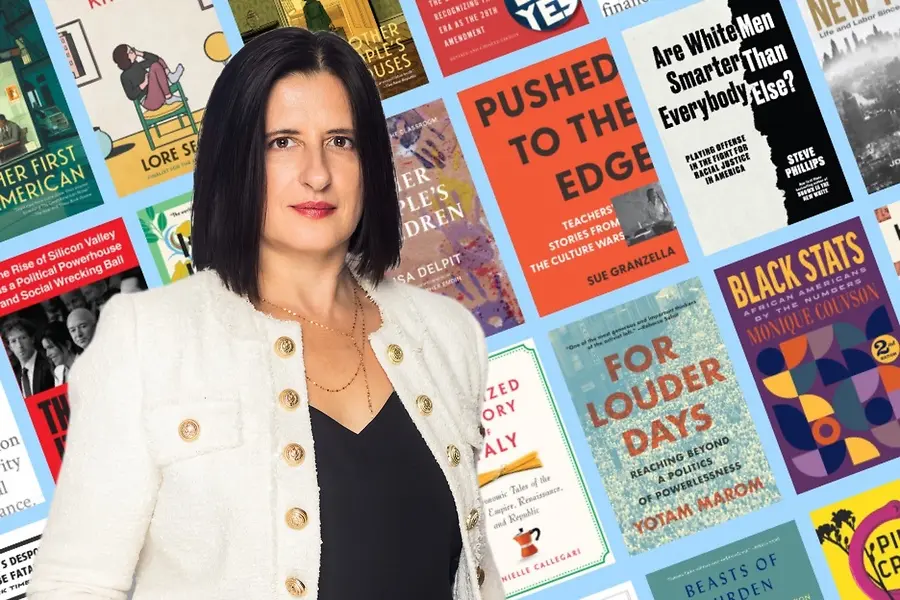
That belief is also what drew me to my current role as Chief Financial and Administrative Officer of The New Press. They publish nonfiction books on social justice, democracy, civil rights, and political life—the ideas that have always mattered most to me. Growing up in a country where those ideas were suppressed, I understood viscerally what it costs a society when access to information is restricted. I understood what books are truly for.
Joining The New Press was not simply a career move. It was a homecoming—a return to the conviction I have carried since childhood: that ideas, carefully preserved and widely shared, are the foundation of an informed and free society.
The books they tried to ban in Romania made me who I am. That is not a small thing to carry into a corner office. It is everything.


