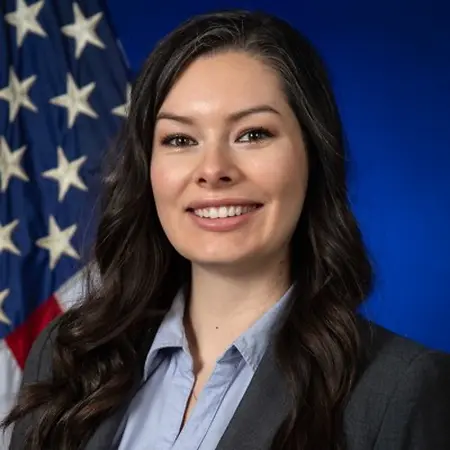
Her Story
About Alyssa
My father was in the Air Force and had a lot of hearing loss, which made me want to essentially study what his problems were. That led me on the path of audiology in general, and I found out that there were a lot of questions left unanswered, and I decided that I wanted to help be the one to answer them, so I did a research degree also. Now I'm studying how hearing works in military service members and trying to figure out ways to better identify their problems and better figure out ways to treat them. I work with audiologists from across the military, and I try to figure out ways to better improve their testing protocols and to identify these problems that service members have. I do a lot of outreach to audiologists so they understand the research and why testing certain things is important for our population. I'm always writing a different manuscript to publish our research in peer-reviewed journals so people understand what the problems are. So I'm either writing a manuscript, writing a grant, reaching out and doing some outreach, or conducting a study. I do presentations for the military specifically and for the general public, so I have the best of both worlds where I have relationships with people outside the military and inside the military, and I'm able to get the information tied to the general public and published out there so anyone can access it.
Her Interview
Ten minutes with Alyssa
01What do you attribute your success to?
I've always had a great support system. I would say it hasn't always been the same people, but I have always had people supporting me at every step of the way. Some of them have been consistent, but even if some of them haven't always been in the same state as me, you know, when I went off to school, I've always had people supporting me and continuing to follow my work and to motivate me along the way. It helps whenever you're wavering to be able to pick up the phone or to have someone right there saying yes, this is the right call, you're going on the right track.
02What’s the best career advice you’ve ever received?
The best career advice I've ever received is: if you don't love it 80% of the time, change careers. You can't love something 100% of the time. There's gonna be stressful days, there's gonna be days where you don't love it, you don't even want to be there. But 80% of the time, I would say, I love my job, and if you don't love your job 80% of the time, you might be in the wrong field.
03What advice would you give to young women entering your industry?
Don't let anything hold you back. I have student loans, and you know, they're just another bill that you can handle later on. Just don't let anything hold you back. You can keep on going. There's a will, there's a way.
04What are the biggest challenges or opportunities in your field right now?
Research, at least my research currently, is limited by funding at the federal level. We have a lot of opportunities and challenges when it comes to grants we're even able to apply for, because hearing hasn't been as widespread as something that should be funded. We've just encountered a lot of challenges for getting money to fund the research that we think is important and that the service members think are important. That's the biggest challenge that I've been facing lately.
05What values are most important to you in your work and personal life?
Honestly, I think it's the same for both, and that's honesty. I work with amazing professionals, and we publish a lot of work, and we depend on other people's work to be honest and reliable. Knowing the research is real and knowing that what's being published is honest and ethical, that's extremely important for me and my job and being able to trust what's published out there. And I mean, that goes double for my personal life, and we're all about honesty and making sure that we're respectful of one another.
Join Influential Women and start making an impact. Register now.