
Explore how trauma-informed education transforms schools by prioritizing emotional well-being alongside academics, building relationships, and creating supportive environments where every student can thrive and reach their full potential.
Her Story
About Amy
Amy DeWitt serves as Principal of a unique tribal school located on a college campus in Bismarck, North Dakota, and also completes the duties of the superintendent and business manager. With over 14 years in education, she previously taught in public schools, private schools, and a maximum-security detention center for juveniles, experiences she pursued to prepare for an administrative role. Motivated by the need to support teachers in addition to students, DeWitt earned her doctorate and assumed her current position three years ago. In her role, she manages operations across nine buildings, oversees facility improvements for a new school, engages daily with the Bureau of Indian Education, and collaborates closely with college staff under the UTTC president. Her first year brought successful accreditation and an audit, along with a visit from federal representatives from Washington, D.C., and she has since seen improvements in school culture, climate, academics, and staff morale. Outside her duties, DeWitt is PTO President for her son's school, a member of the Optimist Club for Bismarck and the North Dakota Council of Education Leaders, and mentors upcoming administrators.
Her Interview
Ten minutes with Amy
01What do you attribute your success to?
I attribute my success to resilience, purpose, and the willingness to keep learning. Throughout my career, I've faced challenges that required creativity, persistence, and collaboration. Rather than seeing obstacles as setbacks, I've tried to view them as opportunities to improve systems, support others, and continue growing as a leader. At the heart of everything I do is a commitment to creating opportunities that help students, educators, and communities thrive.
02What’s the best career advice you’ve ever received?
The best advice I've ever received was to remember when I told myself, "I can't do this" and to remember that I did. There are always times that we feel down and defeated, but every day is a fresh start to learn from where we can improve and take a different turn. Not everything is meant to be, and that's ok.
03What advice would you give to young women entering your industry?
Especially as a woman, there's a large difference between the way that we like to be viewed by others. We always want to please where people losers nature, and we're afraid of people not liking us, or not doing something perfect. And speaking out instead of just sitting in the back and being quiet. And I think that that needs to change, because I think that there's a lot of women out there that have really great ideas, and can make a huge difference. They just have to be brave enough to do so. So I think that those stigmas need to fall down, and we need to stand up and say something.
04What are the biggest challenges or opportunities in your field right now?
Working in tribal education has shown me both the challenges and the incredible opportunities that exist in our field. Schools serving Indigenous students often face funding disparities, recruitment and retention challenges, and the responsibility of preserving language and culture while meeting rigorous academic expectations. Yet these schools also have the opportunity to create learning environments where cultural identity is celebrated alongside academic excellence. By partnering with tribal communities, honoring Indigenous knowledge, and preparing students for success in both their communities and the broader world, we can create educational experiences that are both meaningful and transformative. I believe the future of education depends on our willingness to innovate while never losing sight of why we're here—to help every student reach their full potential. The challenges are significant, but so is our ability to make a lasting impact.
05What values are most important to you in your work and personal life?
I believe the most important values are integrity, collaboration, respect, and service. Throughout my career in education, I've learned that meaningful change happens when people feel heard, valued, and empowered. I strive to lead with transparency, make decisions that put students and communities first, and foster a culture where others can grow and succeed. Personally, I carry those same values into my relationships by treating people with empathy, honoring my commitments, and always looking for opportunities to learn and give back.
Her Content Hub
Articles by Amy
Beyond Behavior: Why Trauma-Informed Schools are Essential for Student Success
Building Resilience and Belonging: How Understanding Trauma Transforms Student Success
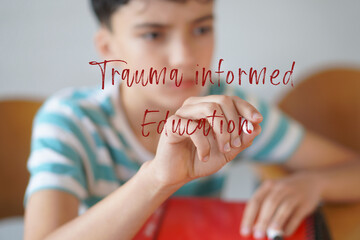
Trauma-Informed Education: Creating Schools Where Every Student Can Thrive
For many years, schools have focused primarily on academic achievement and behavior management. Although both remain essential, we now know that learning cannot be separated from a student's emotional well-being. Trauma-informed education recognizes this reality and shifts our focus from asking, "What's wrong with this student?" to asking, "What has this student experienced, and how can we help them succeed?"
A trauma-informed school is not a school that lowers expectations. Rather, it is a school that understands how trauma affects brain development, emotional regulation, relationships, and learning. Students who have experienced trauma may struggle with attention, memory, organization, self-regulation, or trust. Without understanding these underlying factors, educators may unintentionally interpret trauma responses as defiance, laziness, or a lack of motivation.
When schools recognize these behaviors as forms of communication, everything changes.
Building Relationships
The most effective trauma-informed schools begin by building relationships. Students learn best when they feel physically and emotionally safe, connected to trusted adults, and confident that mistakes are opportunities for growth rather than reasons for punishment. Simple practices such as greeting students by name, providing predictable routines, offering opportunities for choice, and teaching emotional regulation skills can significantly improve engagement and classroom climate.
This work extends beyond individual classrooms. Creating a trauma-informed school requires a shared commitment among teachers, administrators, counselors, families, and community partners. Professional learning, collaborative problem-solving, and consistent practices across the school help create environments where every student can experience stability and support.
Responding to Crises and Building Resilience
Trauma-informed education is not only about responding to crises. Sometimes, it is about preventing additional harm while building resilience. Every positive relationship, every encouraging conversation, and every opportunity for student success strengthens a child's belief that they are capable, valued, and worthy of belonging.
For schools serving culturally diverse communities, trauma-informed practices become even more meaningful when paired with culturally responsive education. Students thrive when they see their identities, histories, languages, and traditions reflected in their learning. Honoring culture alongside emotional well-being strengthens both academic achievement and a student's sense of identity.
Educators Also Need Support
Educators also need support. Teachers cannot pour from an empty cup. Schools that prioritize staff wellness, provide meaningful professional development, encourage collaboration, and recognize compassion fatigue create healthier environments for both adults and students. Caring for educators is an essential component of caring for children. Administrators can further support teachers by listening to what they need and finding meaningful ways to provide that support without taking away their most valuable resource: time.
The Future of Education
The future of education is not defined solely by higher test scores or new technology. It is defined by our ability to create schools where every child feels safe enough to learn, supported enough to grow, and empowered enough to reach their full potential.
Trauma-informed schools are not about making education easier-they are about making it more effective. When students know they belong, learning becomes possible. When educators lead with empathy while maintaining high expectations, schools become places of healing, hope, and opportunity.
As educational leaders, our responsibility extends beyond teaching content. We are called to build environments where resilience can flourish, relationships can grow, and every student has the opportunity to succeed. That is the promise of trauma-informed education, and it is a promise worth pursuing.
Join Influential Women and start making an impact. Register now.