
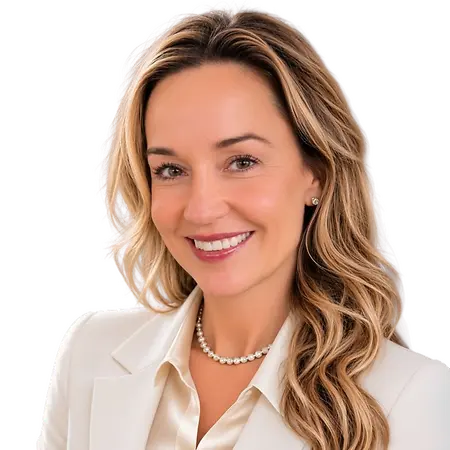
Her Story
About Beth
Beth Jurmo-Brown is an Area Vice President with Gallagher Benefits Services, where she advises mid-market and large employers on employee benefits strategy. After 15 years in the insurance industry, she has learned that complicated situations rarely get better by adding more complexity. Sometimes you need to step back, ask better questions and challenge the way things have always been done.
Beth is curious by nature and likes to understand what is really going on. In her work, that means looking beyond the surface of a benefits program at the costs, contracts and decisions behind it. What is working? What isn’t? What is worth changing? And what can probably be left alone?
Her approach to people is even simpler: treat others the way you would want to be treated. Listen. Be generous with what you know. Show up when you can. And if you have the chance to open a door for someone else, open it.
Growing up in a large family with modest means taught Beth the value of hard work and that opportunities are not always handed to you. Sometimes you have to believe in yourself before anyone else does, take a risk and create your own path. That perspective still guides how she approaches her work and how she shows up for others.
It has also shaped what influence means to her. Being named one of the 2026 Most Influential Women is especially meaningful because Beth believes influence is not just about what you accomplish yourself. It matters most when you use it to move someone else forward.
Beth holds a bachelor’s degree from Eastern Michigan University and a Certificate in Women’s Entrepreneurship from Cornell University. She is also a certified yoga instructor. Outside of work, she enjoys reading, strength training, gardening, cooking vibrant food, hunting, live music and spending time with her family.
Her Interview
Ten minutes with Beth
01What do you attribute your success to?
I attribute a lot of my success to the way I grew up. I came from a large family without a lot of financial resources, and I think that gave me a strong drive to create opportunities and experiences I didn’t always have growing up. That drive is still very much a part of who I am, but today it has evolved. My husband, Steve, and I have a blended family with four children, and I think a lot about what they see when they look at the life we’re building together. With three daughters, it is especially important to me that they see a woman who can be ambitious, lead, provide for her family, take risks and still really enjoy her life. And for all four of our kids, I want them to know that you don’t need to wait for someone to hand you an opportunity. Work hard. Stay curious. Believe in yourself, sometimes before anyone else does, and go after what you want.
02What’s the best career advice you’ve ever received?
The best career advice I received came from my mentor and fellow businesswoman, Diane. She told me, “When you’re the only woman in the room, make sure you have something meaningful to say. Don’t speak just to be heard.” She also taught me to trust what I know and be direct about it. If I disagree with the direction a project is going, I don’t need to spend four minutes explaining why I’m about to disagree. I can simply say, “I disagree, and here’s why.” That advice has stuck with me because it’s really about having confidence in the value you bring. Listen. Be prepared. Ask good questions. And when you have a point of view, own it. Know your business. Think strategically. And don’t dilute a strong point of view with a four-minute disclaimer.
03What advice would you give to young women entering your industry?
Don’t put a ceiling on yourself. Work hard, stay curious and be willing to say yes to opportunities that stretch you. You may not know exactly where your career is going when you start, and that’s okay. One of the things I love about this industry is that there are so many ways to build a career. You can work with clients, get deep into financial analytics, become an expert in a specific industry or find a specialty you didn’t even know existed when you started. Figure out what you’re good at and what keeps you interested, then keep building on it. Find good mentors. Ask questions. Take the opportunities that scare you a little. And don’t be afraid to change direction as you figure out what you really enjoy. There is a lot of room in this industry to be creative, help people and build a career that is uniquely yours. You don’t have to follow someone else’s path. Create your own.
04What are the biggest challenges or opportunities in your field right now?
I actually think this is one of the most interesting times to be in employee benefits. Healthcare and prescription drug costs continue to put pressure on employers, and the system has gotten incredibly complicated. But we also have more data, better technology and more visibility into what is happening than we’ve ever had before. That creates a huge opportunity. We can look underneath the benefits program and ask some pretty basic questions: What are we paying for? Who benefits economically? What is actually working? What can we control? And what should management change first?
The challenge is turning all of that information into action. HR is already managing costs, complicated contracts, systems that don’t talk to each other, an endless stream of new solutions and employees who just want to understand their benefits. That’s the part of the work I really enjoy. Give me the complicated, messy benefits situation. Let’s figure out what matters, define the path to a decision and then run the change like a project with a tight deadline. I think the biggest opportunity ahead is helping employers move from simply managing their benefits to really understanding the economics behind them. When you understand where the money is going, what’s working and what isn’t, you can stop reacting and start making much more intentional decisions about what to change and where to invest.
05What values are most important to you in your work and personal life?
Trust is probably the value that matters most to me. Listen well. Be honest. Do what you say you’re going to do. Be someone people can count on. I care about results, but I also care about how we get there and the relationships we build along the way.
Mentorship is personal to me because I know what someone else’s belief can change. I’ve had people challenge me, share what they knew and see something in me before I fully saw it in myself. I try to return that favor. Make the introduction. Share what you know. Open the door. And when you see something in someone, tell them. I especially believe in women doing that for other women.
I’ve also learned to trust my own instincts. You will not always have every answer or every step mapped out. Sometimes you have to listen to your intuition, take the opportunity and figure out the rest as you go. Maybe that’s my version of believing the universe has your back. Personally, family keeps everything in perspective. I love what I do, but I don’t want success to be measured only by my career. I want our children to see that you can build something you’re proud of, treat people well and still have a really good time creating a life you love.
Join Influential Women and start making an impact. Register now.